


Starting a new business is not just about having a great idea or product. Success depends on how well you reach the right audience, communicate value, and convert interest into customers. This is where a well-structured marketing plan becomes essential.
The best marketing plan for a new business focuses on clarity, cost-effectiveness, and long-term growth. It helps businesses avoid random promotions, reduce marketing waste, and build a strong foundation for sustainable success. This guide explains every step required to create a powerful marketing plan that supports real business growth.
What Is a Marketing Plan for a New Business
A marketing plan is a strategic document that outlines how a business will promote its products or services, attract customers, and achieve specific growth objectives. For a new business, this plan acts as a roadmap that guides all marketing decisions.
Without a proper marketing plan, businesses often rely on trial and error, which leads to inconsistent results. A structured marketing plan ensures that every marketing activity aligns with business goals, customer needs, and available resources.
Why a Marketing Plan Is Crucial for Every New Business
New businesses face challenges such as limited budgets, low brand awareness, and strong competition. A marketing plan helps overcome these challenges by providing direction and focus.
By following a clear marketing plan, a business can prioritize the right channels, avoid unnecessary spending, and build trust with potential customers. It also allows business owners to track performance and improve strategies based on real data rather than assumptions.
Core Components of the Best Marketing Plan for a New Business
An effective marketing plan is built on several key components that work together. Each element strengthens the overall strategy and ensures consistent growth.
Understanding and implementing these components helps a new business create a competitive advantage and maintain long-term relevance in the market.
Target Audience Identification – The Foundation of a Marketing Plan
Identifying the right target audience is the most important step in any marketing plan. Marketing to everyone usually results in weak messaging and low conversions.
A new business must clearly define who its ideal customers are, what problems they face, and how they make purchasing decisions. This clarity allows businesses to create personalized marketing messages that resonate with the right people.
Creating Buyer Personas for Better Marketing Accuracy
Buyer personas are fictional profiles that represent ideal customers based on research and data. They help businesses understand customer behavior, motivations, and expectations.
For a new business, even one or two well-defined buyer personas can significantly improve marketing effectiveness. Personas guide content creation, platform selection, and messaging tone across all marketing channels.
Defining a Strong Value Proposition for Your Business
A value proposition clearly explains why customers should choose your business over competitors. It highlights the unique benefits and outcomes your product or service delivers.
For a new business, a strong value proposition builds trust and reduces customer hesitation. It should focus on solving a specific problem and delivering measurable value rather than vague promises.
Setting Clear and Measurable Marketing Goals
Marketing goals provide direction and help measure success. Without clear goals, a marketing plan becomes difficult to evaluate and improve.
Using SMART goals ensures that objectives are specific, measurable, achievable, relevant, and time-bound. This approach allows a new business to track progress, stay focused, and adjust strategies when needed.
Market Research and Competitor Analysis for Strategic Advantage
Market research helps businesses understand industry trends, customer expectations, and competitive dynamics. It ensures that marketing decisions are based on facts rather than assumptions.
Competitor analysis reveals gaps in the market and opportunities for differentiation. By studying competitors’ messaging, pricing, and marketing channels, a new business can position itself more effectively.
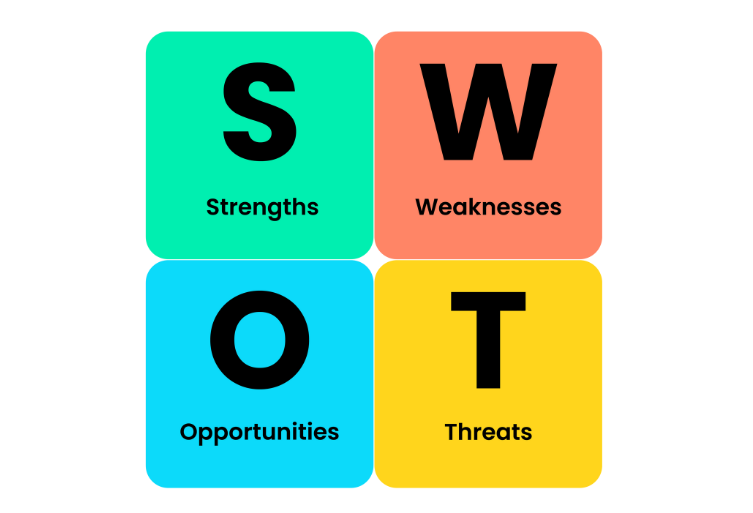
SWOT Analysis for New Business Marketing Planning
A SWOT analysis evaluates strengths, weaknesses, opportunities, and threats related to a business. It provides a clear overview of internal capabilities and external risks.
For a new business, SWOT analysis helps identify areas to improve, opportunities to leverage, and potential challenges to prepare for. This insight strengthens the overall marketing plan.
Choosing the Right Marketing Channels for a New Business
Not all marketing channels deliver the same results. The best marketing plan focuses on platforms where the target audience is already active.
By selecting the right channels, a new business can maximize visibility, engagement, and ROI without spreading resources too thin. Strategic channel selection improves consistency and performance.
Content Marketing as a Long-Term Growth Strategy
Content marketing involves creating valuable and informative content that attracts and educates potential customers. It plays a critical role in SEO and organic traffic growth.
For a new business, content marketing builds authority, improves search engine rankings, and generates inbound leads over time. Blogs, guides, and FAQs are especially effective for long-term visibility.
Social Media Marketing for Brand Awareness and Engagement
Social media platforms allow businesses to connect directly with their audience and build relationships. It is an effective way to increase brand awareness and customer engagement.
A new business should focus on a limited number of platforms and post consistently. Sharing educational, helpful, and interactive content builds trust and encourages conversations.
Email Marketing for Lead Nurturing and Retention
Email marketing remains one of the most cost-effective digital marketing channels. It helps nurture leads, build relationships, and increase customer retention.
For a new business, email marketing supports long-term growth by maintaining direct communication with interested users. Sharing valuable content and updates keeps the brand top of mind.
Budget Planning in a Marketing Plan for New Business
A marketing plan must include a realistic budget that aligns with business goals. For a new business, smart budgeting is more important than high spending.
Allocating funds toward high-ROI channels such as content, SEO, and email marketing helps maximize results. Tracking expenses and performance ensures better financial control.
Step-by-Step Implementation of a Marketing Plan
Execution is where strategy turns into results. A marketing plan should be implemented in clear and manageable steps to avoid confusion.
By following a structured process, a new business can launch campaigns efficiently, maintain consistency, and improve performance through continuous optimization.
Importance of Inbound Marketing for New Businesses
Inbound marketing focuses on attracting customers through value-driven content rather than interruptive advertising. It aligns well with modern customer behavior.
For a new business, inbound marketing offers sustainable growth, better lead quality, and higher trust. It reduces dependency on expensive paid advertising.
Measuring and Optimizing Marketing Performance
Tracking performance is essential to understand what works and what doesn’t. Data-driven decisions lead to better marketing outcomes.
Monitoring metrics such as website traffic, conversions, engagement, and ROI helps a new business refine its marketing plan and improve efficiency over time.
Common Marketing Plan Mistakes New Businesses Should Avoid
Many new businesses struggle due to avoidable marketing mistakes. These errors often result from lack of planning or unrealistic expectations.
Avoiding mistakes like unclear goals, inconsistent branding, and ignoring analytics helps businesses save time, money, and effort while improving success rates.
Long-Term Benefits of a Well-Structured Marketing Plan
A strong marketing plan delivers benefits beyond short-term sales. It builds brand credibility, customer loyalty, and market authority.
For a business, consistent marketing efforts lead to scalability, improved profitability, and competitive advantage in the long run.
Final Thoughts – Building the Best Marketing Plan for Your Business
The best marketing plan for a new business is simple, focused, and adaptable. It prioritizes understanding customers, delivering value, and choosing the right marketing channels.
By following a structured approach and continuously optimizing strategies, any business can achieve sustainable growth and long-term success.
FAQs
Have questions? We’ve answered some of the most common queries to help you understand the topic better
Q1. What is the best marketing plan for a new business
The best marketing plan focuses on target audience research, clear value proposition, measurable goals, and cost-effective digital marketing channels.
Q2. How much should a new business spend on marketing
A new business should start with a limited budget and scale spending based on performance and ROI.
Q3. Is digital marketing suitable for a new business
Yes, digital marketing is affordable, measurable, and scalable, making it ideal for new businesses.
Q4. How long does a marketing plan take to show results
SEO and content marketing take time, while email and social media can show engagement earlier.
Q5. Can a business grow without paid ads
Yes, inbound marketing strategies like SEO, content marketing, and email marketing support organic and sustainable growth.
Want To Grow Your Business - Connect With KTPL
KTPL – Business Growth Agency, a creative solutions and business growth agency from India.
👉 Visit https://kirnanitechnologies.com
📞 Call us at +91 95093 33000
📧 Email us at contact@kirnanitechnologies.com


