


For more than a century, Coca-Cola has stood as one of the most recognizable and emotionally powerful brands in the world. Its signature red packaging, classic contour bottle, and timeless messaging built a global identity that symbolized happiness and togetherness. However, even iconic brands face difficult phases.
By the late 2000s, Coca-Cola was experiencing declining soda consumption in several mature markets. Changing lifestyle patterns, growing health awareness, and increasing competition from alternative beverages were reshaping consumer preferences. In the United States, the brand faced an 11-year sales decline. The challenge was not only about product demand but about cultural relevance.
Then came one of the most influential marketing moves of the decade – the “Share a Coke” Campaign. What appeared to be a simple packaging change turned into a global case study in personalization, emotional marketing, and brand reinvention.
The Market Challenge Facing Coca-Cola
Before the campaign launch in 2011, Coca-Cola was confronting a serious shift in consumer behavior. Younger audiences were drifting toward bottled water, flavored drinks, and functional beverages. Traditional advertising was no longer creating the same excitement. Brand loyalty was softening, and purchase frequency was declining.
The company needed more than a new commercial. It required a cultural reset that could reconnect emotionally with consumers and make the product feel relevant again. The solution did not involve altering the formula or launching a new flavor. Instead, it focused on something far more powerful – identity.
The Birth of the “Share a Coke” Campaign
The “Share a Coke” Campaign was first introduced in Australia in 2011. Instead of displaying the iconic Coca-Cola logo on bottles and cans, the company replaced it with 250 of the most popular first names in the country. This bold move temporarily stepped away from one of the most recognizable logos in the world.
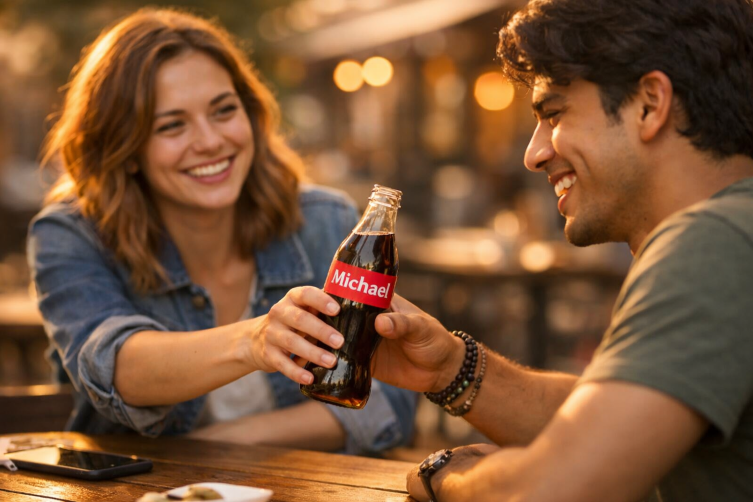
The idea was refreshingly simple. Consumers could now find bottles with their own names or the names of friends and family members. This small design change transformed a mass-produced beverage into something that felt personal and exclusive.
The response in Australia was immediate. Sales increased by 7 percent during the campaign period. Encouraged by the results, Coca-Cola expanded the campaign to more than 80 countries, adapting it to local cultures and languages.
Hyper-Personalization at Global Scale
Personalization has often been associated with digital marketing, but Coca-Cola demonstrated that personalization can succeed at physical retail scale. By printing real names directly on packaging, the brand created a sense of ownership and emotional attachment.
Consumers began searching store shelves for their names, the names of friends, and even playful titles. This behavior changed the shopping experience from a routine purchase into a personal mission. The strategy worked because it tapped into a universal human desire – the desire to be recognized.
Key drivers behind the personalization strategy included – replacing the logo with popular first names to spark emotional identification, encouraging consumers to purchase bottles as gifts rather than single servings, increasing repeat store visits as shoppers searched for different names, and creating a collectible experience that encouraged multiple purchases.
This was not customization for a niche audience. It was personalization executed at mass scale.
Emotional Marketing That Reconnected Consumers
The campaign tagline encouraged people to “Share a Coke with” someone special. That phrase shifted attention away from the product and toward relationships. Instead of promoting features or price points, Coca-Cola promoted connection.
The brilliance of Coca-Cola’s Campaign was its emotional simplicity. A bottle labeled with a friend’s name could become a birthday gesture. A can with the word “Mom” could turn into a family dinner moment. These interactions created stories that extended beyond the beverage itself.
According to coverage from NBC News, the campaign helped reverse an 11-year decline in Coca-Cola sales in the United States. By making the product feel personal and meaningful again, the brand successfully attracted both new consumers and those who had stopped purchasing soda.
Social Media Virality and Organic Buzz
The success of the “Share a Coke” Campaign was amplified by social media. The campaign launched during a period when platforms such as Instagram and Facebook were growing rapidly. Consumers began posting photos of their personalized bottles, tagging friends, and sharing their finds online.
This organic sharing created a powerful feedback loop. People discovered bottles in stores, posted images online, inspired others to search for their names, and increased overall product visibility.
The social impact of Coca-Cola’s Campaign included – millions of user-generated posts across social platforms, significant increases in brand mentions and hashtag engagement, unpaid organic reach that reduced reliance on traditional advertising spend, and deeper engagement among younger demographics who valued shareable experiences.
Instead of interrupting consumers with advertisements, the campaign allowed consumers to become brand ambassadors.
Integration of Physical and Digital Experiences
Another major factor behind the campaign’s effectiveness was its integration of offline and online engagement. While the physical bottles created excitement in retail stores, digital extensions expanded the experience.
Consumers could create virtual personalized bottles on Coca-Cola’s website, share digital versions with friends, and in some locations even print custom labels at live kiosks. This combination ensured that even individuals who did not find their names in stores could still participate.
The physical and digital blend strengthened the campaign’s reach. It demonstrated how traditional products can evolve in a connected world without losing authenticity.
Local Adaptation Across Global Markets
Although the core concept remained consistent worldwide, Coca-Cola carefully adapted the campaign for each country. Local teams researched the most popular names in their markets and incorporated culturally relevant titles.
In some regions, bottles included terms such as Bestie, Mom, Dad, or BFF to ensure inclusivity. This thoughtful localization made the campaign feel native rather than imported.
Key localization elements included – selecting regionally popular first names, incorporating culturally meaningful nicknames and titles, adapting language and typography to match local expectations, and aligning campaign messaging with regional celebrations and holidays.
This balance between global consistency and local customization played a critical role in sustaining long-term success.
Measurable Results and Commercial Impact
The impact of Coca-Cola’s Campaign was not limited to brand buzz. The numbers demonstrated clear commercial gains.
In Australia, sales rose by 7 percent shortly after launch. The campaign expanded to more than 80 countries worldwide. In the United States, it helped reverse more than a decade of declining sales. Younger consumers re-engaged with the brand, and lapsed buyers returned to shelves.
Beyond immediate revenue growth, the campaign restored cultural relevance. It repositioned Coca-Cola as a brand that understood modern consumers and their desire for individuality.
Why the “Share a Coke” Campaign Worked
The campaign succeeded because it combined simplicity, emotional intelligence, and scalability. It did not rely on complicated technology or heavy promotional discounting. Instead, it focused on human psychology.
Core success factors included – clear and easy-to-understand concept, strong emotional appeal centered on sharing and connection, built-in social media shareability, cost-effective personalization at mass production scale, and seamless integration between offline retail and online interaction.
The campaign also demonstrated that innovation does not always require changing the product itself. Sometimes the most effective strategy is to change how consumers experience the product.
Lessons for Modern Marketers
Coca-Cola’s Campaign provides valuable insights for brands across industries. Personalization increases perceived value even when production costs remain similar. Emotional storytelling drives stronger engagement than feature-based advertising. Consumer participation enhances loyalty more effectively than passive messaging.
Marketers can learn that identity-based engagement builds deeper relationships, social sharing multiplies brand exposure organically, and localized adaptation strengthens global campaigns. Most importantly, large brands can reinvent themselves without abandoning their core identity.
The Gen Z Reimagining
Years after its original success, Coca-Cola refreshed the campaign to resonate with Gen Z audiences. Updated versions included enhanced digital integration, QR codes for interactive experiences, and expanded customization options.
This revival demonstrated the campaign’s flexibility. Personalization remains relevant in an era shaped by digital culture and self-expression. By evolving while maintaining its emotional foundation, Coca-Cola continues to leverage one of its most successful marketing innovations.
Conclusion - A Blueprint for Personalization Success
The story of Coca-Cola’s “Share a Coke” Campaign is more than a marketing case study. It is a reminder that brands succeed when they make consumers feel seen and valued.
By replacing its iconic logo with personal names, Coca-Cola transformed a standard beverage into a meaningful gesture. The campaign reversed declining sales, reignited brand excitement, and created a model that marketers continue to study.
In a marketplace saturated with advertisements, personalization cut through the noise. Coca-Cola proved that even a century-old brand can feel intimate and contemporary.
The campaign’s legacy remains clear – when a product becomes personal, it becomes powerful.
FAQs
Have questions? We’ve answered some of the most common queries to help you understand the topic better
Q1. What was the main goal of Coca-Cola’s “Share a Coke” Campaign?
The primary goal was to reconnect emotionally with consumers by personalizing packaging, increasing engagement, and reversing declining sales trends.
Q2. When did the “Share a Coke” Campaign begin?
The campaign launched in Australia in 2011 before expanding globally to more than 80 countries.
Q3. How did Coca-Cola reverse its sales decline?
By introducing personalized bottles, encouraging social sharing, integrating digital participation, and creating emotional connections, Coca-Cola successfully reversed an 11-year sales decline in the United States.
Q4. Why was Coca-Cola’s Campaign so successful?
Its success came from hyper-personalization, emotional storytelling, strong social media integration, and careful local adaptation in each market.
Q5. Is the “Share a Coke” Campaign still relevant today?
Yes. The campaign has been reimagined for younger audiences and continues to influence modern personalization strategies worldwide.
Want To Grow Your Business - Connect With KTPL
KTPL – Business Growth Agency, a creative solutions and business growth agency from India.
👉 Visit https://kirnanitechnologies.com
📞 Call us at +91 95093 33000
📧 Email us at contact@kirnanitechnologies.com


