


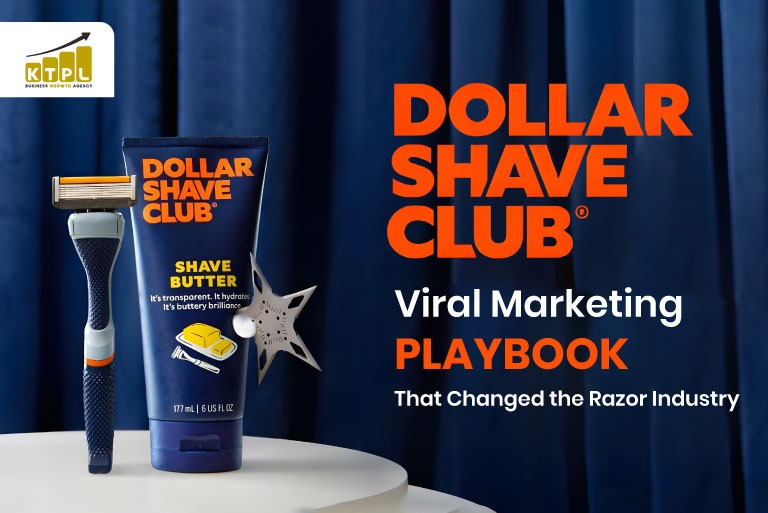
In 2012, the Razor Industry looked stable, profitable, and nearly impossible to disrupt. Established brands dominated retail shelves, controlled pricing, and dictated how consumers bought shaving products. Most customers didn’t love buying razors — they simply accepted the cost and inconvenience as normal.
Then Dollar Shave Club’s entered the market with a bold message and an even bolder attitude. What followed wasn’t just a successful launch — it was a masterclass in modern branding. This is the story of how Dollar Shave built a Marketing Playbook that reshaped the Razor Industry forever.
The Razor Industry Before Dollar Shave
Before Dollar Shave Club’s rise, the Razor Industry was controlled by a few powerful corporations. Brands like Gillette dominated shelf space with premium pricing and constant “innovation” upgrades. The competition focused heavily on adding more blades, lubrication strips, and design tweaks to justify higher costs.
Consumers had limited choices and even less pricing transparency. Buying razors often meant asking a store employee to unlock a display case. It was inconvenient, expensive, and oddly frustrating — but nobody questioned it publicly. The system worked for manufacturers, even if it didn’t fully work for customers.
The Moment Everything Changed: The Viral Video
In 2012, Dollar Shave Club’s launched a simple, low-budget video featuring co-founder Michael Dubin walking through a warehouse delivering sharp humor and sharper messaging. The production wasn’t polished, but the message was crystal clear.
Within 48 hours, thousands of customers signed up. The video spread rapidly across social platforms, turning a small startup into a national conversation. Instead of promoting blade technology, the company promoted honesty and affordability. That shift in tone made the brand instantly relatable — and highly shareable.
Lesson 1: Sell the Problem, Not the Product
Traditional razor brands sold features. Dollar Shave sold relief. Instead of talking about stainless steel or blade precision, the company highlighted the frustration customers felt about overpaying.
This aligns closely with business model thinking popularized by platforms like Strategyzer, which emphasize solving customer pain points over listing product features. Dollar Shave Club’s Marketing Playbook focused on a simple insight: customers were tired of being overcharged. By articulating that frustration clearly, they positioned themselves as the obvious solution.
Lesson 2: Make Pricing the Hero
Pricing wasn’t just a detail — it was the headline. The name “Dollar Shave” immediately communicated affordability and simplicity. This clarity removed confusion and built instant trust.
In a Razor Industry where prices kept climbing, transparent subscription pricing felt revolutionary. Customers could receive blades delivered monthly without visiting a store. That predictability reduced friction and made switching feel safe. The pricing strategy wasn’t just competitive — it was psychologically powerful.
Lesson 2: Make Pricing the Hero
Pricing wasn’t just a detail — it was the headline. The name “Dollar Shave” immediately communicated affordability and simplicity. This clarity removed confusion and built instant trust.
In a Razor Industry where prices kept climbing, transparent subscription pricing felt revolutionary. Customers could receive blades delivered monthly without visiting a store. That predictability reduced friction and made switching feel safe. The pricing strategy wasn’t just competitive — it was psychologically powerful.
Lesson 3: Build Brand Personality, Not Just a Business
One of the strongest elements of Dollar Shave Club’s Marketing Playbook was its personality. The brand voice was witty, bold, and refreshingly honest. Instead of corporate polish, it embraced humor and authenticity.
This approach differentiated the company immediately from legacy competitors. While large brands relied on serious messaging and technical superiority, Dollar Shave leaned into relatability. Personality became a growth engine, encouraging customers to share content voluntarily and advocate for the brand.
Lesson 4: Distribution Is Strategy
Most Razor Industry players relied on retail partnerships for growth. Dollar Shave Club’s chose a direct-to-consumer model instead. By selling online through subscriptions, they bypassed traditional retail channels entirely.
This shift allowed them to control customer data, optimize retention, and improve margins. More importantly, it built direct relationships with subscribers. Instead of fighting for shelf placement, the company focused on digital acquisition — a move that proved far more scalable in the long
Lesson 5: Start Small, Think Big
Early in its journey, Dollar Shave Club’s did not manufacture its own blades. Instead, it sourced products efficiently and focused resources on branding and customer acquisition. This minimized capital risk while maximizing flexibility.
Rather than competing on blade engineering, the company competed on convenience and messaging. That strategic focus helped them grow rapidly without heavy R&D costs. The lesson for startups is clear: innovation doesn’t always mean inventing something new — sometimes it means delivering it differently.
From Startup to $1 Billion Exit
In 2016, Unilever acquired Dollar Shave Club for approximately $1 billion. The acquisition shocked many industry observers and validated the strength of the business model.
Unilever recognized the power of recurring revenue, strong branding, and digital-first infrastructure. Dollar Shave had proven that even established markets could be disrupted with a better Marketing Playbook. The Razor Industry was officially on notice.
Breaking Down Dollar Shave Club’s Marketing Playbook
When we analyze Dollar Shave’s growth, several strategic pillars become clear. First, the brand identified a widely shared frustration and spoke about it openly. Second, it simplified its value proposition into a single, memorable idea.
Third, it leveraged viral content to reduce acquisition costs dramatically. Fourth, it built a subscription system that ensured predictable revenue. Together, these elements created a powerful and repeatable framework for growth.
Why the Strategy Worked So Well
The success of Dollar Shave Club’s was not random timing — it was strategic alignment. Consumers were increasingly skeptical of big corporations and open to challenger brands. Social media platforms made sharing content effortless.
At the same time, subscription services were becoming normalized through digital platforms. Dollar Shave entered the market precisely when conditions favored disruption. The Marketing Playbook succeeded because it aligned with cultural and technological shifts.
The Bigger Lesson for Modern Businesses
The story of Dollar Shave is not just about razors — it’s about positioning. Many companies compete on incremental improvements, hoping small upgrades will win customers. But true disruption often comes from reframing the conversation entirely.
Instead of asking, “How can we make a better blade?” Dollar Shave asked, “Why are customers paying so much in the first place?” That question changed the Razor Industry permanently. Businesses today can apply this same thinking in crowded markets.
Final Takeaway
At its core, Dollar Shave Club’s success came down to simplicity. The company combined a clear value proposition, bold storytelling, and a subscription model into one cohesive strategy. There was no unnecessary complexity — just clarity.
By respecting customers’ intelligence and addressing real frustrations, Dollar Shave built loyalty quickly. The Razor Industry had long prioritized product upgrades; Dollar Shave prioritized customer experience. That difference reshaped an entire market.
FAQs
Have questions? We’ve answered some of the most common queries to help you understand the topic better
Q1. What made Dollar Shave Club’s marketing go viral?
A humorous launch video, clear value messaging, and strong brand personality helped Dollar Shave capture attention and generate rapid social sharing.
Q2. How did Dollar Shave disrupt the Razor Industry?
By introducing affordable subscription pricing and direct-to-consumer distribution, Dollar Shave eliminated retail dependency and simplified the buying process.
Q3. What is Dollar Shave Club’s Marketing Playbook?
It’s a strategy built on solving customer frustration, simplifying pricing, building brand personality, and leveraging digital distribution.
Q4. Why did Unilever acquire Dollar Shave Club?
Unilever saw the long-term value in its subscription revenue model, strong customer base, and disruptive market positioning.
Q5. What can startups learn from Dollar Shave?
Focus on customer pain points, simplify messaging, build strong brand personality, and use scalable distribution models.
Want To Grow Your Business - Connect With KTPL
KTPL – Business Growth Agency, a creative solutions and business growth agency from India.
👉 Visit https://kirnanitechnologies.com
📞 Call us at +91 95093 33000
📧 Email us at contact@kirnanitechnologies.com


