


Introduction
Plastic is everywhere—from packaging to furniture—but so is the pollution it leaves behind. Every year, millions of tons of single-use plastics clog our oceans, rivers, and landfills. The search for alternatives has led innovators, businesses, and consumers to one powerful material: bamboo.
In this blog, we’ll explore how Plastic-Busting Bamboo Goods are changing the way we live, why bamboo is one of the fastest-growing sustainable resources, and how scaling bamboo solutions can make a real difference. We’ll also highlight risks, opportunities, and actionable steps for businesses and everyday consumers.
What Are Plastic-Busting Bamboo Goods?
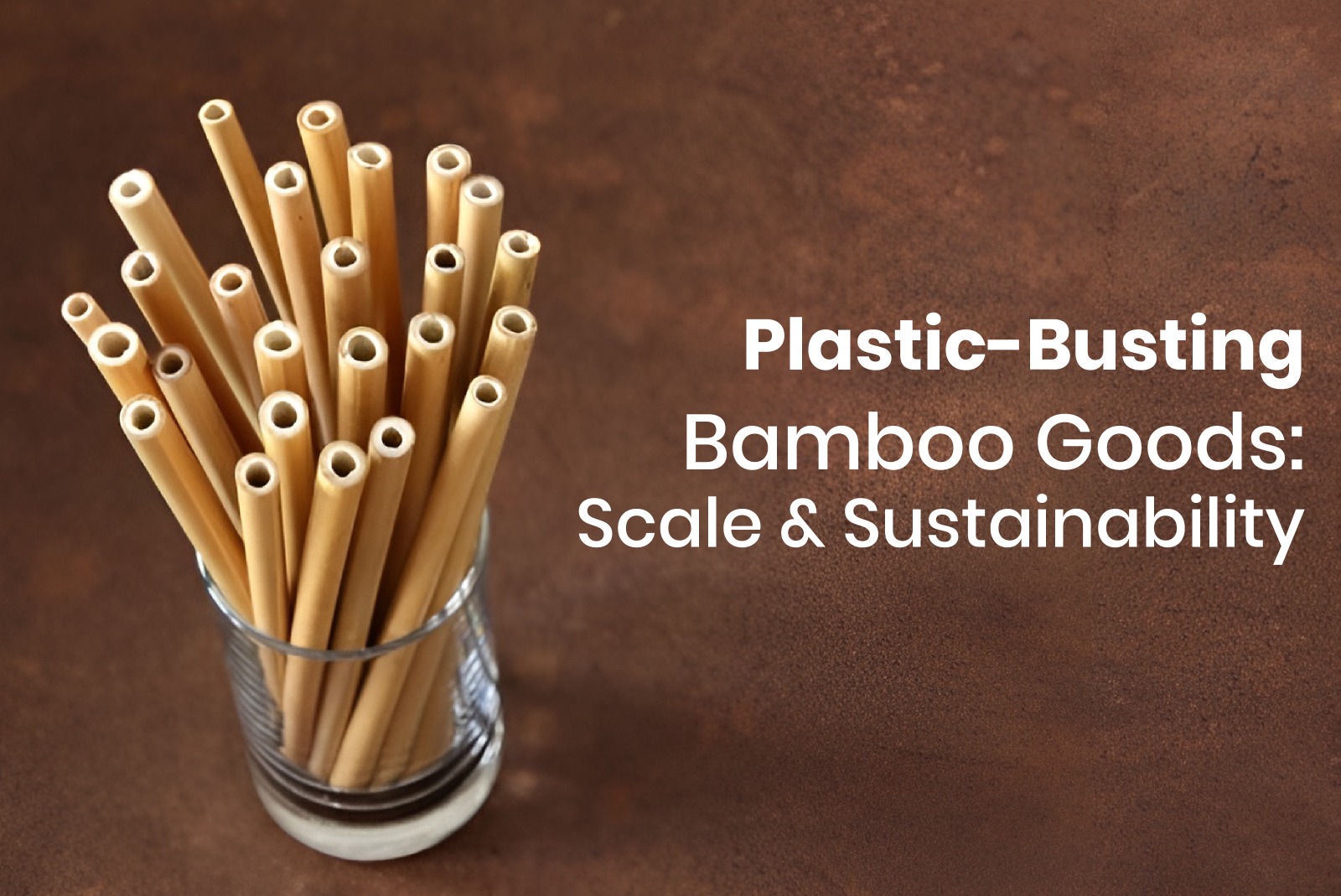
Plastic-busting bamboo goods are everyday products made from bamboo that directly replace plastic items. Think bamboo toothbrushes, earbuds, straws, cutlery, and even phone cases. Unlike plastic, bamboo is biodegradable, renewable, and naturally strong—making it an excellent alternative.
Everyday Examples of Bamboo Goods
- Bamboo toothbrushes and ear swabs to replace plastic hygiene products.
- Bamboo straws and cutlery for sustainable dining.
- Bamboo fiber packaging that substitutes harmful plastic wraps.
- Bamboo-based fabrics for clothing and accessories.
Why Bamboo Is Perfect for Plastic-Busting
Bamboo grows incredibly fast, with some species sprouting over 90 cm in a single day. Unlike trees that take decades to mature, bamboo can be harvested in just 3–5 years. This rapid renewability makes it a scalable and sustainable raw material.
Environmental Benefits of Bamboo Goods
- Low Water Usage – Bamboo needs far less water than cotton or timber.
- No Pesticides – It grows naturally without chemicals.
- Carbon Sequestration – Bamboo absorbs more CO₂ than most trees, helping fight climate change.
- Soil Regeneration – Its root system prevents erosion and restores soil health.
This combination of features explains why bamboo is called a “green steel” of sustainability.
Scale & Sustainability: From Local Crafts to Global Markets
The question is not just whether bamboo is sustainable—it’s whether it can scale to meet global demand. The answer is yes.
China leads the world in bamboo production, with an industry valued at over $75 billion in 2023. India is catching up, with startups like Bamboo India turning bamboo into eco-friendly toothbrushes, pens, and household items.
Industrial Scale Production of Bamboo Goods
- Construction: Bamboo is being used for flooring, scaffolding, and even structural panels.
- Packaging: Food companies are adopting bamboo-fiber trays and wraps.
- Textiles: Bamboo fabrics are breathable, antibacterial, and a growing fashion trend.
- Bioplastics: Bamboo fibers are combined with biodegradable polymers to create strong, plastic-like materials.
These examples show that bamboo is not just an alternative but a global industry in the making.
The Sustainability Advantage of Plastic-Busting Bamboo Goods
While many materials claim to be eco-friendly, bamboo stands out because of its life cycle. It grows without fertilizers, is fully compostable, and supports community-based economies.
Why Scale & Sustainability Matter
Scaling bamboo products means making them available worldwide at competitive prices. But sustainability ensures we don’t repeat the mistakes of plastic—mass production without considering long-term impact. Together, scale and sustainability are the twin engines driving bamboo’s success.
Risks and Concerns with Bamboo Goods
Not all bamboo products are equal. Some companies mix bamboo with plastics like melamine or formaldehyde, creating harmful composites. These items may look eco-friendly but can leach chemicals into food and drinks.
How to Identify Safe Bamboo Goods
- Look for 100% natural bamboo or bamboo + biodegradable material (like PLA).
- Choose BPA-free and food-safe certified products.
- Avoid suspiciously cheap bamboo-plastic composites.
By being mindful, consumers can ensure their bamboo choices remain truly plastic-busting.
How Businesses Can Adopt Plastic-Busting Bamboo Goods
Businesses have a key role to play. Restaurants can switch to bamboo cutlery, offices can introduce bamboo stationery, and retailers can expand eco-friendly product lines.
Benefits for Businesses
- Brand Image – Going plastic-free builds trust with eco-conscious consumers.
- Compliance – Many countries are banning single-use plastics. Bamboo is a ready solution.
- Cost Efficiency – As bamboo production scales, costs are becoming competitive with plastic.
Adopting bamboo goods is not just an ethical choice—it’s a smart business move.
How Consumers Can Support Scale & Sustainability
For consumers, the power lies in daily choices. Every bamboo toothbrush or straw purchased reduces demand for plastic.
Actionable Consumer Steps
- Buy certified bamboo products.
- Support local bamboo startups.
- Gift eco-friendly bamboo items.
- Spread awareness in your community.
Together, small actions create large-scale change.
The Future of Plastic-Busting Bamboo Goods
The future is bright. Research is pushing bamboo into new territories—from medical applications to advanced composites. Governments and NGOs are promoting bamboo as part of climate action strategies.
With innovation, investment, and consumer support, bamboo goods can move from niche to mainstream, truly replacing plastic on a global scale.
Conclusion
Plastic-Busting Bamboo Goods represent more than a trend—they are a blueprint for a sustainable future. By combining scale & sustainability, bamboo products prove that we don’t have to sacrifice convenience to protect the planet.
Businesses, consumers, and policymakers all have a role to play. With conscious choices and widespread adoption, bamboo can help us win the fight against plastic pollution.
FAQs
Have questions? We’ve answered some of the most common queries to help you understand the topic better
Q1. Are bamboo goods really better than plastic?
Yes, bamboo is renewable, biodegradable, and absorbs carbon dioxide—making it far more sustainable than plastic.
Q2. Can bamboo goods replace plastic completely?
While not every plastic product can be replaced, bamboo goods cover a wide range of alternatives, from toothbrushes to packaging.
Q3. How long do bamboo products last?
High-quality bamboo goods can last months to years depending on the product, provided they are used and cared for properly.
Q4. Are bamboo goods safe for food use?
Yes, as long as they are made from natural bamboo and are food-safe certified. Avoid bamboo-plastic composites.
Q5. Is bamboo production sustainable at scale?
Yes, when grown responsibly, bamboo can be harvested continuously without harming the environment, making it scalable and sustainable.
Want To Grow Your Business - Connect With KTPL
KTPL – Business Growth Agency, a creative solutions and business growth agency from India.
👉 Visit https://kirnanitechnologies.com
📞 Call us at +91 95093 33000
📧 Email us at contact@kirnanitechnologies.com


