


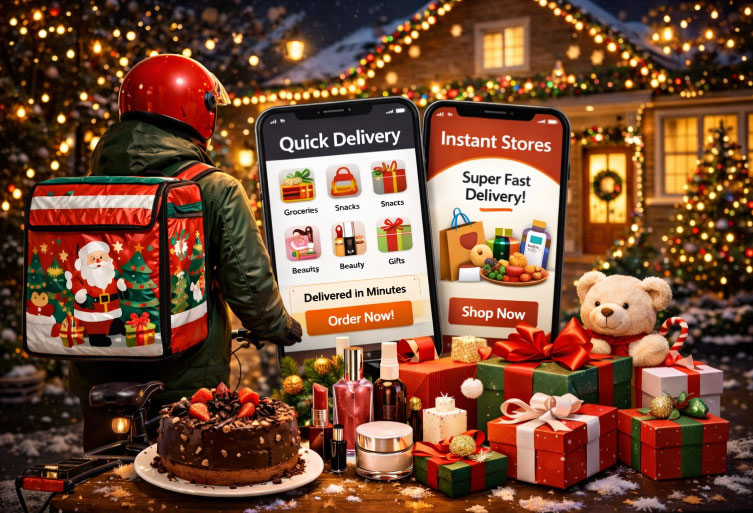
Christmas 2025 turned out to be more than just a festive celebration for Indian consumers—it became a defining moment for quick commerce and D2C brands. As shoppers rushed to buy gifts, sweets, cakes, beauty products, and daily essentials, instant delivery platforms emerged as the fastest-growing sales channel during the holiday season.
From last-minute Christmas cakes to surprise gifting and festive essentials, quick commerce proved that speed and convenience now matter as much as price. For many direct-to-consumer brands, Christmas sales surged sharply, driven by changing consumer behavior and growing trust in 10–30 minute delivery models.
This festive season clearly showed that quick commerce is no longer limited to groceries—it has become a powerful growth engine for India’s D2C ecosystem.
How Quick Commerce Became a Festive Shopping Favorite
Festive shopping in India has traditionally revolved around malls, local markets, and large ecommerce platforms. However, Christmas 2025 marked a clear shift in how urban consumers shop during festivals.
Before diving into specific brand performances, it’s important to understand why quick commerce gained massive traction during Christmas.
Speed, Convenience, and Last-Minute Gifting
Quick commerce platforms like Blinkit, Zepto, and Swiggy Instamart positioned themselves perfectly for the festive rush. With instant delivery, customers no longer needed to plan purchases days in advance.
- A forgotten Secret Santa gift
- A last-minute plum cake order
- Christmas decor or candles
- Snacks and beverages for guests
The convenience of real-time delivery, combined with festive discounts and curated Christmas collections, made quick commerce the default choice for urban shoppers.
The Role of Technology in Driving Quick Commerce Growth
Behind the scenes, technology played a major role in making festive quick commerce successful. AI-powered demand forecasting, hyperlocal dark stores, and optimized supply chains helped platforms handle the Christmas surge smoothly.
Before exploring brand-level impact, let’s look at how tech infrastructure supported this growth.
Smarter Inventory and Local Fulfillment
- Bakery products and desserts
- Chocolates and confectionery
- Beauty and grooming essentials
- Party snacks and beverages
This technology-first approach gave D2C brands a strong distribution edge during peak demand days.
Christmas Sales Surge for D2C Brands on Quick Commerce Platforms
The festive season proved to be highly profitable for D2C brands leveraging instant delivery channels. Many brands recorded multi-fold growth compared to the previous year.
Before breaking down categories, it’s worth noting that Christmas shopping on quick commerce wasn’t limited to emergencies—it became a planned behavior.
Food, Bakery, and Dessert Brands Lead the Surge
Food and bakery brands were among the biggest winners during Christmas. Plum cakes, pastries, cookies, and desserts saw exceptional demand.
- 2x to 3x growth in festive orders
- High repeat purchases during Christmas week
- Increased discovery from new customers using quick commerce apps
Beauty, Grooming, and Personal Care Brands See Strong Growth
- Skincare gift sets
- Grooming essentials
- Fragrances and self-care products
Impulse buying played a key role here. With products delivered quickly, customers were more willing to add premium or giftable items to their carts.
Lifestyle and Everyday Essentials Gain Festive Momentum
- Candles and home decor
- Party supplies
- Snacks and beverages
- Convenience gifting items
Quick commerce enabled shoppers to complete their festive shopping without stepping outside, reinforcing the channel’s growing importance.
Why Consumers Chose Quick Commerce Over Traditional Ecommerce
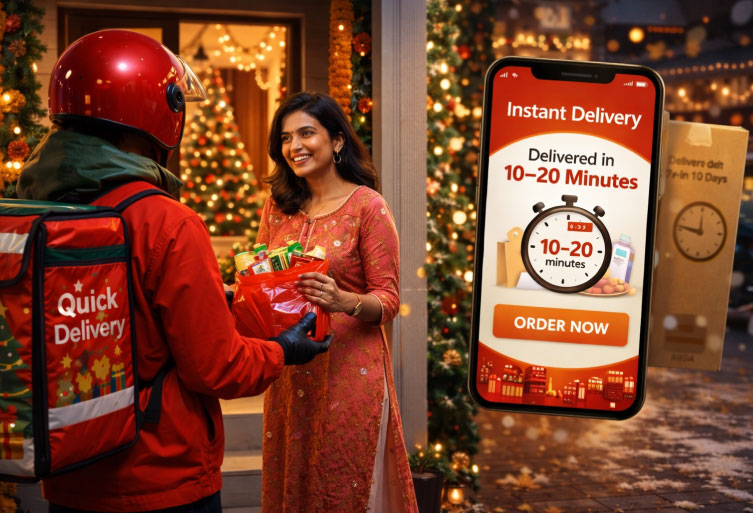
While traditional ecommerce platforms still played a role, quick commerce clearly dominated last-mile festive purchases.
Before analyzing long-term impact, let’s understand why customers preferred instant delivery during Christmas.
Instant Gratification and Reduced Planning Stress
Christmas shopping often involves urgency. Consumers don’t want to wait for delivery timelines or worry about missing gifts.
- Long checkout processes
- Delayed delivery slots
- Uncertain arrival times
This shift highlights how consumer expectations have evolved—speed is now a core part of brand value.
Marketing Strategies That Boosted Festive Sales
Quick commerce platforms didn’t rely only on speed—they enhanced the festive shopping experience through smart marketing.
Before discussing future trends, let’s look at what worked during Christmas.
Festive Campaigns and Group Gifting Features
- Secret Santa group orders
- Christmas-themed app interfaces
- Curated festive collections
- Limited-time discounts and bundles
D2C brands that participated in platform-led promotions saw higher visibility and better conversions.
What This Christmas Means for the Future of D2C Brands
The Christmas sales boom offers important lessons for D2C brands planning future growth strategies.
Before concluding, it’s essential to understand the long-term impact of quick commerce on digital retail.
Quick Commerce Is No Longer Optional
For modern D2C brands, quick commerce is becoming a core distribution channel, not just an experiment.
- Faster customer acquisition
- Increased brand discovery
- Higher impulse purchases
- Better control over hyperlocal demand
The Expanding Role of Quick Commerce in Indian Retail
- Festive shopping
- Gifting
- Premium D2C products
- Lifestyle and personal care
Final Thoughts: A Festive Win for Speed-Driven Commerce
Quick commerce brought genuine Christmas cheer for D2C brands by delivering strong sales growth, wider customer reach, and faster conversions. The festive season highlighted a simple truth—convenience wins.
For brands, Christmas was not just about higher revenue but also about understanding modern consumer behavior. For shoppers, it proved that festive shopping can be instant, stress-free, and enjoyable.
As India’s digital economy grows, quick commerce is set to play an even bigger role in shaping the future of festive and everyday shopping.
FAQs
Have questions? We’ve answered some of the most common queries to help you understand the topic better
1. What is quick commerce?
Quick commerce delivers products within minutes using hyperlocal fulfillment.
2. Why did D2C brands benefit during Christmas?
Instant delivery increased impulse buying and last-minute festive purchases.
3. Which categories performed best on quick commerce?
Food, bakery, beauty, grooming, and lifestyle products saw the highest growth.
4. Is quick commerce replacing traditional ecommerce?
It complements ecommerce, especially for urgent and local purchases.
5. Will quick commerce grow beyond festivals?
Yes, it is becoming a year-round shopping habit in urban India.
Want To Grow Your Business - Connect With KTPL
KTPL – Business Growth Agency, a creative solutions and business growth agency from India.
👉 Visit https://kirnanitechnologies.com
📞 Call us at +91 95093 33000
📧 Email us at contact@kirnanitechnologies.com


