


In the fast-evolving digital world, a website is no longer just an online brochure—it’s the core of your brand’s identity, the first interaction users have with your business, and a primary driver of growth. Websites today must do more than look good; they must be functional, engaging, and adaptable to ever-changing user expectations.
In 2026, what sets a great website apart? It’s a combination of modern UX design, meaningful content, intelligent technology, and mobile-first strategies. Let’s dive deep into the elements that make a website truly exceptional in today’s digital landscape.
Understanding the Core of Modern UX Design
User Experience (UX) is the backbone of every great website. A strong UX ensures that your visitors can navigate your website effortlessly, access the information they need, and complete actions like purchases, subscriptions, or inquiries with ease.
Key elements of modern UX design include:
- Intuitive Navigation: Clear menus and logical structure allow users to find what they need in seconds. Dropdowns, breadcrumbs, and sticky menus help users move around your site without confusion.
- Seamless Responsiveness: Your website must adapt flawlessly to different screen sizes. This isn’t optional—desktop, tablet, and mobile users must all have smooth experiences.
- Fast Loading Times: Speed matters. A website that takes more than three seconds to load risks losing visitors. Optimization of images, caching, and minimalistic design can significantly improve performance.
- Consistency in Design: Uniform colors, fonts, and layouts create a sense of professionalism and enhance brand recognition.
- Accessibility: Modern UX considers all users, including those with disabilities. Features like alt text, keyboard navigation, and readable fonts make your website inclusive.
A great UX design anticipates user needs rather than just reacting to them. KTPL – Business Growth Agency focuses on creating websites where every click feels natural, intuitive, and rewarding.
The Power of Visual Design: Less is More
- Whitespace Enhances Focus: Giving content breathing space improves readability and directs attention to important elements.
- Color Psychology: Colors influence perception. Blues can instill trust, while vibrant hues like orange or green can drive action.
- Readable Typography: Fonts should be legible on all devices, with clear hierarchies to guide users through headings, subheadings, and body text.
- High-Quality Images and Illustrations: Visual content should support the narrative, not just fill space. Infographics, product visuals, and lifestyle images make your content memorable.
Content That Converts: Quality Over Quantity
Content is the heart of any website. It informs, educates, and persuades. In 2026, content isn’t just words—it’s an experience. Great websites provide helpful, actionable, and human-centered content.
How to create content that resonates:
- Write for Humans, Not Algorithms: Avoid keyword stuffing and jargon. Focus on clear, concise, and conversational language.
- Storytelling Drives Engagement: Sharing relatable experiences, client success stories, or real-life examples makes your website more memorable.
- Visual Support: Charts, videos, diagrams, and images enhance understanding and break monotony.
- Structured Content: Use headings, bullet points, and short paragraphs to improve readability.
- Evergreen and Fresh Content: Regular updates keep your site relevant and boost SEO performance.
KTPL ensures that content is not only informative but also crafted to encourage conversions, guiding users naturally toward desired actions.
Personalization: A Website That Knows Its Users
- Behavior-Based Recommendations: Show products, services, or articles based on past interactions.
- Interactive Tools: Quizzes, calculators, and chatbots make the user journey dynamic and helpful.
- Localized Content: Tailor content based on region, language, or user behavior.
- Accessibility Features: Ensuring everyone can navigate and understand your website strengthens trust and inclusivity.
Leveraging Technology Without Overcomplicating
- AI-Powered Analytics: Track user behavior to optimize UX, content placement, and conversion paths.
- Progressive Web Apps (PWA): Offer app-like experiences directly in browsers for faster, smoother interactions.
- Voice-Activated Features: Support voice commands and searches to align with emerging user habits.
- Security and Privacy: Implement HTTPS, secure forms, and data compliance measures to protect users and build trust.
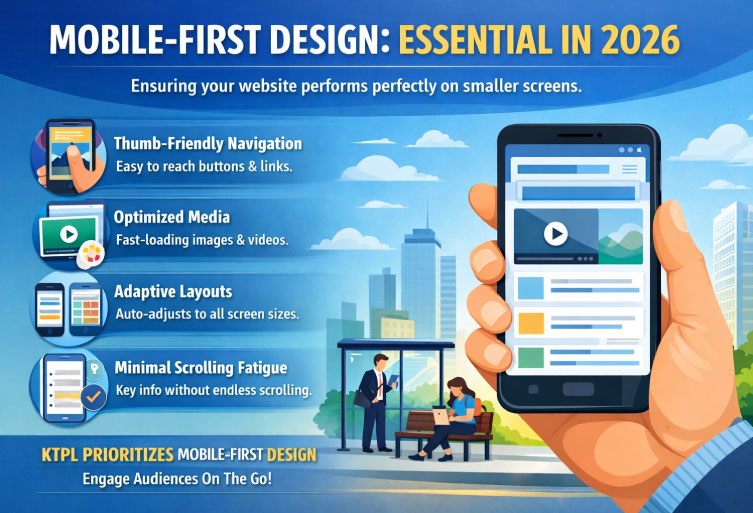
Mobile-First Design: Essential in 2026
- Thumb-Friendly Navigation: Key buttons and links should be easily reachable.
- Optimized Media: Images and videos should load quickly without sacrificing quality.
- Adaptive Layouts: Content should automatically rearrange for different screen sizes, maintaining readability and usability.
- Minimal Scrolling Fatigue: Important information should be accessible without excessive scrolling.
Continuous Testing and Optimization
- A/B Testing: Experiment with different layouts, headlines, and CTAs to identify what works best.
- User Feedback: Collect insights through surveys, feedback forms, or session recordings.
- Performance Analysis: Track metrics like bounce rates, session duration, and conversion rates.
- Iterative Updates: Make gradual improvements based on data rather than infrequent, large redesigns.
Conclusion: Crafting a Website That Drives Growth
Building a website in 2026 goes beyond creating a digital presence. It requires a user-centered approach, engaging content, mobile-first design, and strategic technology use.
KTPL – Business Growth Agency specializes in designing websites that not only look great but perform exceptionally, driving business growth and creating memorable experiences for users. By focusing on UX, personalization, and continuous improvement, your website becomes a powerful growth engine rather than just an online address.
A great website in 2026 is intuitive, visually appealing, content-rich, and adaptive—designed to meet users’ expectations today and anticipate the needs of tomorrow.
FAQs
Have questions? We’ve answered some of the most common queries to help you understand the topic better
Q1. What defines a great website in 2026?
A combination of seamless UX, mobile-first design, engaging content, and intelligent technology integration defines a great website.
Q2. How important is mobile optimization today?
It’s critical. Most users access websites via mobile devices, making responsive and mobile-first design essential.
Q3. Can personalized content improve user engagement?
Absolutely. Tailored experiences increase relevance, retention, and conversion rates.
Q4. How often should websites update content?
Ideally, content should be refreshed regularly—quarterly or more frequently—to stay relevant and optimize SEO.
Q5. Does minimalist design impact user experience?
Yes. Clean layouts with clear navigation enhance usability and make websites feel professional.
Want To Grow Your Business - Connect With KTPL
KTPL – Business Growth Agency, a creative solutions and business growth agency from India.
👉 Visit https://kirnanitechnologies.com
📞 Call us at +91 95093 33000
📧 Email us at contact@kirnanitechnologies.com


