


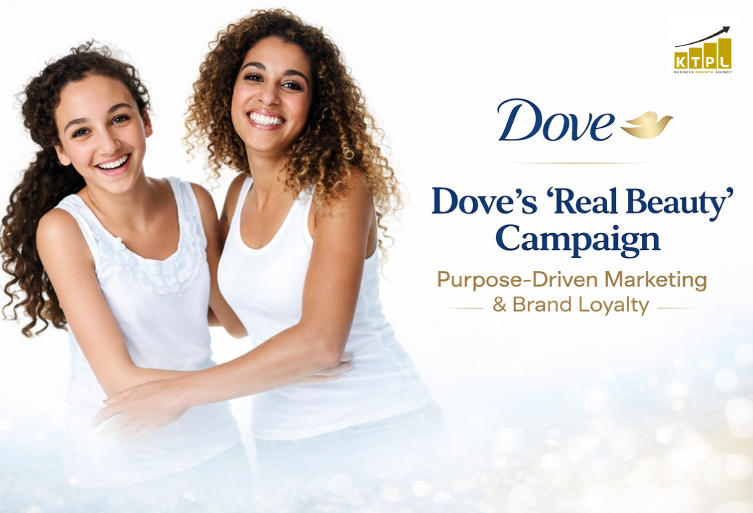
In the modern digital marketing era, brands are no longer judged only by product quality. Consumers now value authenticity, purpose, and emotional connection. One of the most powerful examples of this transformation is the Dove Real Beauty Campaign created by Dove, a personal care brand owned by Unilever.
Launched in 2004, the campaign changed the way beauty brands communicate with their audience. Instead of using unrealistic beauty standards and heavily edited models, the brand chose to highlight real women of different body types, ages, and ethnicities. This bold move shifted the focus from perfect appearances to confidence, authenticity, and self-acceptance.
Over the past two decades, this purpose-driven marketing strategy has not only reshaped the beauty industry but has also built deep brand loyalty and global trust among consumers.
This case study explores how the Real Beauty campaign became one of the most influential marketing strategies in modern branding and what businesses can learn from it.
The Birth of the Real Beauty Movement
Before the campaign began, research conducted by the brand revealed a shocking insight: only 2% of women worldwide considered themselves beautiful. This finding highlighted the negative impact of unrealistic beauty standards promoted in advertising and media.
Instead of ignoring the issue, the brand decided to confront it directly.
The Dove Real Beauty Campaign was launched with a mission to redefine beauty by showcasing real, unretouched women rather than professional models. The goal was not just to promote soap or skincare products but to change the cultural conversation around beauty.
This approach was revolutionary because beauty advertising traditionally focused on perfection. By breaking this pattern, the brand created an emotional narrative that resonated with millions of people globally.
The campaign quickly gained attention because it spoke to a deeper human truth — everyone wants to feel accepted and valued.
Challenging Traditional Beauty Standards
One of the most impactful aspects of the campaign was its direct challenge to conventional beauty ideals.
- Airbrushed images
- Unrealistic body proportions
- Perfect skin and features
- Limited representation of age and diversity
This representation allowed consumers to see themselves reflected in advertising for the first time. Instead of feeling pressured to look perfect, they felt encouraged to embrace their individuality.
The campaign’s message was simple but powerful:
Beauty should be a source of confidence, not anxiety.
By promoting inclusive beauty standards, the brand created a deeper emotional bond with its audience.
Purpose-Driven Marketing: Selling More Than Products
One of the biggest lessons from this campaign is the power of purpose-driven marketing.
Rather than focusing solely on product features, the brand built its communication around a social mission — improving women’s self-esteem.
This purpose was supported through the Dove Self-Esteem Project, an initiative designed to help young people develop confidence and positive body image.
Through educational workshops, school programs, and digital resources, the project has reached tens of millions of young people worldwide.
This strategy demonstrated an important marketing principle:
Consumers connect more strongly with brands that stand for something meaningful.
Instead of simply selling soap or body wash, the brand positioned itself as a champion of self-confidence and real beauty.
Emotional Storytelling That Built Global Engagement
Another reason for the campaign’s success was its strong use of emotional storytelling.
Rather than traditional advertisements, the campaign often focused on real stories and experiences. Some of the brand’s most memorable content explored how women perceive themselves versus how others see them.
These emotionally driven campaigns encouraged viewers to reflect on their own perceptions of beauty.
When audiences feel emotionally connected to a brand’s message, they are far more likely to remember it, share it, and trust it.
The Real Beauty campaign succeeded because it transformed marketing into a conversation about identity, confidence, and self-worth.
Consistency Over Two Decades
Many marketing campaigns create short-term buzz but fade quickly. The Real Beauty initiative succeeded because of its long-term consistency.
For more than 20 years, the brand has continued to promote the same message: authentic beauty matters.
This consistency strengthened the brand’s credibility and reinforced consumer trust.
Recently, the brand also made a bold commitment: it pledged not to use artificial intelligence to create or distort women’s images in advertising.
This decision reinforced the campaign’s core principle — promoting real, authentic beauty without digital manipulation.
In a time when AI-generated visuals and unrealistic filters dominate social media, this stance further strengthened the brand’s authenticity.
Global Campaign With Local Impact
Although the campaign started as a global initiative, it has evolved to address regional cultural challenges.
Different countries face different beauty pressures. To address this, the brand adapted its messaging for local audiences.
For example, in India, the campaign launched initiatives challenging social beauty expectations and encouraging women to reject unfair appearance-based judgments.
This approach ensured that the campaign remained culturally relevant while maintaining its global message.
By combining global branding with local storytelling, the campaign built a stronger connection with audiences worldwide.
Commercial Success and Business Impact
Purpose-driven marketing is often criticized as being idealistic rather than profitable. However, the success of this campaign proved the opposite.
Before the campaign launched, the brand generated approximately $2.5 billion in annual sales.
Within a decade of launching the Real Beauty campaign, revenue increased to over $4 billion.
- Stronger brand trust
- Increased customer loyalty
- Higher brand recall
- Positive social impact
This approach turned everyday customers into loyal brand advocates.
How the Campaign Built Strong Brand Loyalty
Brand loyalty does not happen overnight. It develops when customers consistently feel valued and understood.
The Real Beauty campaign strengthened loyalty in several ways:
1. Authentic Representation
Consumers appreciated seeing real people instead of unrealistic models. This honesty built credibility.
2. Emotional Connection
The campaign addressed real insecurities and encouraged self-confidence, creating deep emotional engagement.
3. Consistent Messaging
Maintaining the same core message for decades reinforced trust and reliability.
4. Social Impact
The brand supported real-world programs that helped improve self-esteem among young people.
Together, these factors transformed the brand from a simple product provider into a trusted advocate for positive self-image.
Marketing Lessons Businesses Can Learn
The success of the Real Beauty campaign provides valuable insights for businesses and marketers.
Purpose Builds Stronger Brands
Consumers increasingly support brands that represent meaningful values rather than purely commercial interests.
Authenticity Matters
Modern audiences quickly detect inauthentic marketing. Honest messaging builds long-term trust.
Emotional Storytelling Drives Engagement
Stories that connect with human emotions create stronger brand recall than traditional advertising.
Long-Term Consistency Wins
Short campaigns create awareness, but consistent messaging builds lasting brand equity.
For digital marketing agencies and growth strategists like KTPL – Business Growth Agency, this campaign demonstrates how purpose-driven strategies can transform brand perception and customer loyalty.
The Future of Purpose-Driven Branding
The marketing landscape continues to evolve, especially with the rise of AI content, social media filters, and digital influence.
However, one principle remains clear: authenticity builds trust.
Brands that focus on real human experiences, social responsibility, and honest storytelling will continue to stand out in a crowded marketplace.
The Real Beauty campaign set a benchmark for modern branding, proving that marketing can be both ethical and profitable.
More importantly, it demonstrated that powerful campaigns are not just about selling products — they are about changing conversations and inspiring confidence.
FAQs
Have questions? We’ve answered some of the most common queries to help you understand the topic better
Q1. What is the Dove Real Beauty Campaign?
The Dove Real Beauty Campaign is a global marketing initiative launched in 2004 to challenge unrealistic beauty standards and promote confidence by showcasing real women instead of professional models.
Q2. Why was the Real Beauty campaign created?
The campaign was inspired by research showing that only a small percentage of women considered themselves beautiful. It aimed to improve self-confidence and redefine beauty standards.
Q3. How did the campaign impact Dove’s brand?
The campaign significantly increased brand loyalty, improved global trust, and helped grow the brand’s revenue from around $2.5 billion to over $4 billion within a decade.
Q4. What is the Dove Self-Esteem Project?
The Dove Self-Esteem Project is an educational initiative that helps young people develop body confidence and positive self-image through workshops and learning programs.
Q5. What marketing lesson does this campaign teach?
The campaign proves that purpose-driven marketing, authenticity, and emotional storytelling can create strong brand loyalty and long-term business growth.
Want To Grow Your Business - Connect With KTPL
KTPL – Business Growth Agency, a creative solutions and business growth agency from India.
👉 Visit https://kirnanitechnologies.com
📞 Call us at +91 95093 33000
📧 Email us at contact@kirnanitechnologies.com


