


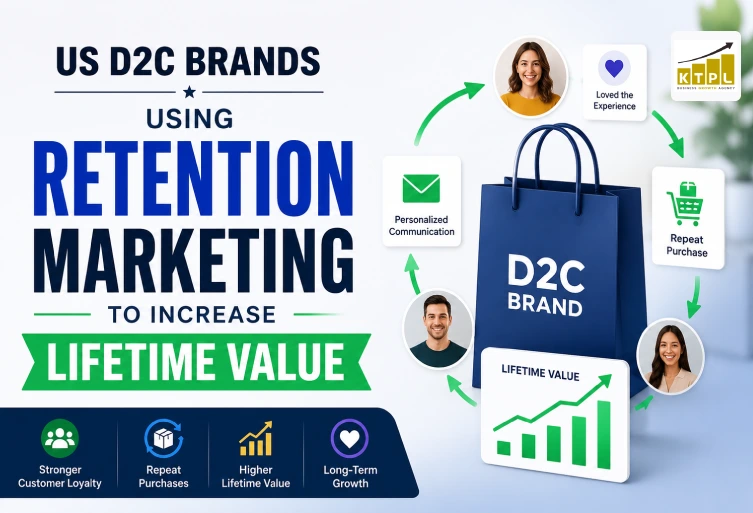
The ecommerce industry in the United States has changed rapidly over the last few years. Rising advertising costs, increasing competition, and changing consumer behavior have pushed brands to rethink how they grow online. Today, successful US D2C Brands are focusing less on one-time sales and more on building long-term customer relationships through retention marketing.
Direct-to-consumer businesses now understand that sustainable growth does not come only from running paid ads on Google, Meta, or TikTok. Instead, the real profitability comes from increasing Customer Lifetime Value (LTV), improving repeat purchase rates, and creating loyal customers who continue buying for months or years.
Modern retention marketing combines customer psychology, automation, personalization, loyalty programs, and data-driven communication strategies. Leading D2C brands in the United States use advanced lifecycle marketing systems to keep customers engaged long after the first purchase.
At KTPL – Business Growth Agency, we closely analyze ecommerce growth trends and retention systems that help brands scale profitably in competitive digital markets.
What Are US D2C Brands?
US D2C Brands are businesses that sell products directly to customers through their own websites, apps, or digital platforms instead of relying heavily on third-party retailers. This business model allows companies to fully control customer experience, branding, marketing, customer service, and retention strategies. Over the past decade, the D2C model has become highly popular because it enables brands to build stronger relationships with their audiences while collecting valuable customer data.
Many modern D2C brands operate in industries like skincare, fashion, health supplements, pet care, home decor, fitness products, and sustainable consumer goods. Unlike traditional retail businesses, D2C companies interact directly with buyers, which allows them to personalize communication and improve retention marketing efforts. This direct customer connection helps brands create long-term loyalty while increasing revenue from repeat customers.
The biggest advantage of the D2C model is data ownership. Brands can track customer behavior, shopping habits, product preferences, and engagement patterns to optimize marketing campaigns. This data becomes the foundation for powerful retention marketing systems that improve Customer Lifetime Value over time.
Successful US D2C Brands focus heavily on customer experience optimization, post-purchase engagement, subscription models, and personalized communication to maintain long-term profitability in competitive ecommerce markets.
Why Retention Marketing Matters for US D2C Brands
Retention marketing has become one of the most important growth strategies for ecommerce businesses because acquiring new customers is becoming more expensive every year. Paid advertising costs on major platforms continue rising, which makes it difficult for brands to maintain profitability through acquisition alone. As a result, successful US D2C Brands are shifting their focus toward retaining existing customers and maximizing long-term value.
Studies consistently show that repeat customers spend more money, purchase more frequently, and are easier to convert compared to new buyers. Existing customers already trust the brand, which reduces friction during future purchases. This means brands can generate higher revenue without continuously increasing advertising budgets.
Retention marketing also helps businesses create stronger emotional relationships with customers. When customers feel connected to a brand through personalized experiences, rewards, and consistent communication, they become loyal advocates rather than occasional buyers. This emotional loyalty improves brand reputation and increases referral-based growth.
Modern retention strategies include email automation, SMS marketing, loyalty programs, subscription systems, personalized product recommendations, and lifecycle marketing campaigns. Together, these systems help brands reduce churn and increase Customer Lifetime Value significantly.
How US D2C Brands Increase Customer Lifetime Value
The most successful ecommerce brands in the United States use multiple retention marketing techniques together to maximize profitability. Instead of depending on short-term sales spikes, these companies build long-term systems that continuously engage customers after the initial purchase. By improving repeat purchases and reducing customer churn, brands create predictable recurring revenue streams.
Retention-focused brands analyze customer data carefully to understand shopping behavior, reorder frequency, and engagement patterns. This allows them to deliver highly personalized experiences that increase customer satisfaction and improve loyalty. Companies that prioritize retention marketing often achieve much stronger long-term growth than brands relying only on acquisition campaigns.
Below are some of the most effective retention marketing strategies used by leading US D2C Brands to increase Customer Lifetime Value and maintain sustainable ecommerce growth.
Subscription-First Business Models
Subscription-based selling has become one of the strongest retention strategies in modern ecommerce. Many D2C brands selling consumable products encourage customers to subscribe for automatic recurring deliveries instead of making one-time purchases. This creates predictable monthly revenue while improving long-term customer retention.
Subscription models are especially effective for industries like vitamins, supplements, skincare, pet food, grooming products, and coffee. Customers appreciate the convenience of automatic deliveries, while brands benefit from stable recurring income and lower churn rates. Successful subscription systems focus heavily on flexibility and customer convenience.
Many leading brands allow customers to skip deliveries, swap products, pause subscriptions, or change delivery frequencies without difficulty. This reduces frustration and improves long-term customer satisfaction. A complicated cancellation process often increases churn and damages customer trust.
AG1’s Subscription Retention Strategy
AG1 has built one of the strongest subscription-focused D2C ecosystems in the health supplement industry. Their business model heavily emphasizes recurring monthly subscriptions instead of one-time purchases. By offering bundled savings, educational onboarding, and personalized guidance, the company improves customer retention significantly.
AG1 focuses on educating customers about the benefits of consistent supplement usage. Their automated onboarding emails explain product usage, health benefits, and lifestyle integration. This educational approach helps customers see long-term value, reducing early-stage churn.
The brand also improves retention by making subscription management flexible and user-friendly. Customers can adjust shipment timing, skip deliveries, or change plans easily without friction. This customer-centric subscription strategy helps maximize Customer Lifetime Value while building strong brand loyalty.
Personalized Customer Experiences
Modern ecommerce customers expect personalized experiences instead of generic marketing messages. Leading US D2C Brands use customer data, shopping behavior, and zero-party data to create highly relevant communication and product recommendations. Personalization increases engagement, improves conversion rates, and strengthens customer loyalty.
Zero-party data includes information customers willingly share, such as skincare concerns, dietary preferences, shopping interests, fitness goals, or product expectations. Brands use this information to deliver customized product suggestions and targeted lifecycle campaigns that feel more relevant to the customer.
Personalized retention marketing also helps reduce customer fatigue. Instead of sending broad promotional emails, brands deliver targeted content based on customer needs and buying behavior. This increases engagement while improving long-term customer relationships.
Many D2C companies now use AI-powered recommendation engines, predictive analytics, and segmentation tools to personalize the customer journey at scale. These systems improve customer experience while increasing repeat purchase rates.
Glossier and True Botanicals Retention Approach
Glossier and True Botanicals are excellent examples of brands using personalized retention marketing successfully. Both companies collect customer preference data during the shopping process and use it to create highly customized post-purchase communication.
These brands send automated skincare education emails, replenishment reminders, personalized product recommendations, and targeted promotional campaigns based on customer needs. Their lifecycle marketing strategies focus on helping customers achieve better product results, which improves satisfaction and long-term loyalty.
Personalized experiences make customers feel understood and valued. This emotional connection often becomes one of the strongest drivers of repeat purchases and long-term Customer Lifetime Value.

The Second Purchase Retention Strategy
One of the most important stages in ecommerce retention marketing is encouraging customers to make a second purchase quickly after their first order. Many brands lose customers after the initial purchase because they fail to maintain engagement during the post-purchase period.
The highest customer churn often happens between the first and second purchase. Successful US D2C Brands actively work to reduce this drop-off through automated retention campaigns and targeted incentives.
Brands commonly use email automation, SMS reminders, discount offers, loyalty rewards, and product recommendations to encourage repeat purchases. These campaigns are carefully timed to re-engage customers before interest declines.
The second purchase is extremely important because customers who buy twice are much more likely to become long-term repeat buyers. Once customers build a habit around a product or brand, retention rates improve dramatically.
Automated Win-Back Campaigns
Many ecommerce businesses use automated win-back campaigns to recover inactive customers. These campaigns typically include personalized discounts, free shipping offers, product bundles, or limited-time promotions to encourage another purchase.
Win-back campaigns often use customer purchase history and browsing behavior to create highly relevant offers. This targeted approach improves conversion rates while increasing long-term customer retention.
Brands that optimize their second purchase strategy usually experience stronger Customer Lifetime Value growth compared to businesses focused only on customer acquisition.
Loyalty Programs and VIP Communities
Loyalty programs have evolved significantly in modern ecommerce. Instead of offering simple reward points, many US D2C Brands now build community-driven loyalty ecosystems that create emotional engagement and exclusivity.
Tiered loyalty systems commonly include Bronze, Silver, Gold, or VIP membership levels that reward customers based on spending or engagement. Higher-tier customers receive exclusive benefits such as early access to product launches, birthday gifts, special discounts, private communities, and member-only experiences.
These loyalty programs help brands strengthen customer relationships while increasing repeat purchases and average order value. Customers feel emotionally connected to the brand when they receive exclusive treatment and recognition.
Community-driven retention strategies also improve word-of-mouth marketing. Loyal customers are more likely to recommend products to friends, leave reviews, and share experiences on social media.
Community Building in Retention Marketing
Many modern D2C brands now invest heavily in community building through Facebook groups, Discord channels, ambassador programs, and exclusive online memberships. These communities create stronger emotional relationships between customers and brands.
When customers feel part of a brand community, they become more loyal and engaged over time. Community-led retention marketing often generates stronger long-term retention compared to discount-heavy promotional strategies.
Email and SMS Automation Systems
Email and SMS marketing remain two of the highest-performing retention channels in ecommerce. Leading US D2C Brands use automation tools to create personalized customer journeys that continue long after the first purchase.
- Klaviyo
- Attentive
- Omnisend
- Postscript
- Mailchimp
Automation ensures customers receive relevant communication at the right time without requiring constant manual work. This improves efficiency while increasing customer engagement.
Why Automated Retention Marketing Works
Automated communication keeps customers connected to the brand consistently. Timely reminders, educational content, and personalized recommendations encourage repeat purchases naturally without aggressive sales tactics.
Brands that optimize email and SMS retention systems often generate a significant percentage of their total revenue from repeat customers. These channels also provide high ROI compared to paid acquisition campaigns.
Chewy’s Retention Marketing Success Story
Chewy is widely recognized as one of the best examples of retention-focused ecommerce growth in the United States. The company transformed the pet care industry by creating exceptional customer experiences combined with highly effective subscription systems.
Their Autoship subscription model encourages recurring purchases while offering customers convenience and discounts. Chewy also uses predictive reorder timing to remind customers when pet food or supplies may be running low.
What makes Chewy unique is its emotional customer experience strategy. The brand is known for handwritten cards, personalized customer support, and compassionate service during emotional situations such as pet loss. This emotional loyalty creates extremely strong customer retention.
Chewy proves that retention marketing is not only about automation and analytics. Emotional brand connection and customer experience also play a major role in increasing Customer Lifetime Value.
The Future of Retention Marketing for US D2C Brands
The future of retention marketing will become even more data-driven and personalized. AI-powered recommendation systems, predictive analytics, and omnichannel customer experiences will continue shaping the ecommerce industry.
Brands are increasingly investing in lifecycle marketing, customer segmentation, and behavioral analytics to improve retention performance. Companies that build strong retention systems today will have a major competitive advantage in the future.
As acquisition costs continue increasing, retention marketing will remain one of the most profitable growth strategies for ecommerce businesses. Successful US D2C Brands understand that long-term customer relationships are more valuable than short-term sales spikes.
At KTPL – Business Growth Agency, we believe that brands focusing on customer loyalty, personalized experiences, and lifecycle marketing will dominate the next generation of ecommerce growth.
FAQs
Have questions? We’ve answered some of the most common queries to help you understand the topic better
Q1. What are US D2C Brands?
US D2C Brands are businesses that sell products directly to consumers through their own websites or digital platforms without depending heavily on retail stores.
Q2. Why is retention marketing important for D2C brands?
Retention marketing helps ecommerce brands increase repeat purchases, reduce customer churn, improve loyalty, and maximize Customer Lifetime Value.
Q3. Which industries benefit most from D2C retention marketing?
Industries like skincare, supplements, pet care, fashion, grooming, and fitness products benefit heavily from retention marketing strategies.
Q4. What tools do D2C brands use for retention marketing?
Popular tools include Klaviyo, Attentive, Omnisend, Mailchimp, Recharge, and customer data platforms for automation and personalization.
Q5. How do subscription models improve Customer Lifetime Value?
Subscription models create recurring revenue and encourage long-term customer relationships through automatic deliveries and personalized customer experiences.
Want To Grow Your Business - Connect With KTPL
KTPL – Business Growth Agency, a creative solutions and business growth agency from India.
👉 Visit https://kirnanitechnologies.com
📞 Call us at +91 95093 33000
📧 Email us at contact@kirnanitechnologies.com


