


In today’s digital-first economy, customer expectations have completely changed. People no longer want just products—they expect instant delivery, personalized experiences, accurate recommendations, and seamless support across every interaction. Among global companies, Amazon stands as one of the strongest examples of how data and automation can reshape the entire customer journey.
By 2026, has transformed itself into a highly intelligent commerce ecosystem where every action is driven by data, machine learning, predictive analytics, and automation systems. From the moment a user visits the platform to post-purchase support, every touchpoint is optimized to reduce friction and increase satisfaction.
This blog explores in detail how uses data and automation across its ecosystem to deliver one of the most advanced customer experiences in the world.
1. The Core of Amazon’s Strategy: Data-Driven Commerce
At the heart of lies one powerful principle: every customer interaction generates data, and every data point improves the next interaction.
- Search queries
- Click patterns
- Time spent on product pages
- Purchase history
- Device usage
- Location-based behavior
- Return activity
In simple terms, instead of waiting for customers to tell what they want, the platform predicts it before they even ask.
2. Pre-Purchase Stage: Hyper-Personalization at Scale
The customer journey on begins long before checkout. Even the homepage is not static—it is dynamically generated based on individual behavior.
Predictive Product Discovery
One of the most powerful systems inside is its predictive recommendation engine. It analyzes thousands of behavioral signals in real time to suggest products that align with user intent.
- Past purchases
- Similar user behavior
- Seasonal demand
- Trending products
- Price sensitivity
- Browsing patterns
Anticipatory Commerce Model
A major innovation in is anticipatory commerce. Instead of waiting for demand, the system forecasts what users are likely to buy in the near future.
For example, if a user frequently purchases office supplies every three months, the system predicts the cycle and prepares recommendations in advance.
In some cases, inventory is even positioned closer to predicted demand zones before orders are placed. This significantly reduces delivery time and improves fulfillment efficiency.
Conversational AI Search Experience
Search behavior inside has evolved significantly. Instead of simple keyword-based search, users now interact with AI-driven conversational systems.
- Complex queries
- Intent behind questions
- Product comparisons
- Context-based needs
The system interprets intent and delivers highly relevant results instantly.
Real-Time Personalization Engine
Every second, the personalization engine of updates product recommendations based on live activity. Even a small action like hovering over a product can influence future suggestions.
This real-time adaptation ensures that no two users see the same homepage, making the experience highly unique and personalized.
3. Fulfillment Stage: Automation, Robotics & Smart Logistics
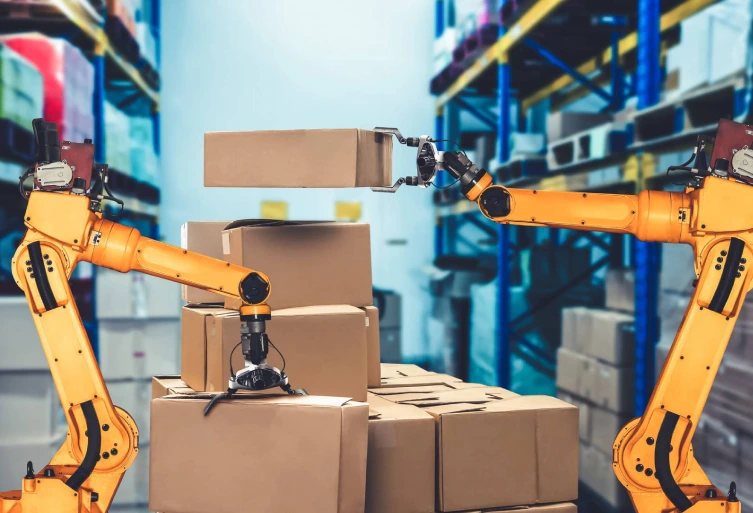
Once an order is placed, the operational intelligence of takes over. This is where automation and robotics play a critical role in delivering speed and accuracy.
Robotic Warehousing Systems
Modern fulfillment centers of are powered by advanced robotics systems that handle sorting, picking, and transporting goods.
- Reduce manual effort
- Increase processing speed
- Improve accuracy
- Optimize warehouse space
AI-Powered Warehouse Optimization
- Fastest movement routes
- Storage efficiency
- Order batching strategies
- Real-time congestion management
Predictive Inventory Placement
One of the most advanced capabilities of is predictive inventory distribution.
By analyzing historical sales data and regional demand patterns, products are stored in locations where they are most likely to be purchased.
- Faster delivery times
- Reduced logistics costs
- Improved product availability
- Better customer satisfaction
Smart Delivery Network
- Traffic conditions
- Weather updates
- Delivery density
- Driver availability
4. Post-Purchase Stage: Intelligent Customer Support
The relationship between customers and does not end after purchase. In fact, post-purchase experience is one of the most critical parts of its ecosystem.
AI-Based Support Systems
- Track orders
- Process refunds
- Handle returns
- Provide product information
Predictive Issue Resolution
A unique innovation in is predictive support. Instead of waiting for customers to report problems, AI systems detect potential issues in advance.
- Delivery delays are proactively communicated
- Damaged items are replaced automatically
- Order mismatches are corrected before complaints
Automated Return Processing
- Return frequency
- Product condition patterns
- Fraud detection signals
5. Data-Driven Marketing & Engagement Systems
Beyond shopping and logistics, uses data intelligence to power marketing and engagement strategies.
Personalized Marketing Automation
- Personalized offers
- Targeted discounts
- Category-specific promotions
Advanced Advertising Intelligence
- Discovery patterns
- Purchase behavior
- Conversion paths
Real-Time Customer Engagement
Engagement systems continuously track user behavior and trigger relevant messages instantly. This ensures that communication is always timely, relevant, and contextual.
6. Why Amazon’s System Works So Effectively
The success of is not just due to technology but due to how all systems are connected.
- Unified data ecosystem
- Real-time decision-making
- Deep learning models
- Large-scale automation
- Continuous optimization loops
7. Business Lessons from Amazon’s Model
- Data must drive every decision
- Automation improves scalability
- Personalization increases retention
- Predictive systems reduce friction
- Customer experience is everything
At KTPL- Business Growth Agency, we help businesses implement similar data-driven systems to improve customer experience, automate operations, and scale effectively in competitive markets.
Conclusion
The transformation of into a global commerce leader is not accidental—it is the result of deeply integrated data systems, intelligent automation, and predictive technologies working together.
From personalized recommendations to robotic warehouses and predictive customer support, every touchpoint is carefully optimized to reduce friction and increase value.
In 2026 and beyond, the companies that succeed will be those that adopt the same mindset: using data not just to analyze the past, but to shape the future.
FAQs
Have questions? We’ve answered some of the most common queries to help you understand the topic better
Q1. How does Amazon use data in its business model?
uses data from user behavior, searches, and purchases to personalize recommendations, optimize logistics, and improve customer experience.
Q2. What role does automation play in Amazon’s operations?
Automation helps in warehouses, delivery systems, customer support, and inventory management, improving speed and efficiency.
Q3. How does Amazon predict customer needs?
It uses AI models that analyze browsing history, purchase cycles, and behavioral patterns to forecast demand.
Q4. Does Amazon use robotics in fulfillment centers?
Yes, robotics systems handle sorting, packaging, and internal warehouse movement to increase productivity.
Q5. Why is Amazon’s customer experience so strong?
Because every stage—from browsing to delivery—is powered by real-time data, personalization, and predictive systems that reduce friction.
Want To Grow Your Business - Connect With KTPL
KTPL – Business Growth Agency, a creative solutions and business growth agency from India.
👉 Visit https://kirnanitechnologies.com
📞 Call us at +91 95093 33000
📧 Email us at contact@kirnanitechnologies.com


