


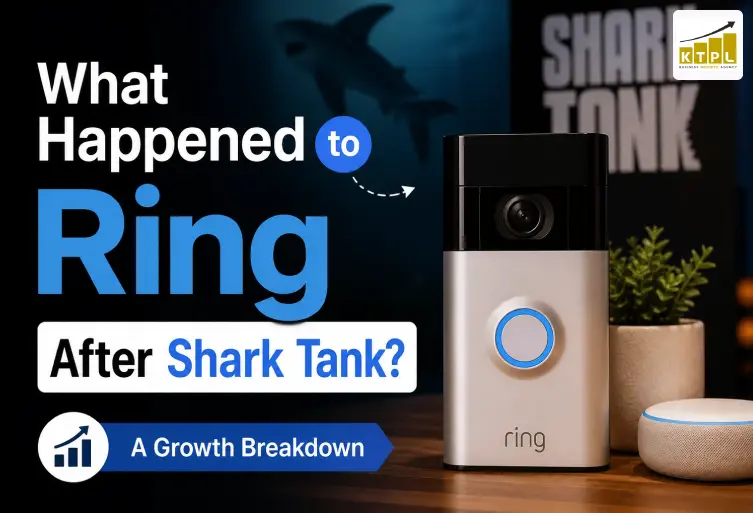
The story of Ring is one of the most talked-about success journeys in modern startup history. It is often referenced in discussions about Shark Tank, rejection stories, and billion-dollar pivots. What makes Ring’s journey so powerful is not just its outcome, but the path it took—from being turned down on national television to becoming a key part of Amazon’s smart home empire.
Today, Ring is a global leader in home security, but its early days were filled with doubt, rejection, and uncertainty. This blog takes a deep look at what happened after Ring appeared on Shark Tank, how it evolved, and why its growth story is studied in business and startup ecosystems worldwide.
The Beginning: The Idea Behind Ring Before Shark Tank
Before Ring became a household name, it started as a simple idea called DoorBot. The founder, Jamie Siminoff, wanted to solve a basic problem—homeowners needed a smarter way to see and communicate with visitors without opening the door.
At that time, smart home technology was still in its early stage. Most people were unfamiliar with connected devices, and home security systems were largely traditional, expensive, and complex.
- A WiFi-enabled video doorbell
- Mobile-based visitor communication
- Basic home entry monitoring
The Shark Tank Pitch: A Defining Moment
When DoorBot appeared on Shark Tank, it was introduced as a smart doorbell that allows users to see and talk to visitors through their smartphones.
The concept impressed the Sharks on a technical level, but they were not convinced about its business potential.
Key concerns raised on Shark Tank:
- The smart home market was still developing
- Uncertainty about mass adoption
- High manufacturing and scaling costs
- Strong competition from traditional security companies
- Lack of proven large-scale revenue stability
Because of these concerns, all the Sharks decided not to invest.
At that moment, it looked like just another rejected pitch. However, this appearance on Shark Tank would later become a turning point that changed everything.
Immediate Reaction After Shark Tank Appearance
Although Ring left the show without a deal, something unexpected happened almost immediately.
The exposure from Shark Tank created massive visibility. Viewers were curious about the product, and many searched for it online after the episode aired.
- A sharp increase in website traffic
- Growing product awareness
- Early organic sales growth
- Strong word-of-mouth discussions across tech communities
For Ring, this visibility became the first major growth catalyst.
The Transformation: From DoorBot to Ring
After the Shark Tank appearance, the company made a crucial decision—rebranding.
The name “DoorBot” was functional but limited. It sounded like a single-purpose device rather than a complete security solution.
- A full-circle security system
- A connected smart home ecosystem
- Simplicity and modern technology
- A stronger emotional connection with safety
Early Growth Phase After Shark Tank
Following the rejection on Shark Tank, Ring focused heavily on improving its product and expanding its capabilities.
- Enhancing video quality and reliability
- Improving mobile app performance
- Expanding product features for better usability
- Strengthening cloud storage and security infrastructure
This period proved something important: rejection does not stop momentum if the product solves a real problem.
Market Timing: Why Ring Started to Grow
One of the most important reasons for Ring’s success after Shark Tank was timing.
- Increased smartphone adoption
- Growing interest in home automation
- Rising concerns about home security
- Expansion of high-speed internet availability

Product Expansion: Building a Full Security Ecosystem
One of the smartest decisions Ring made after Shark Tank was expanding beyond a single product.
Instead of remaining a video doorbell company, Ring evolved into a complete home security ecosystem.
- Video doorbells
- Indoor security cameras
- Outdoor surveillance systems
- Motion detection devices
- Smart lighting and alarm systems
Amazon Acquisition: The Game-Changing Moment
A major milestone in Ring’s journey came when Amazon acquired the company.
This acquisition marked a major shift in scale, resources, and global reach.
- Access to global distribution channels
- Integration with Alexa smart home ecosystem
- Advanced cloud infrastructure support
- Strong investment in AI and security innovation
- Faster product development cycles
In many Shark Tank discussions, this acquisition is often highlighted as one of the biggest “missed investments” in the show’s history.
Growth Breakdown: How Ring Became a Billion-Dollar Brand
Ring’s success after Shark Tank can be broken into several key growth drivers.
1. Strategic Product Expansion
Ring moved from a single device to a full ecosystem. This increased customer lifetime value and brand dependency.
2. Strong Market Demand
- Remote monitoring
- Affordable security systems
- Smartphone-based control
3. Amazon Ecosystem Advantage
Integration with Amazon services and Alexa increased adoption rates significantly. It also improved user experience and product accessibility.
4. Brand Trust and Visibility
Even after the Shark Tank rejection, the brand maintained strong visibility, which continued to attract customers over time.
5. Continuous Innovation
- Better motion detection
- AI-based alerts
- Improved cloud video storage
- Smarter home integration systems
Why Shark Tank Rejection Didn’t Stop Ring
The Shark Tank rejection is often misunderstood as a failure moment. In reality, it played a much more complex role.
- Increased public awareness of the product
- Forced the company to refine its positioning
- Helped validate early market interest
- Encouraged faster innovation and branding changes
Lessons From Ring’s Shark Tank Journey
The Ring story offers several powerful lessons for entrepreneurs and startups.
1. Timing is critical
Even strong ideas may fail if the market is not ready.
2. Exposure matters as much as funding
The Shark Tank appearance gave Ring massive visibility that money alone couldn’t provide.
3. Pivoting creates opportunity
Rebranding from DoorBot to Ring allowed the company to scale beyond a single product.
4. Rejection is not final
Many successful companies have faced rejection before achieving success.
5. Execution beats ideas
The difference between failure and success often lies in how well an idea is executed over time.
Ring Today: A Smart Home Security Leader
Today, Ring is one of the most recognized names in home security technology. It is widely used across households globally and remains a key part of Amazon’s smart home ecosystem.
- Millions of active users worldwide
- Leadership in video doorbell technology
- Integration with modern smart home systems
- Continuous innovation in AI-based security
Conclusion
The journey of Ring proves that rejection is not the end of innovation. When the company appeared on Shark Tank, it did not receive funding, but it gained something arguably more valuable—visibility and validation.
Through strategic rebranding, market timing, product expansion, and eventually Amazon’s support, Ring transformed into a global smart home security leader.
For entrepreneurs, the story is a reminder that success is rarely immediate. It is built through persistence, adaptation, and continuous improvement.
FAQs
Have questions? We’ve answered some of the most common queries to help you understand the topic better
Q1. Did Ring get a deal on Shark Tank?
No, Ring did not receive any investment from the Sharks during its pitch.
Q2. What was Ring called on Shark Tank?
It was originally called DoorBot during its Shark Tank appearance.
Q3. Why did Shark Tank reject Ring?
The Sharks felt the market was too early and had concerns about scalability and competition.
Q4. Who owns Ring now?
Ring is currently owned by Amazon after its acquisition.
Q5. Is Ring still growing today?
Yes, Ring continues to expand as part of Amazon’s smart home ecosystem.
Want To Grow Your Business - Connect With KTPL
KTPL – Business Growth Agency, a creative solutions and business growth agency from India.
👉 Visit https://kirnanitechnologies.com
📞 Call us at +91 95093 33000
📧 Email us at contact@kirnanitechnologies.com


