


Running a Shopify store is easy. Scaling it profitably is where the real challenge begins. Many store owners launch their stores with great products and attractive designs, but after the initial growth phase, sales often slow down. This is where smart scaling strategies become essential.
Successful Shopify Merchants understand that growth does not come from luck. It comes from the right combination of powerful apps, strong conversion rate optimization (CRO), and well-managed paid advertising campaigns. These three elements work together to increase revenue, improve customer retention, and maximize return on investment.
In today’s competitive eCommerce landscape, relying only on organic traffic is no longer enough. Merchants need systems that automate operations, improve the customer journey, and bring qualified traffic consistently. From upsell apps and email automation tools to landing page optimization and high-converting Meta ads, scaling requires a complete strategy.
This blog explains how modern Shopify Merchants use apps, CRO, and paid ads to build long-term growth. Whether you are a small business owner or an established brand, these strategies can help you increase conversions and grow faster without wasting your marketing budget.
Why Shopify Merchants Need a Scalable Growth Strategy
Many online stores generate traffic but fail to convert visitors into buyers. Others get sales but struggle with repeat purchases and profitability. This happens because growth without structure creates problems instead of progress.
Smart Shopify Merchants focus on scalable systems instead of short-term wins. They understand that increasing traffic alone is not enough. What matters most is improving customer experience, boosting average order value, and reducing customer acquisition costs.
A scalable growth strategy helps merchants manage inventory better, automate repetitive tasks, improve retention, and track every stage of the buyer journey. It also helps avoid dependency on a single traffic source like Instagram or Facebook ads.
When apps, CRO, and paid ads are used together, they create a growth engine. Paid ads bring targeted visitors, CRO improves the buying experience, and apps help automate upsells, support, and retention. This creates stable and profitable scaling.
Without this structure, many merchants keep spending more but earning less. That is why serious growth starts with strategy.
The Role of Shopify Apps in Business Growth
Apps are one of the biggest advantages of the Shopify ecosystem. They help merchants automate operations, improve customer engagement, and increase store efficiency without custom development.
Top-performing Shopify Merchants do not install dozens of apps blindly. They choose the right tools that solve specific business problems and improve customer experience.
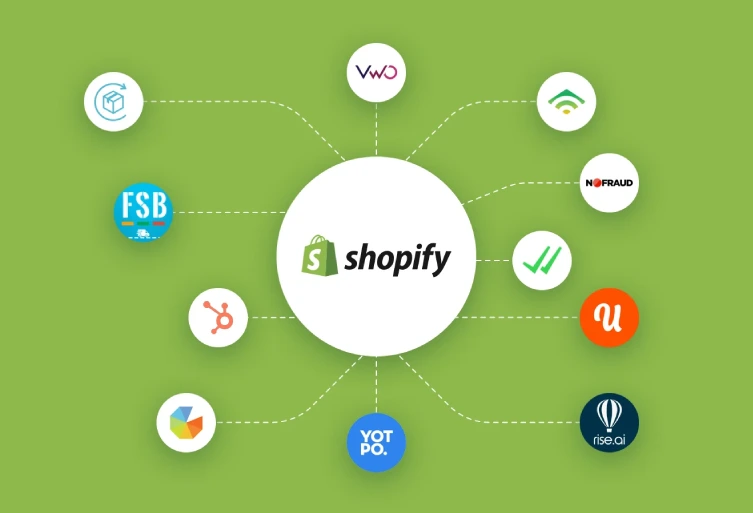
Apps help in areas like abandoned cart recovery, email marketing, loyalty programs, subscription models, product reviews, live chat, inventory control, and post-purchase upselling. The goal is not to use more apps, but to use smarter apps.
For example, if a merchant struggles with cart abandonment, using an email recovery app can recover lost sales. If average order value is low, upsell and bundle apps can increase order size. If repeat purchases are weak, loyalty and rewards apps can improve retention.
The right app stack saves time, improves efficiency, and directly impacts revenue.
Best App Categories for Shopify Merchants
Not every app is necessary for every store. However, some categories consistently deliver strong results for growing brands.
Email and SMS marketing apps help merchants stay connected with customers through automated campaigns, product launches, and abandoned cart reminders. These tools improve retention and lifetime value.
Upsell and cross-sell apps increase average order value by recommending related products, bundles, or one-click post-purchase offers.
Review apps build trust by showing customer feedback, ratings, and user-generated content. This improves conversion rates significantly.
Subscription apps are excellent for businesses selling repeat-purchase products like skincare, supplements, and consumables.
Analytics apps provide deeper insights into user behavior, helping merchants make better marketing decisions.
Support and live chat apps improve customer satisfaction and reduce drop-offs during checkout.
The best Shopify Merchants select apps based on customer journey gaps, not trends.
Avoiding App Overload
Many store owners make the mistake of installing too many apps. This creates slower site speed, poor mobile performance, and checkout friction.
Speed matters in eCommerce. A slow store increases bounce rate and reduces trust. Customers expect pages to load instantly, especially on mobile devices.
Instead of adding multiple apps with overlapping functions, merchants should audit performance regularly. Remove unused tools and prioritize lightweight, high-impact solutions.
It is better to use five high-performing apps than twenty unnecessary ones.
Scaling is not about complexity. It is about efficiency.
CRO: The Secret Weapon for Shopify Merchants
Conversion Rate Optimization is one of the most profitable growth strategies in eCommerce. Instead of spending more money to bring traffic, CRO helps convert more of the visitors you already have.
This is why advanced Shopify Merchants treat CRO as a long-term priority. Even a small improvement in conversion rate can create major revenue growth.
If your store gets 10,000 visitors per month and converts at 1%, improving to 2% can double your sales without increasing ad spend.
CRO focuses on improving trust, usability, speed, product presentation, checkout flow, and buyer confidence. It is about removing friction and helping users make purchase decisions faster.
This includes everything from homepage structure to checkout optimization.
Product Page Optimization
Your product page is where buying decisions happen. Weak product pages kill conversions even when traffic quality is excellent.
High-converting Shopify Merchants focus heavily on product pages because this is where trust must be built quickly.
Clear product images, zoom functionality, video demonstrations, detailed descriptions, size guides, FAQs, reviews, and trust badges all improve buyer confidence.
Product titles should be simple and benefit-focused. Descriptions should explain how the product solves a problem instead of just listing features.
Shipping information and return policies should be visible without confusion. Hidden details create hesitation.
A strong product page removes doubt before the customer asks questions.
Checkout Optimization
A complicated checkout process causes major revenue loss. Many customers leave simply because checkout feels difficult or untrustworthy.
Reducing unnecessary form fields, offering multiple payment methods, and showing delivery timelines clearly can improve conversions significantly.
Mobile checkout should be smooth and fast because most traffic now comes from smartphones.
Guest checkout options also help reduce friction for first-time buyers.
Successful Shopify Merchants test checkout flow continuously because small changes here often create the biggest improvements.
Paid Ads That Actually Scale Shopify Stores
Paid advertising is one of the fastest ways to scale, but only when managed strategically. Throwing money into Meta Ads or Google Ads without proper structure leads to wasted budget.
Smart Shopify Merchants use paid ads to bring qualified traffic, not just cheap clicks.
They focus on customer intent, creative testing, audience segmentation, and backend tracking. Paid ads should support business growth, not create dependency without profit.
Meta Ads work well for discovery and retargeting. Google Ads capture high-intent buyers searching for specific products. YouTube and influencer collaborations also support awareness and trust.
The goal is not just traffic. The goal is profitable customer acquisition.
Meta Ads for Customer Acquisition
Facebook and Instagram ads remain powerful tools for Shopify growth when used correctly.
Creative quality matters more than ever. Lifestyle content, problem-solving videos, customer testimonials, and UGC-style ads often outperform polished brand creatives.
Top Shopify Merchants test multiple creatives weekly instead of relying on one winning ad.
Retargeting is equally important. Many customers do not buy on the first visit. Retargeting campaigns remind them to return and complete the purchase.
Lookalike audiences also help scale faster by finding users similar to existing customers.
The combination of strong creatives and accurate retargeting creates consistent growth.
Google Ads for High-Intent Sales
Google Ads work differently because they target users already searching for products.
Shopping ads are especially effective because they show product images, prices, and ratings directly in search results.
Search campaigns help capture buyers who are ready to purchase immediately.
This makes Google Ads highly valuable for serious Shopify Merchants focused on profitability.
Keyword targeting should be precise. Generic traffic often wastes budget. Long-tail keywords with strong purchase intent usually perform better.
Landing page relevance is also critical. Ad clicks should match the exact product or category being promoted.
Combining Apps, CRO & Paid Ads for Maximum Growth
The real power comes when these three systems work together.
Paid ads bring visitors. CRO converts them. Apps retain them and increase customer lifetime value.
For example, a merchant runs Meta ads for a skincare product. Visitors land on an optimized product page with strong reviews and trust signals. After purchase, an upsell app offers a bundle discount. Later, an email automation app brings them back for repeat orders.
This is how professional Shopify Merchants scale profitably.
Without CRO, ads become expensive. Without apps, retention becomes weak. Without ads, growth becomes slow.
Scaling is not about one strategy. It is about connecting the full customer journey.
How KTPL Helps Shopify Merchants Grow Faster
At KTPL, we help brands build complete growth systems instead of isolated marketing efforts.
We work with Shopify Merchants who want better conversions, stronger paid ad performance, and long-term revenue growth. Our focus is not just traffic generation but full-funnel optimization.
From store audits and CRO improvements to app strategy and paid campaign management, we create solutions that support real business scaling.
We understand that every store is different. A beauty brand needs a different strategy than a fashion store. That is why growth should never be copied blindly.
With the right structure, scaling becomes predictable.
That is the difference between random sales and sustainable business growth.
Final Thoughts
Growing a Shopify business requires more than launching ads or adding a few apps. Real success comes from building systems that improve every part of the customer journey.
The best Shopify Merchants scale by combining operational efficiency, customer-focused optimization, and smart advertising strategies. Apps improve workflows, CRO increases revenue from existing traffic, and paid ads create consistent customer acquisition.
When these three pillars work together, growth becomes faster, stronger, and more profitable.
Instead of asking how to get more traffic, merchants should ask how to convert better and retain longer.
That mindset creates long-term success.
And in modern eCommerce, sustainable growth always wins.
FAQs
Have questions? We’ve answered some of the most common queries to help you understand the topic better
Q1. How do Shopify Merchants scale their online stores?
Shopify Merchants scale their stores by using the right apps, improving conversion rates through CRO, and running targeted paid ads. This helps increase traffic, boost sales, and improve customer retention.
Q2. Why is CRO important for Shopify Merchants?
CRO helps Shopify Merchants convert more visitors into customers without increasing ad spend. Better product pages, faster checkout, and trust-building elements improve overall store performance.
Q3. Which apps are best for Shopify Merchants?
The best apps for Shopify Merchants include email marketing apps, upsell tools, review apps, subscription apps, and analytics tools. These help improve sales, customer experience, and repeat purchases.
Q4. Are paid ads necessary for Shopify growth?
Yes, paid ads help Shopify Merchants reach targeted customers faster. Meta Ads and Google Ads are commonly used to generate traffic, increase conversions, and scale revenue efficiently.
Q5. How can KTPL help Shopify Merchants grow?
KTPL helps Shopify Merchants with store optimization, CRO strategies, app integration, and paid ad management. This creates a complete growth system for long-term business success.
Want To Grow Your Business - Connect With KTPL
KTPL – Business Growth Agency, a creative solutions and business growth agency from India.
👉 Visit https://kirnanitechnologies.com
📞 Call us at +91 95093 33000
📧 Email us at contact@kirnanitechnologies.com


