


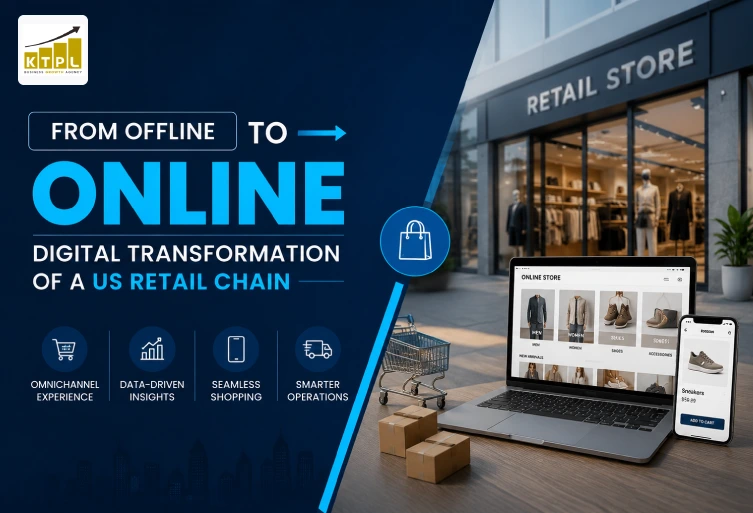
Introduction: The Shift That Redefined Retail in the United States
Over the last decade, the retail industry in the United States has experienced one of the most significant structural shifts in its history. Traditional brick-and-mortar models are no longer sufficient to sustain growth, especially in an environment where customer expectations are shaped by speed, personalization, and seamless digital experiences. A US Retail Chain that once relied entirely on physical stores now finds itself competing in a digitally driven marketplace where online presence is equally important as offline presence.
This transformation is not just about launching an eCommerce website. It is about rethinking the entire business model, from supply chain operations to customer engagement strategies. The journey from offline to online has become essential for survival, scalability, and long-term profitability for any modern US Retail Chain.
The Traditional Offline Model and Its Limitations
Before digital transformation, most retail chains in the United States operated under a fully offline model. Physical stores were the primary revenue drivers, and customer interactions were limited to in-store experiences.
High Operational Dependency on Physical Stores
A conventional US Retail Chain depended heavily on store locations, staffing, and regional foot traffic. Expansion meant opening new outlets, which required heavy investment and long operational cycles.
Limited Customer Data Insights
In the offline model, understanding customer behavior was challenging. Purchase history, preferences, and engagement patterns were often fragmented or not captured effectively, limiting marketing efficiency.
Inventory Inefficiencies
Stock management in a traditional US Retail Chain often suffered from overstocking or understocking issues due to lack of real-time data visibility across locations.
These limitations made it increasingly difficult for retail businesses to stay competitive in a fast-changing digital economy.
Why Digital Transformation Became Necessary
The shift toward digital was not optional; it was inevitable. Several market forces pushed the US Retail Chain industry toward transformation.
Changing Customer Expectations
Modern consumers expect instant access to products, price comparisons, and seamless shopping across devices. A static offline experience could no longer satisfy evolving demands.
Rise of E-Commerce Giants
The rapid growth of global e-commerce platforms reshaped consumer behavior. This forced every US Retail Chain to rethink its positioning and adopt digital-first strategies.
Data-Driven Decision Making
Retailers began to understand the importance of data analytics in predicting trends, optimizing inventory, and improving customer experience.
Core Pillars of Digital Transformation in a US Retail Chain
A successful transformation is built on multiple integrated pillars that work together to modernize operations and customer experience.
Omnichannel Retail Strategy
One of the most critical shifts is the adoption of omnichannel systems. A modern US Retail Chain now integrates physical stores, mobile apps, websites, and social platforms into a unified shopping experience.
Customers can browse online, purchase in-store, or even return products through any channel. This flexibility significantly improves customer satisfaction and retention.
Cloud-Based Infrastructure
Cloud technology has become the backbone of digital transformation. It enables a US Retail Chain to scale operations, manage data efficiently, and ensure real-time synchronization across all systems.
Cloud platforms also reduce operational costs and improve system reliability during peak shopping periods.
Advanced Data Analytics and AI Integration
Data is the new foundation of retail decision-making. Through analytics tools, a US Retail Chain can now track customer behavior, predict demand patterns, and personalize offers.
Artificial intelligence further enhances this process by enabling recommendation engines, chatbots, and dynamic pricing models.
E-Commerce Platform Development
A strong digital storefront is essential. Most US Retail Chain businesses invest heavily in building responsive websites and mobile apps that provide a smooth and intuitive shopping experience.
Features such as one-click checkout, real-time tracking, and personalized dashboards improve conversion rates significantly.
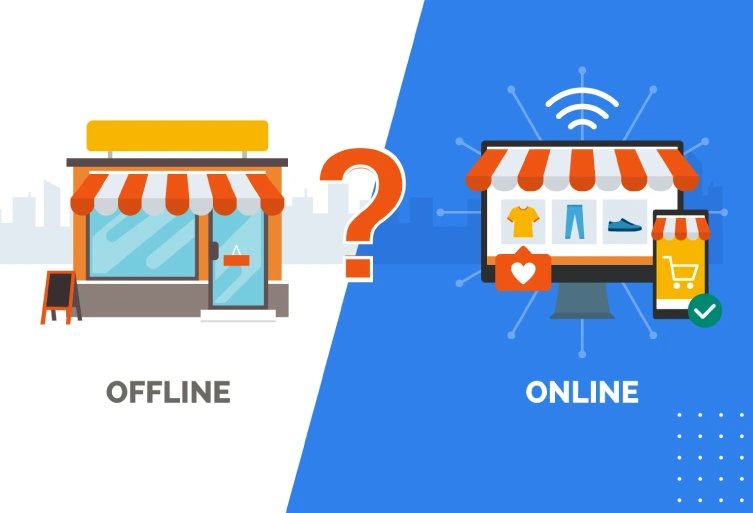
Transformation Journey: From Offline to Online
Have questions? We’ve answered some of the most common queries to help you understand the topic better
Step 1: Digital Readiness Assessment
The first stage involves evaluating existing systems, identifying gaps, and understanding technological limitations.
Step 2: Technology Integration
Legacy systems are gradually replaced or integrated with modern platforms such as ERP, CRM, and cloud-based tools.
Step 3: Omnichannel Implementation
A unified customer experience is created across all touchpoints—offline stores, online platforms, and mobile applications.
Step 4: Data Centralization
All customer and operational data is centralized to enable real-time insights and decision-making.
Step 5: Continuous Optimization
Digital transformation is not a one-time process. A US Retail Chain continuously refines its systems based on customer feedback and performance metrics.
Role of Customer Experience in Digital Retail Growth
Customer experience is the core driver of digital success. A modern US Retail Chain focuses on delivering personalized, seamless, and frictionless interactions.
Personalization at Scale
Using behavioral data, retailers can offer personalized product recommendations and targeted promotions.
Faster Delivery and Fulfillment
Integration of logistics systems ensures faster order processing and delivery, which significantly enhances customer satisfaction.
Seamless Returns and Support
Digital systems simplify return processes and improve customer service responsiveness through AI-powered chat support.
Challenges Faced During Digital Transformation
While the benefits are significant, the transformation journey is not without challenges.
Legacy System Integration
Many US Retail Chain businesses struggle with outdated infrastructure that is difficult to integrate with modern technologies.
High Initial Investment
Digital transformation requires significant investment in technology, training, and system upgrades.
Workforce Adaptation
Employees must be trained to adapt to new tools and workflows, which can take time and effort.
Cybersecurity Risks
As operations move online, protecting customer data becomes a critical priority for every US Retail Chain.
Business Impact of Going Digital
The transformation from offline to online delivers measurable business outcomes.
Increased Revenue Streams
Digital channels open new revenue opportunities beyond physical stores.
Improved Operational Efficiency
Automation reduces manual work and improves overall efficiency across departments.
Stronger Customer Retention
A seamless digital experience helps build long-term customer loyalty.
Better Market Expansion
A US Retail Chain can now reach national and global audiences without geographical limitations.
Future of US Retail Chain in a Digital Ecosystem
The future of retail is deeply connected with emerging technologies such as AI, machine learning, and predictive analytics. A US Retail Chain will continue to evolve toward hyper-personalized shopping experiences, autonomous supply chains, and fully integrated digital ecosystems.
Technologies like augmented reality shopping, voice commerce, and real-time predictive inventory management will further redefine how customers interact with retail brands.
Conclusion: A Continuous Evolution, Not a One-Time Change
The journey from offline to online is not a destination but an ongoing transformation. A modern US Retail Chain must continuously adapt, innovate, and evolve to stay competitive in a rapidly changing marketplace.
Digital transformation is no longer a luxury—it is a necessity for survival and growth. Businesses that embrace this change early will lead the future of retail, while others risk falling behind in an increasingly digital-first economy.
FAQs
Have questions? We’ve answered some of the most common queries to help you understand the topic better
Q1. What is digital transformation in a US retail chain?
It is the process of shifting a traditional retail business into a digital-first model using eCommerce, cloud systems, data analytics, and omnichannel strategies to improve customer experience and operations.
Q2. Why is digital transformation important for retail chains in the US?
It helps a US retail chain meet changing customer expectations, compete with online platforms, and improve sales through better data-driven decisions.
Q3. What technologies are used in retail digital transformation?
Common technologies include cloud computing, AI, CRM systems, mobile apps, eCommerce platforms, and advanced analytics tools.
Q4. How does digital transformation improve customer experience?
It enables personalized recommendations, faster checkout, seamless online-to-offline shopping, and better customer support.
Q5. Is digital transformation expensive for a retail chain?
Yes, initial investment can be high, but it reduces long-term operational costs and increases revenue efficiency for a US retail chain.
Want To Grow Your Business - Connect With KTPL
KTPL – Business Growth Agency, a creative solutions and business growth agency from India.
👉 Visit https://kirnanitechnologies.com
📞 Call us at +91 95093 33000
📧 Email us at contact@kirnanitechnologies.com


