


Introduction
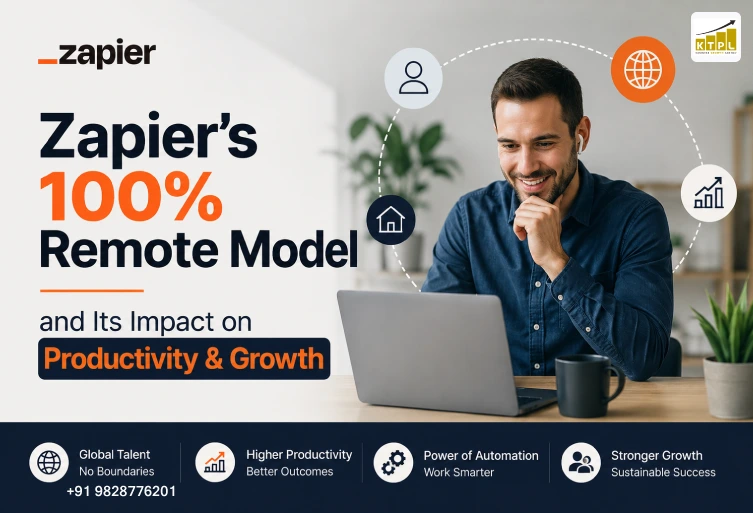
The way businesses operate has changed dramatically over the last decade, and remote work has become a major driver of organizational success. While many companies still rely on hybrid or office-based structures, some businesses have fully embraced a distributed workforce and achieved remarkable results. One of the most successful examples is Zapier, a company that has built its entire operation around a 100% Remote Model.
Zapier has demonstrated that employees do not need to work from a centralized office to achieve exceptional productivity, innovation, and business growth. With hundreds of team members working across dozens of countries, the company has created a system that prioritizes flexibility, efficiency, collaboration, and automation. This approach has helped Zapier become a leading workflow automation platform serving millions of users worldwide.
Understanding how Zapier’s Remote Model contributes to its success can provide valuable insights for business owners, startups, entrepreneurs, and enterprise leaders who want to improve productivity while scaling their operations. This article explores the strategies, benefits, challenges, and growth outcomes associated with Zapier’s fully remote workforce.
Understanding Zapier’s 100% Remote Model
Zapier operates as a fully remote company, meaning its employees work from various locations around the world rather than gathering in a traditional office environment. Unlike organizations that transitioned to remote work during temporary circumstances, Zapier was designed with remote work at its core. Every process, communication channel, workflow, and management system supports distributed collaboration.
The company’s Remote Model allows employees to work from home offices, coworking spaces, or other environments where they can perform at their best. Instead of focusing on physical presence, Zapier emphasizes accountability, ownership, and measurable results. Employees are trusted to manage their schedules while contributing meaningfully to company goals.
This approach has enabled Zapier to build a highly flexible and resilient organization. By eliminating geographical restrictions, the company can recruit talent from nearly anywhere, creating a workforce that reflects diverse experiences, cultures, and perspectives. The Remote Model has become a foundational element of Zapier’s business strategy and long-term growth.
Accessing a Global Talent Pool Through a Remote Model
One of the most significant advantages of Zapier’s Remote Model is unrestricted access to global talent. Traditional companies often compete for employees within specific cities or technology hubs, making recruitment expensive and highly competitive. Zapier removes these limitations by searching for the best candidates regardless of their location.
This global hiring strategy allows the company to attract highly skilled professionals with specialized expertise that may not be available within a single geographic area. Employees from different countries contribute unique insights, helping the organization understand and serve an international customer base more effectively.
A diverse workforce also strengthens innovation and problem-solving. When individuals with different backgrounds collaborate, they bring fresh ideas and alternative perspectives that improve decision-making. By leveraging a worldwide talent network, Zapier has created a competitive advantage that supports both business expansion and product development.
How the Remote Model Improves Employee Productivity
Productivity is often one of the first concerns raised when discussing remote work. However, Zapier’s experience shows that a properly structured Remote Model can significantly enhance employee performance. Rather than measuring productivity based on hours spent at a desk, the company evaluates employees based on outcomes and results.
This results-oriented approach encourages team members to focus on meaningful work instead of appearances or office politics. Employees can structure their workday around periods when they are most productive, leading to higher efficiency and better-quality output.
The Remote Model also reduces many workplace distractions commonly found in traditional offices. Without constant interruptions, unnecessary meetings, or lengthy commutes, employees gain more time to concentrate on important tasks. This increased focus contributes directly to stronger individual performance and organizational success.
Asynchronous Communication as a Productivity Engine
Because Zapier’s workforce spans multiple time zones, the company relies heavily on asynchronous communication. Rather than expecting employees to be available simultaneously, team members communicate through written updates, documentation, collaborative platforms, and project management systems.
Asynchronous communication creates a more efficient workflow because employees can review information and respond when it best fits their schedules. This reduces the need for excessive meetings that often interrupt productive work periods. Team members can dedicate more time to solving problems, building products, and serving customers.
Another important advantage is documentation. Written communication creates a permanent record of decisions, discussions, and project updates. Employees can access information whenever needed, improving transparency and reducing misunderstandings. This communication style has become one of the most powerful components of Zapier’s successful Remote Model.
Automation as the Foundation of Growth
Automation is deeply embedded within Zapier’s culture and business operations. Since the company develops automation software, employees actively use the platform to streamline internal workflows and eliminate repetitive tasks. This philosophy is often summarized by a company mindset known as “Build the Robot.”
Instead of spending valuable hours on manual administrative work, employees create automated systems that handle routine processes. These efficiencies allow team members to focus on high-value activities such as innovation, strategy, customer support, and product development.
The combination of automation and a Remote Model creates a highly scalable operating environment. As the business grows, automated workflows help manage increasing workloads without requiring proportional increases in administrative effort. This efficiency contributes significantly to productivity and sustainable growth.
Building a Strong Remote Company Culture
One common misconception is that company culture weakens when employees work remotely. Zapier has proven that culture can thrive in a distributed environment when organizations intentionally invest in relationship-building and communication.
The company prioritizes transparency, trust, collaboration, and inclusion. Important decisions are documented and shared so that all employees remain informed regardless of their location. This openness helps create a sense of belonging and alignment throughout the organization.
Zapier also encourages social interaction through virtual events, team activities, online communities, and informal communication channels. These initiatives help employees develop meaningful connections with colleagues despite physical distance. A strong culture supports engagement, motivation, and long-term employee satisfaction within the Remote Model.
Employee Satisfaction and Retention Benefits
Employee satisfaction plays a critical role in organizational success, and Zapier’s Remote Model offers several advantages that contribute to higher retention rates. Workers appreciate the flexibility to choose where and how they work, allowing them to create environments that support productivity and personal well-being.
Remote work eliminates commuting, reducing stress and giving employees more time for family, hobbies, and personal development. This improved work-life balance often leads to greater job satisfaction and stronger loyalty to the organization.
When employees feel trusted and empowered, they are more likely to remain committed to the company. Lower turnover reduces recruitment costs, preserves institutional knowledge, and strengthens team stability. These factors contribute positively to both productivity and business growth.
Cost Savings and Operational Efficiency
The financial benefits of a Remote Model extend far beyond employee satisfaction. By operating without large corporate offices, Zapier significantly reduces overhead expenses. Costs associated with office rent, utilities, maintenance, furniture, and on-site amenities are minimized or eliminated entirely.
These savings can be redirected toward strategic initiatives such as product innovation, employee development, customer support, and technology investments. As a result, the company can allocate resources more effectively while maintaining strong financial performance.
Operational efficiency also improves because remote infrastructure is often more scalable than physical office environments. Businesses can expand their workforce without investing heavily in additional office space, making growth more cost-effective and sustainable.

The Direct Impact on Productivity & Growth
The connection between Zapier’s Remote Model and its business growth is evident in multiple areas of performance. Access to global talent enables the company to recruit exceptional professionals who contribute to innovation and customer success. Automation reduces inefficiencies, allowing teams to focus on strategic objectives.
Asynchronous communication improves collaboration while minimizing unnecessary interruptions. Employee satisfaction supports retention and engagement, ensuring that valuable knowledge remains within the organization. Cost savings strengthen profitability and provide additional resources for expansion.
Together, these factors create a powerful ecosystem that drives both productivity and growth. The Remote Model is not simply a workplace arrangement; it functions as a strategic advantage that supports long-term business success.
Challenges of a Remote Model and How Zapier Addresses Them
Although the benefits are substantial, remote work also presents challenges that organizations must address effectively. Communication gaps, isolation, time-zone differences, and onboarding difficulties can impact performance if not managed properly.
Zapier mitigates these challenges through comprehensive documentation, structured communication practices, and intentional community-building efforts. New employees receive clear guidance and resources that help them integrate quickly into the organization. Regular virtual interactions strengthen relationships and maintain team cohesion.
The company continuously refines its remote work practices to ensure employees remain connected, informed, and supported. By proactively addressing challenges, Zapier maximizes the advantages of its Remote Model while minimizing potential drawbacks.
Lessons Businesses Can Learn from Zapier’s Success
Businesses seeking to improve productivity and growth can learn several valuable lessons from Zapier’s approach. First, success in a Remote Model requires intentional planning rather than simply allowing employees to work from home. Organizations must develop systems that support communication, accountability, and collaboration.
Second, documentation should become a central part of company operations. Clear records improve transparency and reduce confusion. Third, automation should be used whenever possible to eliminate repetitive tasks and improve efficiency.
Finally, businesses should focus on outcomes rather than activity. Measuring performance based on results encourages employees to prioritize meaningful work and contribute more effectively to organizational goals. These principles can help companies create a productive and scalable remote workforce.
The Future of Remote Work and Business Growth
The future of work is increasingly digital, flexible, and globally connected. Advances in collaboration technology continue to make remote work more practical and effective for organizations of all sizes. Businesses that embrace modern workplace strategies are likely to gain advantages in recruitment, productivity, and operational efficiency.
Zapier’s success demonstrates that a Remote Model can support sustainable growth while maintaining strong employee engagement and financial performance. As more organizations recognize the benefits of distributed teams, remote-first business models are expected to become increasingly common.
Companies that invest in communication systems, automation tools, and employee-focused policies will be better positioned to compete in the evolving global marketplace. The Remote Model is no longer a temporary trend—it has become a proven strategy for long-term business success.
Conclusion
Zapier’s 100% Remote Model serves as one of the strongest examples of how distributed workforces can drive exceptional productivity and growth. Through global hiring, asynchronous communication, workflow automation, strong company culture, and employee flexibility, the company has built a scalable and highly efficient business structure.
The impact on productivity and growth is evident through improved operational efficiency, increased innovation, lower costs, stronger employee retention, and sustainable expansion. Organizations looking to modernize their operations can learn valuable lessons from Zapier’s approach and adapt these principles to their own business environments.
As the future of work continues to evolve, companies that successfully implement a Remote Model will be well-positioned to attract top talent, improve performance, and achieve long-term competitive advantages in an increasingly connected world.
FAQs
Have questions? We’ve answered some of the most common queries to help you understand the topic better
Q1. What is Zapier’s Remote Model?
Zapier’s Remote Model is a fully distributed work structure where employees work from different countries and collaborate using digital tools, documentation, and asynchronous communication.
Q2. How does a Remote Model increase productivity?
A Remote Model improves productivity by reducing distractions, minimizing commuting time, supporting flexible work schedules, and focusing on measurable outcomes rather than office attendance.
Q3. Why is asynchronous communication important in remote work?
Asynchronous communication allows employees across different time zones to collaborate efficiently without relying on constant meetings, improving focus and workflow efficiency.
Q4. How does automation support business growth?
Automation reduces manual work, eliminates repetitive tasks, improves operational efficiency, and allows employees to focus on innovation and strategic initiatives.
Q5. Can small businesses benefit from a Remote Model?
Yes. Small businesses can access global talent, reduce operating costs, improve employee satisfaction, and scale more efficiently through a well-implemented Remote Model.
Want To Grow Your Business - Connect With KTPL
KTPL – Business Growth Agency, a creative solutions and business growth agency from India.
👉 Visit https://kirnanitechnologies.com
📞 Call us at +91 95093 33000
📧 Email us at contact@kirnanitechnologies.com


