


Introduction
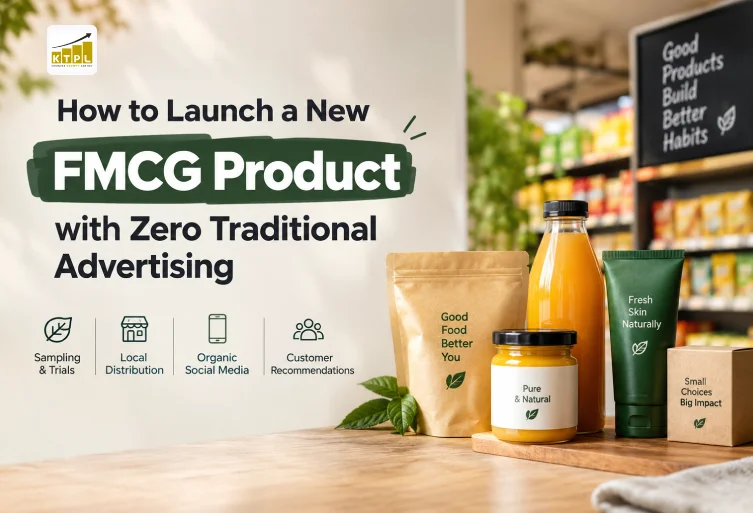
Launching a new product in the fast-moving consumer goods (FMCG) industry can be challenging, particularly when established brands already have strong customer recognition and extensive distribution networks. For a new business, spending heavily on television commercials, newspaper advertisements, radio campaigns, or celebrity endorsements may not be practical. However, a successful FMCG Product launch does not always require a large advertising budget. With the right combination of product sampling, local distribution, attractive packaging, organic social media, and customer recommendations, businesses can introduce their products to the market and build awareness gradually. The key is to focus on activities that encourage people to experience the product rather than simply hear about it. For example, a new snack brand can distribute samples at local events, partner with grocery stores, and encourage customers to share honest reviews. Similarly, a personal care brand can introduce smaller trial packs and demonstrate its product through useful social media content. Instead of trying to reach thousands of unrelated people, businesses should focus on attracting customers who are most likely to purchase and recommend their products. This approach allows brands to understand customer preferences, improve their offerings, and expand when they have evidence of genuine demand.
1. Understand Your Customers and Generate Product Trials
Before launching an FMCG Product, identify the customers you want to reach and understand why they would choose your product over existing alternatives. Consider their buying habits, budget, preferences, common problems, and expectations from products within your category. You can collect useful information through conversations with potential customers, short surveys, local market visits, and discussions with retailers. These simple research activities help you develop a clear product message and avoid spending resources promoting benefits that customers do not consider important. Once you understand your audience, explain the product’s primary advantage in simple language so people can quickly understand what makes it worth trying. Product sampling is one of the most practical ways to encourage first-time purchases. Customers can experience the actual taste, fragrance, texture, convenience, or performance of a product before deciding whether to buy it. Depending on the category, you can distribute samples at residential communities, offices, gyms, college events, local markets, or other relevant gatherings, with appropriate permissions. You can also explore partnerships with complementary businesses that serve a similar audience without selling competing products. For instance, a new snack brand might provide samples for an approved community event, while a personal care brand could collaborate with a suitable salon or wellness business. Make every sample an opportunity to encourage the next step. Include clear product information, purchasing instructions, and a QR code linking to your website, feedback form, or introductory offer. Smaller trial packs and affordable introductory bundles can reduce the financial risk for first-time buyers, provided the pricing remains commercially sustainable. Track how many people receive samples, how many subsequently purchase the product, and whether they buy again. Resources such as the NielsenIQ Trial and Repeat Dictionary can help marketers understand why initial product adoption and repeat purchases should be measured separately.
2. Focus on Local Distribution, Packaging, and Online Availability
A product cannot generate consistent sales if customers cannot find it when they want to purchase it. Instead of attempting a nationwide launch immediately, introduce your FMCG Product in a specific neighbourhood, city area, pin code, or group of retail outlets. Research where your target audience shops and approach relevant kirana stores, convenience shops, specialist retailers, and local supermarkets. Explain your product’s benefits, pricing, retailer margins, and introductory support clearly so shopkeepers can understand why stocking it may be worthwhile. Begin with manageable inventory, monitor sales, and maintain regular communication with participating retailers to understand which locations generate genuine demand. Local distribution also creates opportunities to build relationships with retailers and customers. A shopkeeper who understands your product can explain its benefits to interested shoppers and recommend it to suitable buyers. You can support retailers with small product displays, shelf cards, or sampling activities that help customers recognise your brand. However, simply getting your product onto shelves is not enough; monitor stock availability, sales velocity, and retailer reorders to determine whether the product is actually selling. Expand into nearby locations only after the initial market provides encouraging evidence of demand. Packaging is another important marketing tool when traditional advertising is not part of your strategy. Your packaging should communicate the brand name, product category, and main benefit quickly, whether someone sees it on a retail shelf or a mobile screen. Use readable typography, appropriate colours, clear product information, and a recognisable design that distinguishes your product from competing alternatives. Before producing packaging in large quantities, show different design options to potential customers and ask what they notice first and what they understand about the product. Ensure all product descriptions and claims are accurate and comply with applicable labelling and safety requirements. Online marketplaces and quick-commerce platforms can provide additional purchasing opportunities where they suit your product and business model. Prepare product listings with clear images, accurate pack sizes, transparent pricing, and useful descriptions. Check seller eligibility, platform fees, delivery arrangements, inventory requirements, and profit margins before onboarding. Indian businesses interested in instant-delivery distribution can explore the Blinkit Seller Hub for seller onboarding information. Remember that online availability alone does not guarantee sales; customers must also understand the product, trust the brand, and find sufficient value in the purchase.
3. Build Organic Awareness Through Social Media and Customer Recommendations
Social media allows a new FMCG Product to reach relevant audiences without depending entirely on expensive advertising campaigns. Instead of posting only product photographs, create useful content that shows how the product is made, how it is used, what makes it different, and how it fits into everyday life. Short videos, demonstrations, founder stories, product-development updates, and answers to frequently asked questions can make an unfamiliar brand easier to understand. Choose platforms that your target audience actually uses and maintain a consistent publishing schedule rather than trying to be active everywhere. The objective is to provide information that encourages people to discover, understand, discuss, and eventually purchase the product. Small creators and nano-influencers can also help brands reach relevant communities. Look for creators whose content, audience interests, and location align with your intended customers rather than choosing them solely by follower count. You can offer product samples and invite honest feedback without requiring a positive review or guaranteed coverage. If a collaboration involves payment, free products in exchange for content, or another commercial benefit, disclose the relationship appropriately and follow applicable advertising guidelines. Measure results through relevant enquiries, product-page visits, referral codes, and purchases instead of relying only on likes and views. Customer recommendations can further strengthen organic growth. Encourage satisfied buyers to share genuine experiences, leave honest reviews, or recommend the product to friends and family. A QR code on the packaging or a simple follow-up message can make it easier for customers to provide feedback. You can also introduce a transparent referral programme that rewards successful referrals when the financial model supports it. Always obtain permission before using customer photographs, videos, or testimonials in your marketing, and never require positive reviews in exchange for rewards. The founder’s story can give a new brand a more personal identity. Share why the product was developed, what challenges arose during production, how packaging decisions were made, and what the team has learned from early customers. These stories do not require expensive equipment or elaborate production; clear, honest communication is often enough. Use customer questions and comments to identify topics for future content and improve product information. Over time, a combination of useful social media content, genuine recommendations, and consistent customer interaction can help an FMCG Product develop recognition without relying on traditional mass-media advertising.
4. Measure Results, Improve Your Strategy, and Expand Gradually
A successful launch depends on understanding what customers actually do after discovering a product. Track important measures such as samples distributed, first purchases, repeat-purchase rates, sales by retail outlet, customer acquisition costs, stock availability, and gross profit after relevant discounts and distribution expenses. Use separate QR codes, promotional codes, or tracking links for different sampling activities and creator collaborations where practical. This makes it easier to compare channels and identify which activities produce meaningful business results. Keep records regularly and avoid judging success solely by social media engagement or the number of samples distributed. Customer feedback should also guide product improvements. Ask buyers about packaging, pricing, usability, taste, fragrance, or other characteristics relevant to your category. If customers appreciate the product but find the pack size unsuitable, consider testing a different size or offer. If shoppers cannot understand the product’s primary benefit, improve the packaging or online description before increasing promotional activity. If one neighbourhood generates repeat orders while another produces only initial trials, investigate the differences in customer preferences, retail support, pricing, and availability before expanding. A simple 90-day plan can help organise these activities. During the first 30 days, focus on customer research, product positioning, packaging, pricing, and sample preparation. During days 31–60, introduce the product to selected retailers, distribute samples, publish organic content, and collect early feedback. During days 61–90, review sales, repeat purchases, customer responses, and channel performance to determine where further investment is justified. Adapt this timeline to your product category, buying cycle, and operational requirements rather than treating it as a fixed rule. Avoid launching in too many locations before your distribution and inventory processes are ready. Do not spend the entire budget on discounts, packaging, or influencer collaborations without understanding their contribution to sales. Most importantly, ensure that product quality remains consistent and that customers can find the product again after their first purchase. Gradual expansion based on reliable demand is generally more sustainable than rapid expansion driven only by initial attention.
How KTPL – Business Growth Agency Can Support Your Brand
Launching an FMCG Product requires more than generating awareness; businesses also need clear branding, attractive packaging, useful website content, and consistent communication. KTPL – Business Growth Agency offers services including website design, logo design, packaging design, social media management, and search engine optimisation that can support these activities. A well-designed digital presence helps customers understand your product, while consistent brand visuals make it easier to recognise across packaging, websites, and social platforms. Businesses can explore the official KTPL website to learn more about its services and how a coordinated digital strategy can support their growth objectives.
Conclusion
Launching an FMCG Product without traditional advertising is possible when businesses focus on customer experience, product availability, genuine recommendations, and continuous improvement. Sampling encourages people to try the product, local distribution makes it easier to purchase, and effective packaging communicates its value. Organic social media, relevant creator collaborations, and customer referrals can build familiarity while providing valuable feedback. Start with a focused market, measure actual purchases and repeat orders, and improve your strategy before expanding. Rather than trying to reach everyone immediately, concentrate on serving the customers most likely to value your product. Consistent quality, reliable availability, and a clear reason to buy can help a new FMCG brand build lasting customer relationships without depending on traditional advertising.
FAQs
Have questions? We’ve answered some of the most common queries to help you understand the topic better.
Q1. Can I launch an FMCG Product without advertising?
Yes. Product sampling, local retail partnerships, organic social media, customer referrals, and online marketplaces can help introduce a product without television, print, or radio advertising.
Q2. What is the best marketing strategy for a new FMCG Product?
The best strategy depends on your product and audience. Start with sampling, focused distribution, clear packaging, and channels that encourage customers to try and repurchase.
Q3. How can small FMCG brands compete with established brands?
Focus on a specific audience, offer clear product benefits, maintain quality, build retailer relationships, and use customer feedback to improve the product.
Q4. How can I promote an FMCG Product on a small budget?
Use affordable sampling activities, relevant creator collaborations, useful social media content, customer referrals, and targeted local distribution.
Q5. How long does an FMCG product launch take?
Initial results may appear within weeks, but reliable evidence of repeat purchases often takes longer, depending on the product category and buying cycle.
Want To Grow Your Business - Connect With KTPL
KTPL – Business Growth Agency, a creative solutions and business growth agency from India.
👉 Visit https://kirnanitechnologies.com
📞 Call us at +91 95093 33000
📧 Email us at contact@kirnanitechnologies.com


