


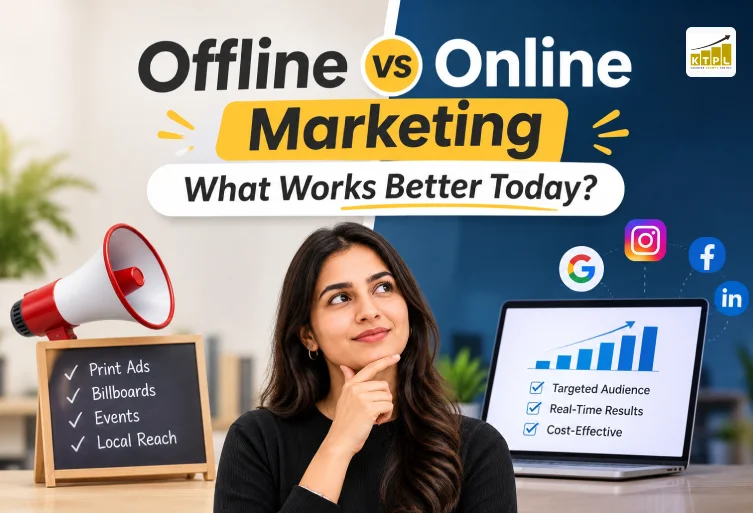
Marketing has changed significantly over the last few years. Businesses are no longer dependent only on newspaper advertisements, banners, television commercials, or printed brochures to reach potential customers. Today, people discover brands through Google searches, social media platforms, websites, online reviews, and digital advertisements. At the same time, traditional marketing methods such as outdoor advertising, business events, referrals, and face-to-face meetings continue to influence buying decisions. This makes Offline vs Online Marketing an important discussion for businesses looking to improve their visibility, attract customers, and increase revenue. Both marketing approaches have different strengths, costs, and audiences. Online marketing provides businesses with better targeting, wider reach, and measurable campaign performance, while offline marketing helps establish personal connections and local brand recognition. The right choice depends on the business model, target audience, marketing budget, and growth objectives. For many businesses in India, combining both approaches can create a stronger marketing strategy than depending on just one channel.
Understanding Offline vs Online Marketing in Today's Business Environment
To understand Offline vs Online Marketing, it is important to know how these two approaches connect businesses with their customers. Online marketing refers to promotional activities carried out through internet-based platforms, including search engines, websites, social media, email marketing, online advertisements, and content marketing. It allows businesses to reach potential customers based on their interests, search behaviour, location, and online activities. For example, a company offering website design services can use Google search campaigns and SEO to connect with business owners actively searching for professional website development. Similarly, an e-commerce brand can use Instagram advertising to introduce its products to people who are more likely to purchase them. Offline marketing involves promotional activities that do not depend on internet-based platforms. Newspaper advertisements, brochures, billboards, banners, radio commercials, trade shows, exhibitions, networking events, and direct customer interactions are common examples. These methods help businesses create physical brand awareness and establish familiarity within a particular community or market. A local retailer, for instance, may attract nearby customers through attractive shop signage, promotional pamphlets, and community events. Although online marketing has become increasingly important, offline promotion still has a valuable role in industries where personal relationships, physical product experiences, and local reputation influence purchasing decisions. The Indian advertising industry also reflects this shift towards digital platforms. According to the ET Brand Equity–Ipsos State of Digital Marketing in India 2025–26 report, digital advertising accounted for 44% of India’s total advertising expenditure in FY2025, reaching approximately ₹49,000 crore. However, traditional channels such as television, print, radio, and outdoor advertising continue to receive investment. This shows that businesses are not necessarily abandoning traditional promotion; instead, they are adjusting their marketing budgets according to changing customer behaviour. Understanding the difference between digital marketing and traditional marketing helps businesses select channels that support their actual business objectives.
Why Online Marketing Works Better for Most Businesses Today
When comparing Offline vs Online Marketing, online promotion often becomes the preferred choice for businesses because it offers flexibility, affordability, and better control over marketing campaigns. Small businesses, startups, service providers, and growing brands can begin promoting themselves without investing heavily in television commercials, newspaper advertisements, or large outdoor campaigns. A business can create a professional website, publish useful blogs, maintain social media profiles, and run targeted advertisements according to its available budget. This makes digital marketing accessible to businesses that want to compete with established brands without spending excessively on advertising. Another major advantage is audience targeting. Online advertising platforms allow businesses to reach people based on factors such as geographical location, age groups, interests, search intent, and other available audience signals. For example, an electrician serving Auckland does not need to advertise to customers across the entire country when the primary objective is to generate enquiries from nearby suburbs. Similarly, an industrial automation supplier can create campaigns targeting manufacturers, engineers, purchase managers, and industrial businesses looking for specific products. Such targeted marketing helps reduce unnecessary advertising expenditure and improves the chances of reaching relevant potential customers. Online marketing also provides measurable performance data. Businesses can monitor website visits, advertisement clicks, enquiries, phone calls, conversions, and customer engagement through different analytics tools. If a campaign is not generating the expected results, businesses can modify the advertisement, change the audience, improve the landing page, or adjust the budget. Search engine optimization, content marketing, email campaigns, and social media promotion also help brands build long-term visibility rather than depending entirely on paid advertisements. According to Ipsos, digital advertising continued to expand in India during FY2024–25, reflecting the growing importance of digital channels in modern business promotion. However, online marketing does not guarantee immediate success. Businesses still need useful content, a properly designed website, relevant keywords, strong offers, customer reviews, and a clear conversion strategy. Running advertisements without understanding the target audience can increase spending without producing meaningful enquiries. Similarly, publishing social media posts without a consistent strategy may generate engagement but fail to convert followers into customers. The most effective online marketing strategy focuses on attracting the right audience, building trust, and giving potential customers a clear reason to choose the business.
Where Offline Marketing Still Has a Strong Advantage
Although digital platforms dominate many marketing discussions, offline marketing remains relevant for businesses that depend on local recognition, personal communication, and relationship-based selling. Physical marketing activities allow customers to experience a brand beyond their computer or mobile screens. A well-designed brochure, product catalogue, business card, storefront display, or exhibition stall can create a lasting impression when presented to the right audience. For businesses operating in specific cities or neighbourhoods, local advertisements and community promotions can also help establish familiarity and encourage people to visit their stores or offices. One of the strongest advantages of traditional marketing is direct customer interaction. Certain products and services require detailed discussions before customers make a purchase decision. Real estate companies, industrial suppliers, educational institutions, construction businesses, and professional service providers often benefit from personal meetings, networking events, industry exhibitions, and referrals. During these interactions, businesses can explain their offerings, understand customer requirements, answer questions, and develop professional relationships. This level of direct communication can be particularly valuable when selling high-value products or services where customers need confidence before making a financial commitment. Offline marketing also helps businesses reach audiences who may not regularly engage with digital platforms. Newspaper advertisements, local radio promotions, printed notices, and community events can be useful for reaching particular customer groups within a defined geographical area. For example, a new retail store can distribute promotional leaflets in nearby residential areas while using attractive outdoor signage to increase walk-in traffic. A manufacturing company can participate in an industry trade show to connect with distributors, business owners, and potential buyers who are actively looking for suppliers. However, offline advertising can involve higher upfront costs, and measuring its direct contribution to sales may be more difficult. A billboard may generate brand awareness, but businesses cannot always determine how many people contacted them specifically because of that advertisement. Similarly, printing thousands of brochures does not guarantee that the right customers will receive or respond to them. To make traditional advertising more effective, businesses should select suitable locations, define a clear target audience, use memorable promotional messages, and connect offline campaigns with measurable actions such as QR codes, dedicated phone numbers, or website visits.
Why Combining Online and Offline Marketing Delivers Better Results
The discussion around Offline vs Online Marketing should not always be treated as a competition because both approaches can support each other. Customers rarely make every purchasing decision after seeing just one advertisement. They may notice a business through a banner, search for its name on Google, visit its website, read customer reviews, check social media profiles, and then contact the company. In another situation, a person may discover a product online but prefer visiting a physical store before purchasing it. This movement between digital and physical interactions makes an integrated or hybrid marketing strategy valuable for businesses across different industries. For example, a local retail business can promote a seasonal offer through printed flyers and outdoor signage while using Instagram and Facebook to share product images, customer feedback, and promotional videos. Customers who notice the offline advertisement can visit the business website or Google Business Profile to learn more before visiting the store. Similarly, a B2B company participating in an industrial exhibition can distribute brochures and business cards while encouraging visitors to explore its website, product catalogue, and enquiry form. The offline interaction creates initial interest, while online channels provide additional information and make follow-up communication easier. A hybrid strategy can also improve customer trust. Businesses can use offline events, product demonstrations, networking meetings, and referrals to develop relationships, while maintaining a professional digital presence through search engine optimization, informative blogs, social media, and customer testimonials. Google explains the importance of holistic marketing measurement because customer journeys often involve several paid, organic, online, and offline interactions. Looking only at the final click or enquiry may overlook the contribution of other marketing activities. Businesses should therefore evaluate the combined influence of their promotional channels rather than judging every campaign independently. For better results, companies should maintain consistent branding across every customer touchpoint. Their website, advertisements, brochures, packaging, social media pages, and business presentations should communicate the same brand message and visual identity. They should also monitor enquiries, sales, customer feedback, and campaign performance to understand which channels are contributing to business growth. A well-planned hybrid marketing strategy does not mean spending equally on every platform. It means choosing the right combination of digital and traditional marketing activities according to customer behaviour, business requirements, and available resources.
How to Choose the Right Marketing Strategy for Your Business
Choosing between Offline vs Online Marketing requires more than following the latest advertising trends. Businesses should first understand their target customers, purchasing behaviour, geographical reach, competition, and marketing objectives. A startup with a limited budget may benefit from building a website, investing in SEO, creating social media content, and testing small digital advertising campaigns before spending on expensive offline promotions. A local shop, on the other hand, may need a combination of Google Business Profile optimization, local SEO, attractive storefront branding, customer referrals, and neighbourhood advertising to increase customer visits. B2B companies should consider how their customers research and evaluate suppliers before making purchasing decisions. A manufacturer or industrial supplier may benefit from SEO-focused product pages, technical blogs, Google search campaigns, trade exhibitions, and direct business networking. Educational institutions can combine local awareness campaigns, printed admission materials, parent meetings, social media updates, and informative website content. Similarly, professional service providers can use online search visibility to generate enquiries while relying on consultations and personal communication to build customer confidence. Budget allocation should also be based on performance rather than assumptions. Businesses can start with a manageable marketing budget, test different channels, and review the quality of enquiries generated by each activity. For online campaigns, useful indicators include cost per lead, website conversions, engagement, and customer acquisition cost. For offline campaigns, businesses can track responses through dedicated contact numbers, promotional codes, QR codes, event registrations, and customer feedback. Reviewing these results regularly helps companies identify which marketing activities deserve more investment and which need improvement. At KTPL – Business Growth Agency, the focus should be on building a marketing approach that connects brand visibility with meaningful business results. A strong digital foundation through website design, SEO, logo design, packaging design, and social media management can help businesses present a consistent identity across online and offline platforms. Instead of selecting a marketing channel simply because competitors are using it, businesses should choose activities that reach their ideal customers, communicate their value, and support long-term growth.
Conclusion: Offline vs Online Marketing – What Works Better Today?
So, which approach works better today? For most businesses, online marketing offers stronger flexibility, precise audience targeting, measurable performance, and opportunities to reach customers beyond their immediate geographical area. It is particularly useful for startups, small businesses, e-commerce brands, and service providers that want to generate enquiries while managing their marketing budgets. However, offline marketing continues to deliver value through local visibility, personal relationships, direct communication, and physical brand experiences. The real answer to Offline vs Online Marketing is that neither approach is universally better for every business. Companies should understand where their customers spend time, how they discover products or services, and what influences their purchasing decisions. A business that combines digital visibility with meaningful offline interactions can create a more consistent customer experience and improve its chances of generating enquiries and sales. The best marketing strategy is not about choosing between old and new methods; it is about using the right channels together to achieve sustainable business growth.
FAQs
Have questions? We’ve answered some of the most common queries to help you understand the topic better.
Q1. Which is better: Offline vs Online Marketing?
Online marketing generally offers better targeting and measurement, while offline marketing supports local visibility and personal relationships. The right choice depends on business goals and customers.
Q2. Is online marketing more affordable than offline marketing?
In many cases, yes. Businesses can start with SEO, social media, and content marketing using relatively small budgets, whereas traditional advertising may require higher upfront investment.
Q3. Can small businesses benefit from offline marketing?
Yes. Local banners, brochures, community events, referrals, and networking can help small businesses improve local awareness and attract nearby customers.
Q4. What is a hybrid marketing strategy?
A hybrid marketing strategy combines online channels such as websites, SEO, and social media with offline activities such as events, print advertising, and direct customer interactions.
Q5. How can businesses measure marketing performance?
Businesses can track website traffic, leads, conversions, cost per enquiry, phone calls, promotional code usage, customer visits, and sales to evaluate marketing performance.
Want To Grow Your Business - Connect With KTPL
KTPL – Business Growth Agency, a creative solutions and business growth agency from India.
👉 Visit https://kirnanitechnologies.com
📞 Call us at +91 95093 33000
📧 Email us at contact@kirnanitechnologies.com


