


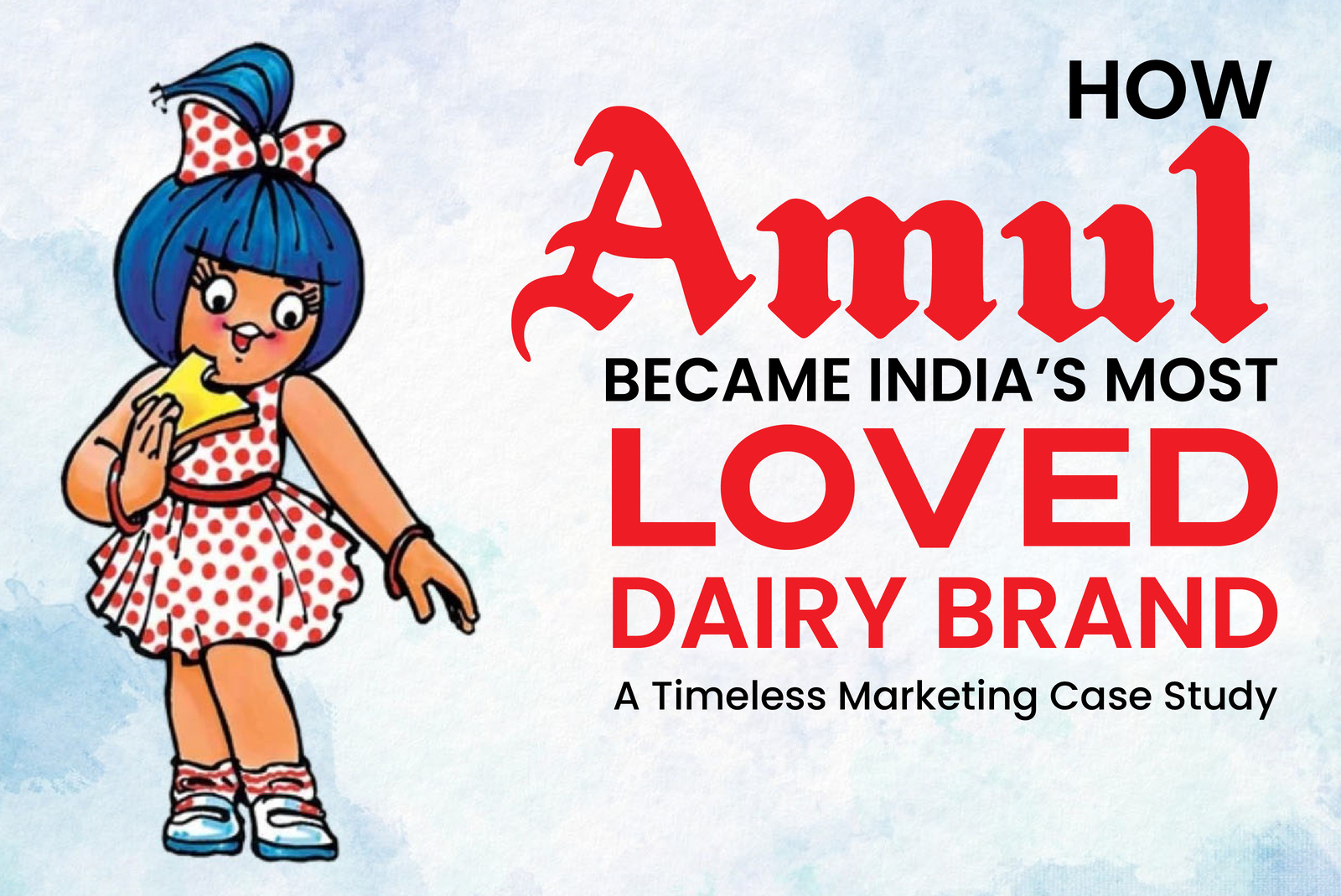
Introduction – The Dairy Brand That Defined a Nation
What makes a brand iconic? It’s not just quality products — it’s a deep, emotional connection with the people.
That’s exactly what Amul has achieved over the last seven decades.
From humble beginnings in Anand, Gujarat, Amul has become a household name across India, known for its witty advertisements, strong brand personality, and democratic pricing. This isn’t just a dairy company. It’s a marketing masterclass, a case study of how storytelling, social relevance, and brand consistency can build trust generation after generation.
The Origin Story – How Amul Was Born
Amul’s journey began in 1946, when farmers in Gujarat, frustrated by exploitation from middlemen and colonial structures, came together to form a cooperative. Under the leadership of Dr. Verghese Kurien, the cooperative transformed into Amul (Anand Milk Union Limited) — a brand by the people, for the people.
Key Highlights from the Origin:
- Set up during the Indian independence movement
- Created to eliminate middlemen exploiting farmers
- Became the symbol of India’s White Revolution
- Founded by visionary Dr. Kurien, known as the ‘Milkman of India’
By empowering farmers and focusing on self-sufficiency, Amul wasn’t just selling milk — it was enabling rural prosperity
The Amul Girl – The Mascot that Made History
If you ask any Indian to name one ad they remember from childhood, chances are they’ll recall the Amul Girl.
Created in 1966 by Sylvester da Cunha, the Amul Girl became a pop culture icon, with her topical, witty and humorous commentary on everything — from politics and sports to Bollywood and global affairs.
“Utterly Butterly Delicious” isn’t just a tagline. It’s a feeling.
Why the Amul Girl worked:
- Constantly updated (real-time marketing)
- Used humor to tackle serious issues
- Reinforced brand recall with every newsworthy event
- Became part of dinner-table conversations
This mascot did what few brands could — stay relevant for over 50 years.
Marketing Magic – Humor, Timing & Relevance
Amul’s marketing is an example of simplicity with brilliance.
It has never relied on fancy shoots or celebrities (except occasional collaborations). Instead, it focused on:
Real-time Advertising:
- Billboards featuring breaking news
- Instantly relatable, shareable, and memorable
Consistent Brand Voice:
- Pun-filled humor with emotional undertones
- Always signed off with the Amul Girl
Affordability & Mass Reach:
- Campaigns were designed for the masses, not niches
- Products were affordable, yet aspirational
In a world where brands struggle to engage audiences even for a moment, Amul has managed to make people look forward to its ads.
The 4Ps of Amul’s Marketing Strategy
Let’s break down Amul’s marketing through the classic 4Ps model:
1. Product
- Wide range: Milk, Butter, Cheese, Ice Cream, Chocolates
- Constant innovation: Flavored milk, probiotic curd, lactose-free options
- Maintains highest quality standards with farmer-first sourcing
2. Price
- Affordable pricing for mass market
- Transparent cooperative structure ensures low margins
- Special rates for rural markets to increase access
3. Place
- Pan-India distribution network
- Available in over 1 million retail outlets
- Export presence in 40+ countries
4. Promotion
- Topical hoardings (since 1966)
- Print + Outdoor + Digital + Social Media campaigns
- Emotional storytelling without overuse of celebrities
Key Takeaway: Amul never overcomplicates marketing. It communicates clearly, honestly, and consistently.
Digital Transformation – Amul in the 21st Century
While Amul’s roots lie in traditional advertising, it has adapted beautifully to the digital age
Active on Social Media:
- Memes, topical posts, Twitter trends
- Instagram reels of recipes using Amul products
Engaging Content:
- Amul Topical Ads Archive (massive brand nostalgia)
- YouTube videos, #AmulRecipes series
Digital-first Campaigns:
- During COVID, promoted home-made food culture
- Leveraged influencer marketing smartly
By retaining its legacy but embracing modern formats, Amul remains timeless and current — a rare mix
Business Lessons from Amul’s Timeless Marketing
Amul is not just a brand; it’s a marketing institute in itself.
Here’s what every business can learn from Amul:
- Consistency is King – Stick to your brand voice and values
- Make It Human – Talk to people, not customers
- Topical = Relatable – Stay relevant by commenting on what’s trending
- Build a Mascot – Create a visual identity that lives beyond logos
- Stay Accessible – Be affordable without compromising value
- Innovation Matters – Expand your product line smartly
You don’t need a million-dollar budget. You need an unforgettable story.
Conclusion – Amul: The Heartbeat of Indian Homes
In a world flooded with ads, Amul stands out by being genuinely Indian, deeply emotional, and intelligently simple.
Its success isn’t based on gimmicks but on trust, storytelling, and consistency — three things every business should master.
Amul isn’t just India’s most loved dairy brand. It’s a brand that became part of India’s cultural and emotional fabric.
FAQs
Have questions? We’ve answered some of the most common queries to help you understand the topic better
Q1. What is the marketing strategy of Amul?
Amul’s marketing strategy focuses on emotional storytelling, topical advertising through the Amul Girl, affordable pricing, a wide product range, and consistent brand messaging that connects with the masses
Q2. Why is Amul considered a successful case study in branding?
Amul is a successful branding case study because it built deep emotional trust, maintained cultural relevance for decades, empowered rural producers, and used low-cost, high-impact marketing to become a household name in India.
Q3. Who is the founder of Amul and what was the brand’s mission?
Amul was founded by Dr. Verghese Kurien and the farmers of Gujarat in 1946. The mission was to eliminate middlemen, ensure fair milk prices, and create a cooperative movement to uplift rural dairy farmers.
Q4: How did the Amul Girl contribute to the brand’s popularity?
The Amul Girl played a key role in brand popularity by delivering witty, timely, and humorous messages that reflected current events. Her consistent presence made Amul ads memorable and emotionally resonant with Indian audiences.
Q5. How has Amul adapted its marketing for the digital age?
Amul adapted to digital marketing by embracing platforms like Twitter, Instagram, and YouTube, using meme culture, topical digital creatives, recipe videos, and influencer collaborations while maintaining its original brand voice.
Want To Grow Your Business - Connect With KTPL
KTPL – Business Growth Agency, a creative solutions and business growth agency from India.
👉 Visit https://kirnanitechnologies.com
📞 Call us at +91 95093 33000
📧 Email us at contact@kirnanitechnologies.com


