


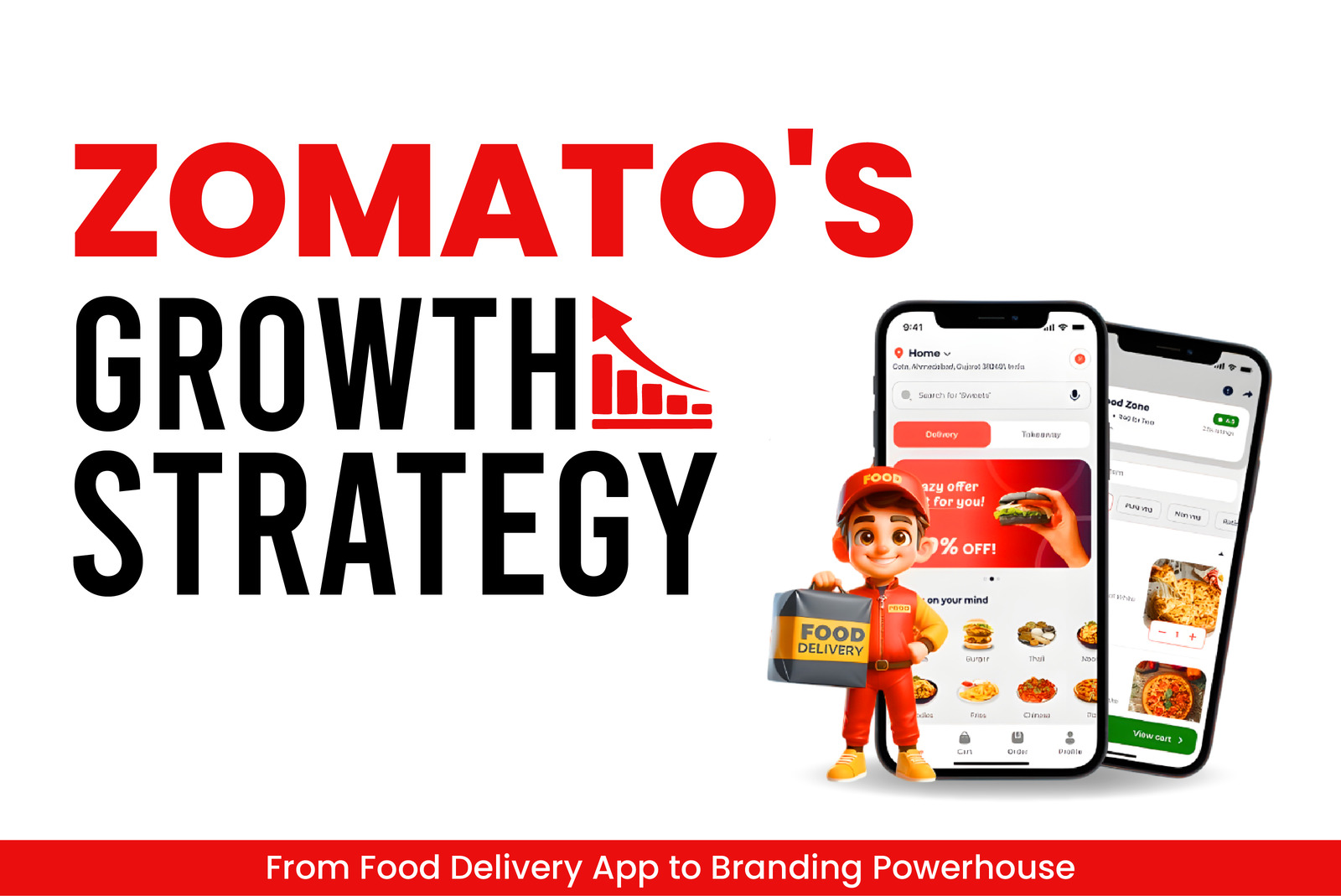
Introduction: Zomato’s Transformation From Plates to Power Plays
What started in 2008 as ‘Foodiebay’ soon morphed into one of India’s most loved and talked-about brands — Zomato. Today, Zomato is not just a food delivery app. It’s a content creator, a trendsetter, and a marketing genius that knows exactly how to grab attention, retain users, and redefine an entire industry. In this deep dive, we explore the core strategies, bold campaigns, and brand positioning that turned Zomato into a powerhouse.
Founding Story: From Foodiebay to Zomato
Zomato was launched in 2008 by Deepinder Goyal and Pankaj Chaddah as Foodiebay, primarily focused on restaurant discovery. By 2010, the brand rebranded to Zomato and expanded globally. Early on, they focused on solving a real pain point: accessing digital restaurant menus. Their app soon became an essential part of the urban eating experience in India.
Their early growth was powered by:
- User-first design
- Restaurant reviews and listings
- Global expansion mindset
- Mobile-first approach
Zomato’s Marketing Mastery
1. Content Marketing That Clicks
Zomato’s social media handles are a case study in themselves. Instead of pushing offers, they pushed entertainment. They’re known for:
- Witty one-liners
- Trendjacking (e.g., Bollywood releases, IPL)
- Memes and minimalist posters
Key takeaway: Zomato became part of the cultural conversation.
2. Meme Marketing & Humor-Driven Branding
Zomato leverages relatability through humor. It turned everyday food moments into shareable content. Their minimalist red-themed designs combined with witty copy elevated engagement.
Examples:
- “Guys, kabhi kabhi ghar ka khana bhi kha lena chahiye.”
- Election-themed creatives encouraging people to vote and eat
3. Hyperlocal & Vernacular Strategy
Zomato realized early that India isn’t one homogeneous market. They adapted creatives in regional languages and integrated local events.
Impact:
- Higher engagement in Tier 2/3 cities
Better brand recall in regional markets
Zomato Gold, Blinkit & Beyond: Smart Product Pivots
Zomato consistently reinvented itself. From food delivery, it branched into:
- Zomato Gold / Pro Membership: Exclusive benefits and discounts
- Acquisition of Blinkit: Entering quick-commerce space
- Zomato Kitchen: Cloud kitchen support
- Zomato IPO: Becoming the first Indian food tech company to go public
These pivots weren’t just growth hacks; they were long-term strategic plays.
Competitive Edge Over Swiggy & Others
While Swiggy is Zomato’s biggest rival, Zomato focused more on branding and user engagement. Some differentiators:
- Edgy, humorous content
- Consistent brand voice
- Strong influencer collaborations
- Better UI/UX experimentation
Zomato chose to entertain first, sell second — and it paid off.
Brand Building Through Emotion & Culture
Zomato tapped into user emotions. From hunger to heartbreak, their creatives connect deeply. They mastered moment marketing:
- Valentine’s Day
- Diwali
- National Pizza Day
Zomato campaigns reflect the voice of the youth.
Data-Driven Decisions & Tech Edge
Behind the humor lies serious data:
- Geo-segmentation for custom offers
- Behavioral insights for app notifications
- Machine learning for delivery optimization
Data allowed Zomato to offer the right food, to the right person, at the right time.
What Startups Can Learn from Zomato
Lessons:
- Brand voice matters. Stay consistent.
- Content is king. But relatability is emperor.
- Tech + Emotion = Trust
- Evolve or die. Keep innovating.
Own your audience. Don’t just rent it from ads.
Conclusion: A Brand That Eats Culture For Breakfast
Zomato isn’t just feeding India. It’s feeding conversations, culture, and connections. From food delivery to branding royalty, it has shown how to build a company that customers love and talk about. If your brand wants to stay top-of-mind, learn from Zomato: stay sharp, stay human, and never stop experimenting.
FAQs
Have questions? We’ve answered some of the most common queries to help you understand the topic better
Q1. What is Zomato's core marketing strategy?
Zomato’s core strategy is content-driven branding using humor, relatability, and moment marketing to build emotional engagement.
Q2. How did Zomato grow so fast in India?
Zomato focused on user needs, hyperlocal strategies, social media virality, and data-driven decision-making.
Q3. What makes Zomato different from Swiggy?
While Swiggy focuses on logistics, Zomato emphasizes brand storytelling, UI/UX, and humorous engagement.
Q4. What is Zomato Gold or Pro?
It’s a premium membership offering discounts and exclusive deals for regular users across restaurants and delivery
Q5. How does Zomato use memes in marketing?
Zomato uses humor, trends, and pop culture references to create memes that go viral, increasing user engagement and shares
Want To Grow Your Business - Connect With KTPL
KTPL – Business Growth Agency, a creative solutions and business growth agency from India.
👉 Visit https://kirnanitechnologies.com
📞 Call us at +91 95093 33000
📧 Email us at contact@kirnanitechnologies.com


