


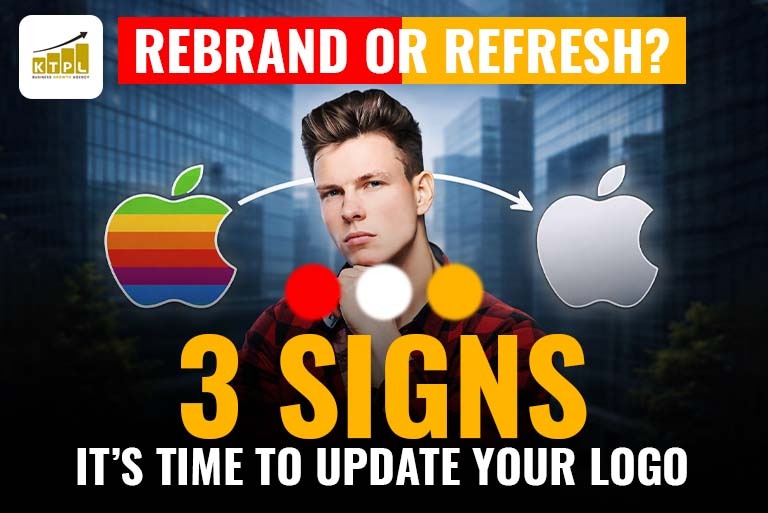
In today’s competitive digital landscape, a logo is not just a visual mark. It is the first impression of a brand, the foundation of trust, and a silent communicator of values. Businesses across India and global markets are constantly evolving, and a logo that once worked perfectly may no longer reflect the current reality of the brand.
At KTPL – Business Growth Agency, many growing businesses ask a common question. Is it better to rebrand completely or simply refresh the existing logo? Understanding the difference between rebrand vs refresh and identifying the right moment for a logo update can protect brand equity while driving future growth.
This guide explains the difference, highlights three clear signs that indicate it is time for change, and helps decision-makers choose the right path with confidence.
Understanding the Difference Between Rebrand and Refresh
Before updating a logo, it is important to understand what kind of change is actually required. A refresh and a rebrand serve very different purposes, even though they are often confused.
A brand refresh focuses on visual improvements while preserving the core identity. This approach works best when the brand is still relevant but needs a modern touch to stay competitive. Typical refresh elements include minor typography adjustments, color palette updates, simplified layouts, improved scalability for digital platforms, and better visual consistency across websites, social media, and marketing materials.
A rebrand, on the other hand, represents a deeper transformation. It is usually driven by major business changes such as mergers, acquisitions, new leadership, revised company values, expansion into new markets, or a complete shift in positioning. A rebrand often includes a new logo, updated brand messaging, revised tone of voice, and sometimes even a new brand name.
Choosing between rebrand vs refresh depends on how much the business identity has changed and how the brand is perceived by its audience.
Why Logo Relevance Matters More Than Ever
A logo operates at the intersection of trust, recognition, and credibility. In markets like India, where digital-first discovery dominates buying decisions, outdated branding can quietly damage conversions and brand perception.
Modern customers expect brands to look professional, consistent, and aligned with current design standards. A weak or outdated logo can create doubts about reliability, innovation, and seriousness, even if the product or service quality is high.
A strategic logo update helps reinforce confidence, attract the right audience, and signal that the brand is active, evolving, and future-focused.
Sign One Your Logo Looks Outdated or Unprofessional
Design trends evolve rapidly. A logo that looked modern five or six years ago may now feel cluttered, low-resolution, or visually outdated. Fonts that were once popular may now look generic, while complex designs may struggle to perform across mobile screens and digital platforms.
Common signs that a logo looks outdated or unprofessional often include poor scalability on mobile devices, overly complex shapes, outdated typography, inconsistent color usage, lack of alignment with current digital branding standards, and difficulty maintaining visual consistency across platforms.
When a logo feels visually behind its competitors, it can negatively impact credibility. Customers may subconsciously associate outdated visuals with outdated services. In such cases, a logo refresh is often enough to modernize the appearance while maintaining brand familiarity.
Sign Two Your Business Has Evolved or Expanded
Businesses rarely stay the same. Growth brings new services, broader markets, larger teams, and refined goals. A logo created during the early stages of a company may no longer reflect its current scale or ambition.
This situation commonly occurs when a business expands from local to national or international markets, introduces new product lines or services, shifts from startup positioning to an established enterprise, or redefines its mission and vision.
When the logo no longer aligns with what the business represents today, it creates a disconnect between perception and reality. In such scenarios, decision-makers must evaluate whether the brand identity still communicates the right message. A refresh may work if the core brand remains strong, but a full rebrand may be necessary if the evolution is significant.

Sign Three You Are Targeting a New Audience or Market
Target audiences change as businesses grow. A logo that resonates with one demographic may fail to connect with another. This challenge is especially common when moving from B2C to B2B, entering new industries, targeting a premium market segment, or expanding into international markets.
Audience expectations around professionalism, trust, and visual appeal vary widely. A playful or casual logo may work well for consumer-focused brands but appear unprofessional in corporate or enterprise environments.
When targeting a new audience, a logo update helps align visual identity with the values, preferences, and expectations of that market. In many cases, this requires more than surface-level design tweaks and may justify a strategic rebrand.
Rebrand vs Refresh Which Option Is Right
Deciding between a refresh and a rebrand requires honest evaluation. Both approaches offer value when applied correctly.
A logo refresh is ideal when the brand identity is still strong but needs modernization. This approach retains brand recognition while improving relevance. It typically includes refined typography, updated colors, cleaner design elements, improved digital adaptability, and better consistency across touchpoints.
A rebrand is the right choice when the business identity itself has changed. This approach realigns the brand with new values, direction, and positioning. It often includes a redesigned logo, new brand messaging, updated visual language, and a cohesive identity system that reflects the company’s future goals.
At KTPL – Business Growth Agency, businesses across India choose their approach based on long-term strategy rather than short-term trends.
Benefits of a Strategic Logo Update
A well-planned logo update delivers measurable benefits beyond aesthetics. It strengthens brand recognition, improves digital performance, builds trust with modern audiences, enhances consistency across platforms, and supports marketing and sales efforts.
For growing businesses, a refreshed or rebranded logo can signal professionalism, innovation, and readiness for the next stage of growth. It also helps unify internal teams under a clear and confident brand identity.
Why Professional Guidance Matters
Logo updates are strategic decisions, not just design tasks. Without proper planning, brands risk losing recognition, confusing customers, or weakening their market position.
Working with experienced branding professionals ensures that every decision aligns with business goals, audience expectations, and long-term vision. From research and strategy to execution and rollout, expert guidance helps protect brand equity while enabling growth.
KTPL – Business Growth Agency works with clients across India and international markets to deliver logo refresh and rebrand solutions that are strategic, scalable, and future-ready.
Final Thoughts
Knowing when to update a logo is as important as knowing how. Whether the need is driven by outdated visuals, business evolution, or a shift in audience, understanding the difference between rebrand vs refresh empowers smarter decisions.
A logo update done at the right time can strengthen trust, improve visibility, and position a brand for sustained success. Businesses that treat branding as a strategic asset rather than a cosmetic detail consistently outperform those that do not.
If your brand feels misaligned with who you are today or where you are heading tomorrow, it may be time to take a closer look at your logo and make the change that supports growth.
FAQs
Have questions? We’ve answered some of the most common queries to help you understand the topic better
Q1. What is the difference between rebrand vs refresh
Rebrand vs refresh refers to the level of change in brand identity. A logo refresh focuses on modernizing visual elements such as colors, fonts, or layout while keeping the core identity intact. A rebrand involves a complete transformation, including a new logo, updated brand messaging, and sometimes a new name, usually due to major business changes.
Q2. When should a business consider a logo update
A logo update should be considered when the current logo looks outdated, no longer reflects the business direction, or fails to connect with the target audience. Businesses that have grown, expanded services, or entered new markets often benefit from a strategic logo refresh or rebrand.
Q3. How do I know if my business needs a rebrand or a logo refresh
A business needs a logo refresh if the brand identity is still relevant but visually outdated. A rebrand is required when the company has undergone significant changes such as mergers, new leadership, repositioning, or a shift in values. Evaluating brand perception and future goals helps determine the right approach.
Q4. Does updating a logo help with brand growth and trust
Yes, a professional logo update improves brand credibility, visual consistency, and audience trust. A modern logo aligns with current design standards, enhances digital presence, and helps businesses appear reliable, competitive, and future-ready in crowded markets.
Q5. How often should a company update its logo
There is no fixed timeline, but many businesses review their logo every five to seven years. If the logo no longer aligns with business goals, audience expectations, or digital platforms, a logo refresh or rebrand may be necessary to stay relevant and competitive.
Want To Grow Your Business - Connect With KTPL
KTPL – Business Growth Agency, a creative solutions and business growth agency from India.
👉 Visit https://kirnanitechnologies.com
📞 Call us at +91 95093 33000
📧 Email us at contact@kirnanitechnologies.com


