


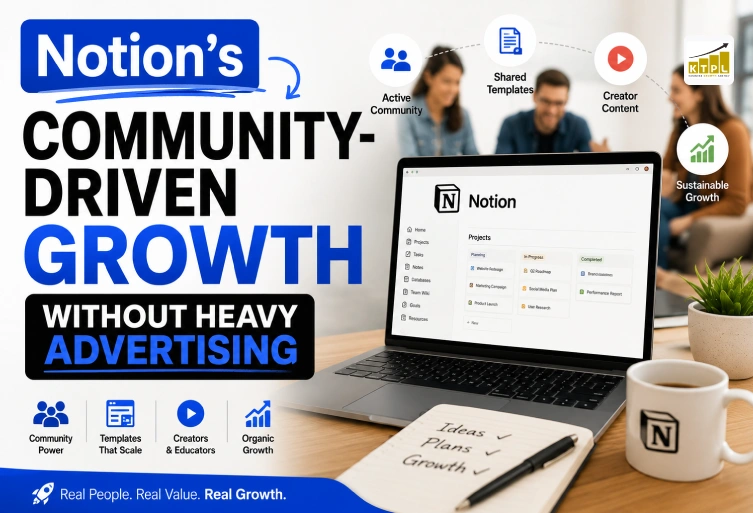
Growing a global software company usually requires significant investment in digital advertising, influencer campaigns, and paid promotions. However, Notion proved that there is another path to success. Instead of relying on expensive marketing campaigns, the company focused on creating a product that people genuinely loved using and sharing. This customer-first approach transformed everyday users into passionate advocates who promoted the platform across blogs, YouTube channels, Reddit communities, LinkedIn posts, newsletters, and online forums. Today, Notion’s Community-Driven strategy is widely recognized as one of the best examples of sustainable organic growth in the SaaS industry. Since its launch, Notion has grown to more than 100 million users and achieved a valuation of over $10 billion without depending heavily on traditional advertising. Rather than interrupting potential customers with promotional messages, the company encouraged users to build templates, share workflows, and educate others about the platform. Every tutorial, downloadable template, and success story became a new opportunity for someone to discover Notion. This approach reduced customer acquisition costs while building a loyal community that continues to promote the brand naturally. The success of Notion’s Community-Driven growth demonstrates that exceptional products combined with engaged communities can outperform even the largest advertising budgets. Businesses of all sizes can learn valuable lessons from this strategy by focusing on customer experience, encouraging collaboration, and creating valuable resources that people genuinely want to share. In this blog, we’ll explore the key principles behind Notion’s remarkable growth and discover how companies can apply similar community-led marketing strategies to build long-term success.
Why Notion Chose Community Over Traditional Advertising
Unlike many fast-growing technology companies, Notion understood that trust is more valuable than visibility alone. While paid advertisements can quickly generate traffic, they often produce only short-term results. Once the advertising budget ends, the flow of new visitors usually declines. Notion wanted to build a marketing system that would continue generating growth even without constant spending. Instead of investing millions in advertising, the company invested in creating a flexible product that users enjoyed recommending to friends, colleagues, classmates, and online communities. This decision became the foundation of Notion’s Community-Driven growth strategy. Modern consumers rarely make decisions based solely on advertisements. Before trying a new product, they search for reviews, tutorials, comparison articles, YouTube demonstrations, and recommendations from real users. Notion recognized this behavior early and focused on encouraging customers to create that content naturally. As users built project management systems, business dashboards, study planners, and productivity workflows, they began sharing them across the internet. Every shared resource showcased the platform’s capabilities while introducing new audiences to Notion through authentic experiences instead of promotional messaging. Another reason Notion’s Community-Driven strategy became so successful is its long-term impact on search engine visibility. Thousands of independent creators publish blogs, videos, and tutorials featuring Notion templates and workflows. This continuous stream of user-generated content creates valuable backlinks, brand mentions, and keyword relevance across the web. Search engines recognize these authentic discussions as signals of trust and authority, helping Notion rank for thousands of productivity-related searches without relying heavily on paid search campaigns. The company also embraced the growing creator economy instead of competing with it. Rather than controlling every piece of educational content, Notion encouraged creators to build businesses around the platform by designing templates, offering online courses, and consulting organizations on productivity systems. As these creators promoted their own work, they simultaneously expanded Notion’s reach. This mutually beneficial relationship allowed both the creators and the platform to grow together, creating a marketing ecosystem that became stronger with every new community contribution. Perhaps the biggest lesson from Notion’s Community-Driven approach is that genuine customer satisfaction creates the most effective form of marketing. People naturally recommend products that simplify their work, improve productivity, and solve everyday challenges. By consistently delivering value instead of focusing solely on promotions, Notion built a loyal global community that continues attracting new users through trust, education, and shared experiences. For businesses seeking sustainable growth, this strategy proves that investing in customer success often delivers greater long-term results than investing exclusively in paid advertising.
The Template-Driven Growth Engine That Powered Notion's Success
One of the biggest reasons behind Notion’s Community-Driven success is its powerful template ecosystem. Unlike traditional productivity software that offers fixed features, Notion allows users to build customized workspaces for almost any purpose. Whether it’s project management, content planning, customer relationship management (CRM), business operations, financial tracking, study schedules, or personal goal setting, users can create systems that perfectly match their needs. Once these workspaces are created, they can be shared with anyone through a simple link. This flexibility turned Notion from a productivity tool into a platform where users continuously create and exchange valuable resources. The real innovation lies in how these templates contribute to business growth. When someone finds a useful Notion template through Google Search, YouTube, LinkedIn, Reddit, or a creator’s website, they need a Notion account to duplicate and use it. This simple onboarding process transforms every shared template into a customer acquisition tool. Instead of convincing people through advertisements, the value of the template itself encourages them to sign up. Every download becomes an opportunity to introduce a new user to the platform, making the product one of its own most effective marketing channels. Another strength of Notion’s Community-Driven model is its contribution to search engine optimization. Thousands of creators publish articles and videos targeting searches like “best content calendar template,” “project management dashboard,” “student planner,” and “business CRM template.” Because many of these resources feature Notion, the brand appears naturally across countless search results without spending money on paid advertising. This steady flow of organic content improves visibility, generates backlinks, and increases authority, helping Notion remain one of the most recognized productivity platforms in the world. The template ecosystem also encourages continuous engagement. Users rarely stop after downloading a single workspace. Instead, they customize templates, improve workflows, and often create entirely new systems based on their experiences. Many eventually share these improved versions with colleagues, clients, or online communities, creating another cycle of organic promotion. Every shared template introduces more people to Notion while strengthening the overall value of the platform. This continuous cycle of creation, improvement, and sharing is one of the strongest pillars supporting Notion’s Community-Driven growth strategy. Perhaps the greatest advantage of this approach is that it scales naturally. As the user base grows, the number of templates also increases, making the platform even more valuable for future users. Businesses, students, freelancers, marketers, educators, and startups all contribute unique solutions that solve real-world problems. This expanding library of community-created resources keeps attracting new audiences while reducing the company’s dependence on traditional advertising. It is a perfect example of how empowering customers can create a self-sustaining growth engine.
How Creators Became Notion's Biggest Marketing Team
One of the smartest decisions behind Notion’s Community-Driven growth was empowering creators instead of relying solely on an internal marketing team. Across the world, productivity experts, entrepreneurs, educators, consultants, freelancers, and content creators began producing tutorials, templates, online courses, newsletters, and educational videos explaining how they use Notion in their daily work. Every piece of content not only helped their own audience but also introduced thousands of new users to the platform. Instead of paying influencers to promote the product, Notion allowed creators to grow alongside the platform, creating a mutually beneficial relationship. The rise of the creator economy further accelerated this strategy. Many professionals discovered they could build successful businesses by selling premium Notion templates for project management, business operations, finance tracking, marketing planning, and personal productivity. Platforms like Gumroad and individual websites enabled creators to monetize their expertise while expanding Notion’s visibility. As these creators promoted their products through blogs, YouTube, LinkedIn, and social media, they naturally marketed Notion at the same time. This decentralized marketing model became one of the strongest drivers of Notion’s Community-Driven success. Community engagement extended beyond selling templates. Independent users organized webinars, virtual workshops, local meetups, online challenges, and discussion groups where beginners could learn directly from experienced users. These communities helped people solve productivity challenges, discover innovative workflows, and share practical ideas. Because these conversations were led by real users rather than corporate marketing teams, they felt authentic and trustworthy. This authenticity encouraged more people to explore the platform, strengthening community participation and increasing long-term customer loyalty. Notion also recognized the importance of rewarding its most passionate supporters. Through initiatives such as the Ambassador Program, Certified Consultant Program, and featured creator showcases, the company acknowledged individuals who consistently contributed valuable content to the ecosystem. These contributors often received early access to new features, direct communication with the product team, and opportunities to showcase their work on official platforms. Such recognition motivated creators to continue producing high-quality educational resources while inspiring others to become active members of the community. The success of Notion’s Community-Driven strategy proves that modern marketing is no longer limited to advertising departments. When businesses empower customers to educate, inspire, and collaborate, they create a network of trusted advocates who promote the brand naturally. Every tutorial, template, webinar, and success story adds value to the community while expanding the company’s reach. This people-first approach has become one of the defining reasons behind Notion’s extraordinary global growth.
Building Loyal Power Users Through Community
A major reason why Notion’s Community-Driven strategy continues to succeed is its focus on building long-term relationships with loyal users. Instead of treating customers as subscribers, Notion encourages them to become contributors, educators, and innovators. The company actively listens to feedback, improves the product based on community suggestions, and recognizes individuals who help others succeed. This collaborative environment creates a strong sense of belonging, making users feel like they are helping shape the future of the platform rather than simply using another software application. Experienced users also play an important role in supporting newcomers. Across Reddit, Discord, LinkedIn, YouTube, and productivity forums, thousands of community members answer questions, recommend templates, and share practical advice. This peer-to-peer learning environment reduces barriers for beginners while strengthening trust within the community. Instead of relying entirely on customer support teams, Notion benefits from a knowledgeable user base that willingly helps others. This collaborative culture encourages higher engagement and improves customer retention over time. Another strength of Notion’s Community-Driven approach is continuous innovation. Many of the platform’s most popular productivity systems were originally developed by independent users experimenting with new workflows. These ideas often evolve into widely used templates that benefit millions of people. By giving users the freedom to innovate and share their solutions, Notion continuously expands its value without relying solely on internal development teams. This constant flow of creativity keeps the platform fresh, relevant, and useful across different industries and professions. Ultimately, loyal communities are built on trust, recognition, and shared success rather than marketing campaigns. By empowering users, celebrating contributors, and encouraging collaboration, Notion has created a global ecosystem where customers willingly promote the brand because they genuinely believe in its value. This long-term investment in people remains one of the strongest competitive advantages behind Notion’s Community-Driven growth and offers an inspiring example for businesses looking to build sustainable customer relationships.
Lessons Businesses Can Learn from Notion’s Community-Driven Growth
The biggest lesson from Notion’s Community-Driven success is that great products grow faster when customers become advocates instead of just buyers. Many businesses believe they need large advertising budgets to compete in today’s digital market, but Notion proved that creating exceptional customer experiences can be even more powerful. By encouraging users to share templates, publish tutorials, recommend workflows, and help others, the company built a self-sustaining marketing engine that continues to generate organic growth. Businesses of any size can apply this principle by focusing on customer satisfaction first and treating every happy customer as a potential brand ambassador. Another important takeaway is the value of creating shareable resources. Instead of producing only promotional content, businesses should develop useful assets such as templates, checklists, calculators, eBooks, guides, and industry frameworks that solve real problems. When these resources are easy to share, customers naturally distribute them through blogs, social media, newsletters, and professional communities. This not only increases brand visibility but also improves SEO through backlinks, social signals, and user engagement. Like Notion’s Community-Driven strategy, valuable content can become a long-term source of organic traffic that continues delivering results long after it is published. Businesses should also invest in building communities rather than simply growing audiences. An audience may consume content, but a community actively participates, collaborates, and contributes ideas. Creating discussion groups, webinars, online forums, networking events, or educational communities encourages meaningful conversations between customers and the brand. These interactions strengthen trust, improve customer loyalty, and generate valuable feedback that helps businesses improve their products and services. Strong communities also encourage referrals because satisfied members naturally recommend brands they believe in. Another lesson is to support creators instead of competing with them. Content creators, educators, consultants, and industry experts have become trusted sources of information for modern consumers. Partnering with these individuals, recognizing their contributions, and giving them opportunities to showcase their expertise can significantly expand a brand’s reach. Notion succeeded because it allowed creators to build businesses around its platform rather than trying to control every aspect of its marketing. Businesses that empower creators often gain authentic promotion that feels more credible than traditional advertising. Finally, businesses should think beyond short-term marketing campaigns and focus on building lasting relationships. Paid advertisements can quickly generate traffic, but loyal communities create continuous growth through trust, recommendations, and genuine customer advocacy. Notion’s Community-Driven strategy demonstrates that investing in people often delivers greater long-term returns than investing exclusively in paid promotions. Companies that consistently provide value, encourage collaboration, and celebrate customer success are more likely to build resilient brands that continue growing for years.
Conclusion
The success of Notion’s Community-Driven growth proves that sustainable business expansion is built on trust, collaboration, and customer empowerment rather than massive advertising budgets. By allowing users to create templates, share knowledge, and educate others, Notion transformed its community into one of its greatest marketing assets. Every shared workflow, tutorial, blog post, and downloadable template became an opportunity to introduce new users to the platform without relying heavily on paid campaigns. What makes this strategy truly remarkable is its long-term impact. Community-generated content continues attracting visitors through search engines, social media, and professional networks long after it is published. Instead of constantly paying for visibility, Notion invested in creating value that users wanted to share. This approach not only reduced marketing costs but also strengthened customer trust, improved brand authority, and increased organic search visibility. For startups, agencies, SaaS companies, and local businesses, Notion’s Community-Driven journey offers a valuable blueprint for sustainable growth. Focus on building products people love, encourage customers to share their experiences, support creators, and invest in meaningful communities. Over time, these efforts create loyal advocates who promote your business naturally and help establish a strong, trusted brand. At KTPL – Business Growth Agency, we believe that community-led marketing is one of the most effective long-term growth strategies for modern businesses. By combining valuable content, exceptional customer experiences, and strong SEO practices, organizations can build lasting relationships that drive continuous organic growth without depending entirely on expensive advertising.
FAQs
Have questions? We’ve answered some of the most common queries to help you understand the topic better.
Q1. What is Notion’s Community-Driven growth strategy?
Notion’s Community-Driven strategy focuses on growing the platform through user-generated templates, educational content, creator partnerships, and community engagement instead of relying heavily on paid advertising.
Q2. How did Notion grow to over 100 million users?
Notion achieved rapid growth by combining product-led growth with community-led marketing. Users promoted the platform through templates, YouTube tutorials, blogs, Reddit discussions, and online communities.
Q3. Why are Notion templates so important?
Templates make it easy for new users to experience the platform immediately. Every shared template encourages account creation and helps spread Notion organically across different industries and communities.
Q4. Can small businesses use a community-driven marketing strategy?
Yes. Small businesses can create valuable resources, encourage customer success stories, build online communities, and support creators to generate organic growth and improve brand credibility.
Q5. What is the biggest lesson businesses can learn from Notion?
The biggest lesson is that delivering exceptional value and building a loyal community can create sustainable growth, reduce customer acquisition costs, and generate stronger long-term results than relying only on paid advertising.
Want To Grow Your Business - Connect With KTPL
KTPL – Business Growth Agency, a creative solutions and business growth agency from India.
👉 Visit https://kirnanitechnologies.com
📞 Call us at +91 95093 33000
📧 Email us at contact@kirnanitechnologies.com


