


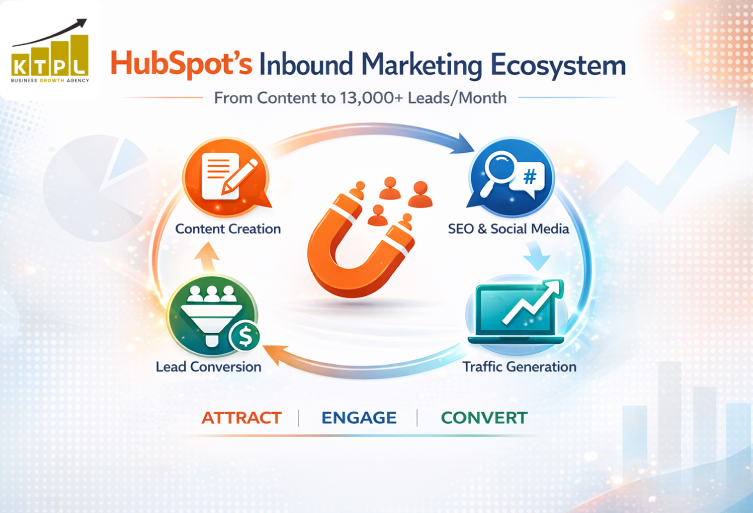
In today’s digital-first world, businesses are no longer chasing customers. Customers are researching, comparing, and making decisions long before they speak to a sales team. This shift has made inbound marketing one of the most powerful growth strategies in the modern era. At the center of this transformation stands HubSpot.
HubSpot has built a complete inbound marketing ecosystem that helps companies attract, engage, and delight customers at scale. From content marketing to automation and lead nurturing, HubSpot’s approach has enabled businesses to generate thousands of qualified leads every month. In this detailed guide, we explore how HubSpot’s inbound marketing ecosystem works and how it can help businesses move from content creation to generating 13,000+ leads per month.
What Is HubSpot and Why It Matters in Modern Marketing?
HubSpot is an all-in-one CRM platform that provides tools for marketing, sales, customer service, and operations. Unlike traditional software that focuses on isolated functions, HubSpot connects every stage of the customer journey into one unified system.
The platform is widely recognized for popularizing inbound marketing. Instead of interrupting audiences with ads, cold calls, or mass emails, HubSpot promotes attracting customers through helpful content, personalized experiences, and meaningful engagement.
- CRM for contact management
- Marketing automation tools
- Content management system
- Email marketing platform
- Sales enablement tools
- Analytics and reporting dashboards
This unified ecosystem allows businesses to create a seamless experience from the first website visit to long-term customer loyalty.
Understanding HubSpot’s Inbound Marketing Framework
HubSpot’s inbound methodology is built around three main stages: Attract, Engage, and Delight. This framework ensures that marketing efforts align with customer needs at every stage of the buying journey.
Attract Stage - Turning Strangers into Visitors
In the attract phase, the goal is to draw the right audience to your website using valuable content and search optimization. HubSpot emphasizes blog posts, SEO strategies, pillar pages, topic clusters, and social media content to drive organic traffic.
Businesses use HubSpot tools to research keywords, optimize blog content, track website performance, and identify high-performing topics. The system allows marketers to monitor which content generates traffic and which pages convert visitors into leads.
Content becomes the foundation of growth. Instead of pushing promotional messages, companies publish educational resources that solve real problems. Over time, this builds authority, trust, and brand visibility.
Engage Stage - Converting Visitors into Leads
Once traffic starts flowing, the next step is converting visitors into leads. HubSpot provides tools such as landing pages, forms, calls-to-action, chatbots, and email automation to capture user information and nurture prospects.
- Personalized email workflows
- Automated lead nurturing sequences
- Smart content based on user behavior
- Segmentation for targeted communication
- CRM tracking for lead scoring
By integrating CRM data with marketing automation, HubSpot enables businesses to send the right message at the right time. Leads receive relevant content based on their interests, industry, or behavior, which increases conversion rates significantly.
Delight Stage - Transforming Leads into Promoters
Inbound marketing does not end after a sale. HubSpot’s ecosystem supports customer retention through email campaigns, feedback surveys, customer service tools, and knowledge bases.
Businesses can track customer interactions, analyze satisfaction data, and create personalized follow-ups. The result is improved retention, repeat purchases, and positive referrals.
The delight phase completes the growth cycle by turning satisfied customers into brand advocates who drive additional inbound traffic and referrals.
How HubSpot Generates 13,000+ Leads Per Month
The success story of HubSpot generating over 13,000 leads per month is rooted in a structured inbound marketing strategy powered by content, automation, and analytics.
HubSpot invests heavily in educational content through blogs, webinars, certifications, free courses, and downloadable resources. Platforms such as HubSpot Academy provide structured learning that attracts marketers, entrepreneurs, and business owners worldwide. This educational ecosystem continuously feeds organic traffic into their funnel.
- Publishing consistent, high-quality blog content
- Offering free downloadable guides and templates
- Creating gated resources to capture lead information
- Running automated email nurturing campaigns
- Leveraging CRM insights for targeted messaging
- Using analytics to refine content strategy
Instead of relying on paid advertisements alone, HubSpot built a content-driven engine that compounds over time. Each blog post, landing page, and downloadable asset acts as a long-term traffic generator.
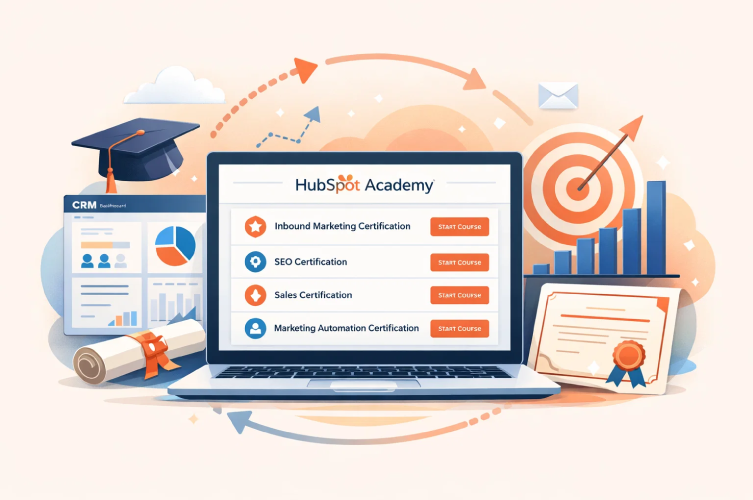
The Power of HubSpot Academy in the Inbound Ecosystem
HubSpot Academy plays a significant role in strengthening the inbound marketing ecosystem. By offering free certification courses on inbound marketing, sales, SEO, and automation, HubSpot attracts millions of learners each year.
These courses not only educate users but also introduce them to HubSpot tools in a practical environment. Learners gain hands-on experience, which increases trust and platform adoption.
- Education attracts learners
- Learners explore HubSpot tools
- Tools solve real business problems
- Businesses upgrade to paid plans
- Customers recommend HubSpot to others
This strategy transforms content marketing into a powerful acquisition engine.
HubSpot’s Enterprise Inbound Strategy
For enterprise-level organizations, HubSpot provides advanced inbound marketing capabilities. These include sophisticated automation workflows, advanced reporting dashboards, multi-touch attribution models, and deep CRM integration.
- Aligning marketing and sales teams
- Using data-driven personalization
- Implementing lead scoring models
- Building multi-channel campaigns
- Measuring ROI through detailed analytics
By connecting marketing and sales teams within one platform, HubSpot eliminates data silos and improves conversion efficiency. The result is faster deal cycles and improved revenue growth.
HubSpot Review Insights - Why Businesses Choose HubSpot
Industry reviews consistently highlight several strengths of HubSpot’s inbound marketing ecosystem. Businesses appreciate its user-friendly interface, comprehensive CRM integration, automation flexibility, and scalability for growing teams.
- All-in-one marketing and sales platform
- Easy-to-use automation workflows
- Strong content management capabilities
- Detailed performance analytics
- Extensive training resources
While some reviews mention pricing considerations for smaller businesses, many organizations see HubSpot as a long-term investment due to its integrated ecosystem and measurable ROI.
Content Strategy - The Core of HubSpot’s Inbound Marketing
Content remains the driving force behind HubSpot’s inbound marketing success. Instead of publishing random blog posts, HubSpot follows a structured content strategy built on topic clusters and pillar pages.
- Strong SEO performance
- Clear content hierarchy
- Improved internal linking
- Higher search visibility
- Long-term organic traffic growth
Every piece of content supports a broader strategy. Educational articles link to downloadable resources. Downloadable resources lead to email nurturing. Email nurturing drives demo requests. Demo requests convert into customers.
This structured system explains how consistent content creation can generate thousands of qualified leads per month.
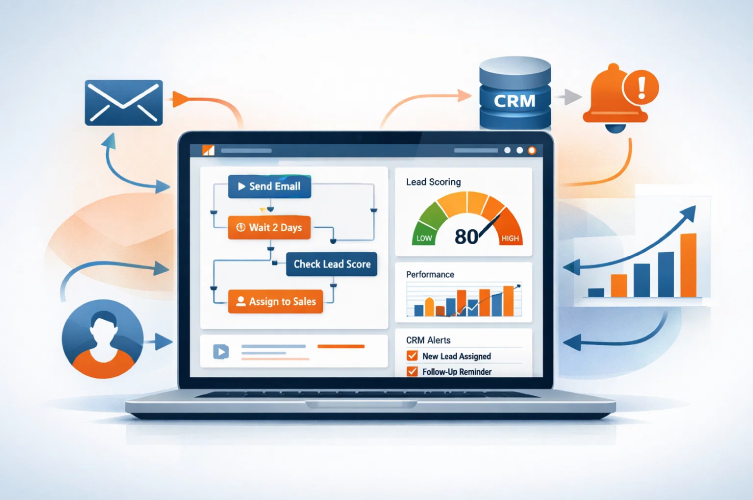
Marketing Automation - Scaling the Inbound Engine
Without automation, managing thousands of leads becomes complex. HubSpot solves this challenge through marketing automation tools that streamline repetitive tasks.
- Behavior-based email triggers
- Lead scoring based on engagement
- Smart workflows for follow-ups
- CRM integration for sales notifications
- Performance tracking dashboards
These tools ensure that no lead is ignored. Every interaction is tracked and optimized for better conversion rates.
Why HubSpot’s Inbound Marketing Ecosystem Works
HubSpot’s inbound marketing ecosystem works because it integrates strategy, technology, and education into one unified system. It focuses on providing value before asking for a sale. It builds trust before pushing conversion.
- SEO-driven content marketing
- Lead capture optimization
- Automated nurturing workflows
- CRM-powered personalization
- Data-driven performance analysis
This structured methodology transforms inbound marketing from a concept into a measurable growth system.
How Businesses Can Implement HubSpot’s Inbound Model
Businesses looking to replicate HubSpot’s success should begin with a clear inbound strategy. The focus should be on identifying target audiences, creating helpful content, optimizing conversion paths, and nurturing leads consistently.
- Conducting audience research
- Building a content calendar
- Creating SEO-optimized blog posts
- Designing landing pages with clear calls-to-action
- Setting up automated email sequences
- Tracking analytics and refining campaigns
Consistency is critical. Inbound marketing compounds over time. With the right tools and structured execution, generating thousands of monthly leads becomes achievable.
Conclusion - From Content to 13,000+ Leads Per Month
HubSpot’s inbound marketing ecosystem demonstrates how strategic content, automation, and CRM integration can transform digital growth. By focusing on education, personalization, and long-term value, HubSpot built a scalable system that generates more than 13,000 leads per month.
For businesses seeking sustainable growth, inbound marketing is not just a trend. It is a proven methodology. HubSpot provides the tools and framework to turn content into consistent, high-quality lead generation.
When strategy meets technology and customer-centric thinking, inbound marketing becomes a powerful revenue engine.
FAQs
Have questions? We’ve answered some of the most common queries to help you understand the topic better
Q1. What is HubSpot and how does it support inbound marketing?
HubSpot is an all-in-one CRM and marketing automation platform designed to support inbound marketing strategies. It helps businesses attract visitors through SEO and content marketing, convert them into leads using landing pages and forms, and nurture them with email automation and CRM tools. HubSpot connects marketing, sales, and customer service into one ecosystem, making it easier to manage the entire customer journey from first visit to final conversion.
Q2. What is HubSpot’s Inbound Marketing Ecosystem?
HubSpot’s Inbound Marketing Ecosystem is a structured framework built around the Attract, Engage, and Delight methodology. It combines content marketing, marketing automation, CRM integration, lead nurturing, analytics, and customer service tools into one unified platform. This ecosystem allows businesses to create valuable content, capture qualified leads, automate communication, and build long-term customer relationships efficiently.
Q3. How does HubSpot generate 13,000+ leads per month?
HubSpot generates over 13,000 leads per month by implementing a content-driven inbound marketing strategy. The company publishes high-quality blog articles, offers downloadable resources, provides certification courses through HubSpot Academy, and uses automated email nurturing campaigns. By combining SEO optimization, lead capture forms, CRM tracking, and personalized workflows, HubSpot converts website visitors into qualified leads at scale.
Q4. Is HubSpot suitable for small and enterprise businesses?
Yes, HubSpot is suitable for both small businesses and enterprise organizations. Small businesses benefit from its easy-to-use CRM, email marketing tools, and automation features. Enterprise businesses use advanced capabilities such as lead scoring, multi-touch attribution, detailed analytics dashboards, and integrated sales pipelines. The scalable nature of HubSpot makes it adaptable for companies at different growth stages.
Q5. Why is HubSpot important for modern digital marketing?
HubSpot is important for modern digital marketing because it centralizes all marketing, sales, and customer service operations in one platform. Instead of using multiple disconnected tools, businesses can manage content marketing, automation, CRM, and analytics within a single ecosystem. This integration improves efficiency, enhances personalization, increases lead conversion rates, and supports long-term inbound marketing success.
Want To Grow Your Business - Connect With KTPL
KTPL – Business Growth Agency, a creative solutions and business growth agency from India.
👉 Visit https://kirnanitechnologies.com
📞 Call us at +91 95093 33000
📧 Email us at contact@kirnanitechnologies.com


