


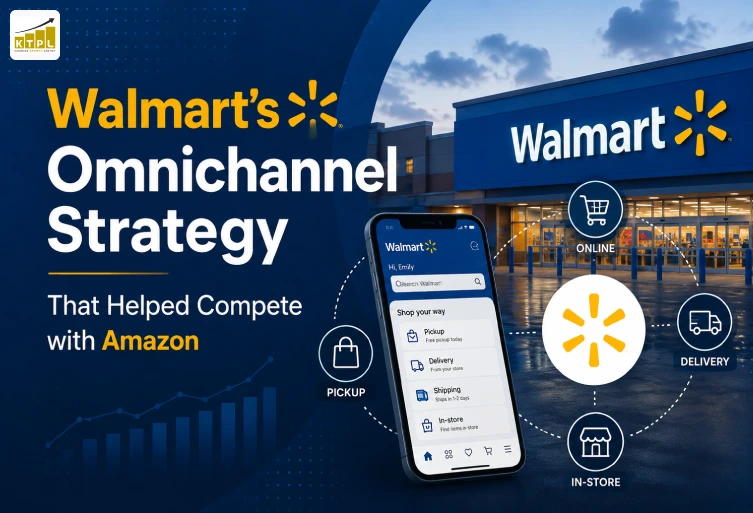
The global retail industry has experienced massive transformation over the last decade, especially with the rise of eCommerce platforms and digital shopping behavior. While Amazon became the dominant force in online retail through innovation, logistics, and customer convenience, traditional retailers struggled to maintain their market position. However, Walmart took a different path by redesigning its entire retail ecosystem through a customer-focused omnichannel model. Today, Walmart’s Omnichannel Strategy is considered one of the strongest examples of digital retail transformation in the modern business world.
Instead of competing with Amazon only in online sales, Walmart created a unified shopping experience that combined physical stores, mobile commerce, online ordering, delivery systems, and customer service into one connected retail structure. This strategy helped Walmart use its existing strengths while adapting to modern customer expectations. The company understood that consumers no longer shop through a single platform. Customers want flexibility, speed, personalization, and seamless experiences across all channels.
The success of Walmart’s omnichannel retail model has become an important case study for businesses worldwide. Companies looking to improve customer engagement, strengthen online visibility, and increase sales performance can learn valuable lessons from Walmart’s retail innovation. In this detailed blog, we will explore how Walmart’s Omnichannel Strategy helped the company compete with Amazon and why omnichannel retail has become essential for long-term business growth.
What Is Walmart’s Omnichannel Strategy?
Walmart’s Omnichannel Strategy is a retail business approach that integrates online shopping platforms, physical retail stores, mobile applications, customer service systems, and delivery networks into one seamless customer experience. Instead of operating digital and offline channels separately, Walmart connected all shopping touchpoints to improve convenience, accessibility, and customer satisfaction. This integrated model allows customers to interact with the Walmart brand in multiple ways without facing interruptions during the shopping journey.
The main objective of Walmart’s omnichannel retail system is to make shopping easier for customers regardless of how they choose to shop. A customer can search for products on the Walmart app, place an order online, pick up items from a nearby store, return products through physical outlets, or request home delivery using the same connected system. This level of flexibility has become extremely important in modern retail because customers expect smooth transitions between online and offline shopping experiences.
Walmart’s omnichannel model also helps the company improve operational efficiency. By integrating inventory systems, delivery operations, and customer data across platforms, Walmart can reduce delays, optimize logistics, and offer faster service. This strategy not only strengthened Walmart’s position in the retail market but also helped the company directly compete with Amazon’s digital dominance.
Why Walmart Needed an Omnichannel Retail Strategy
For many years, Amazon dominated the eCommerce industry by focusing heavily on digital innovation, customer convenience, and advanced logistics. The company built a strong reputation for fast delivery, personalized recommendations, massive product selection, and efficient customer service. Traditional retail companies struggled to keep pace because most of their operations depended heavily on physical stores and outdated retail systems.
Walmart recognized that customer behavior was rapidly changing. More consumers started using smartphones, mobile apps, and online shopping platforms to make purchasing decisions. Customers no longer wanted separate online and offline experiences. They expected flexibility, convenience, and speed throughout the buying process. Walmart understood that failing to adapt to this shift could eventually weaken its market position.
The company also realized that it already possessed several competitive advantages that Amazon did not have at the same scale. Walmart had thousands of retail stores across different locations, strong supply chain networks, established customer trust, and extensive logistics capabilities. Instead of abandoning physical retail, Walmart decided to transform its existing infrastructure into a powerful omnichannel ecosystem. This strategic decision became the foundation of Walmart’s Omnichannel Strategy and helped the company modernize its retail operations successfully.
How Walmart Used Physical Stores to Strengthen Online Retail
One of the most important elements of Walmart’s Omnichannel Strategy was the use of physical stores as fulfillment and distribution centers. Unlike Amazon, which invested heavily in building warehouses and fulfillment hubs, Walmart already had thousands of stores located near customers across multiple regions. The company transformed these stores into mini fulfillment centers capable of handling online orders efficiently.
This strategy significantly improved delivery speed and reduced operational costs. Instead of shipping products from distant warehouses, Walmart could fulfill customer orders from nearby retail locations. This allowed the company to provide faster delivery services while reducing transportation expenses. Customers also benefited because they received products more quickly and gained access to flexible pickup options.
Using physical stores as fulfillment centers also improved inventory management. Walmart could monitor stock levels across different locations and optimize product availability more effectively. This helped reduce inventory shortages and improved customer satisfaction. Walmart’s ability to combine physical infrastructure with digital technology became one of its strongest competitive advantages against Amazon.
Buy Online Pick Up In Store Became a Major Success
A major component of Walmart’s Omnichannel Strategy was the introduction of Buy Online Pick Up In Store services, commonly known as BOPIS. This retail model allows customers to place orders online and collect their products from nearby Walmart stores without waiting for home delivery.
The popularity of this service increased because customers appreciated the convenience and flexibility it offered. Many customers wanted to avoid delivery fees or long shipping times. BOPIS solved these problems by allowing customers to collect products on their own schedule. Walmart also introduced curbside pickup services where customers could receive orders without entering the store.
This omnichannel approach helped Walmart increase customer engagement while improving operational efficiency. Customers visiting stores for order pickup often purchased additional products during their visits, which increased overall sales performance. Walmart successfully combined online convenience with the benefits of physical retail, creating a shopping experience that many customers preferred over traditional eCommerce-only platforms.
Walmart’s Grocery Delivery and Pickup Strategy
Grocery retail became one of the biggest strengths within Walmart’s Omnichannel Strategy. Walmart already had a strong presence in grocery retail before expanding its digital operations. The company used this advantage to build highly effective grocery pickup and delivery services that directly competed with Amazon.
Walmart introduced features such as contactless grocery pickup, same-day delivery, and scheduled online grocery ordering. Customers could easily place grocery orders through the Walmart app or website and choose between home delivery or store pickup options. These services became especially popular among busy families and working professionals looking for convenience and time savings.
The grocery segment helped Walmart build long-term customer loyalty because grocery shopping involves frequent repeat purchases. Customers who regularly used Walmart’s grocery services often continued using other Walmart retail services as well. This created stronger customer retention and improved overall brand engagement. Walmart’s investment in grocery-focused omnichannel experiences played a major role in strengthening its position against Amazon.
Mobile Commerce Played a Critical Role in Walmart’s Growth
Mobile shopping has become a major part of modern retail behavior, and Walmart invested heavily in improving its mobile commerce experience. The Walmart mobile app became an important component of Walmart’s Omnichannel Strategy because it connected customers with online shopping, delivery services, store information, and personalized offers through one platform.
The app allows customers to browse products, check inventory availability, make digital payments, track orders, schedule pickups, and receive personalized recommendations. Walmart continuously improved app performance to create faster and more user-friendly experiences. The company understood that mobile convenience directly impacts customer engagement and purchasing decisions.
Mobile commerce also gave Walmart valuable customer data and shopping insights. By analyzing app usage patterns, browsing behavior, and purchase history, Walmart could optimize marketing strategies and personalize customer experiences. These improvements helped Walmart compete more effectively with Amazon’s advanced recommendation and digital engagement systems.

Walmart Marketplace Helped Expand Product Availability
To strengthen its eCommerce ecosystem, Walmart expanded its online marketplace platform for third-party sellers. This allowed independent businesses and brands to sell products directly through Walmart’s website. The marketplace model became another important pillar of Walmart’s Omnichannel Strategy because it increased product variety and improved platform scalability.
Amazon’s marketplace business had already proven highly successful, and Walmart adopted a similar approach to increase online competitiveness. Expanding marketplace operations helped Walmart offer a broader product catalog without managing all inventory directly. Customers gained access to more product choices while Walmart increased platform traffic and revenue opportunities.
The Walmart Marketplace also attracted sellers looking for alternatives to Amazon’s highly competitive environment. Walmart’s growing digital presence, combined with strong brand recognition, made its marketplace increasingly attractive for businesses wanting to reach new customers online.
Data Analytics and Customer Insights Improved Retail Performance
Modern retail success depends heavily on data analytics, and Walmart invested significantly in customer intelligence systems. Data became a central part of Walmart’s Omnichannel Strategy because it helped the company understand customer preferences, buying patterns, and operational performance more effectively.
Walmart uses advanced analytics to improve inventory planning, optimize product recommendations, forecast demand, and personalize customer experiences. These systems help Walmart reduce waste, improve stock management, and increase sales conversions. Personalized marketing strategies also improve customer engagement because shoppers receive recommendations based on their interests and purchasing history.
Retail data analytics allowed Walmart to compete more effectively against Amazon’s AI-driven systems. By integrating customer data across online and offline channels, Walmart created more accurate insights that improved overall retail performance and customer satisfaction.
Walmart + Membership Program Strengthened Customer Loyalty
Walmart introduced Walmart+ as a subscription-based membership program designed to compete directly with Amazon Prime. The program became an important element of Walmart’s Omnichannel Strategy because it encouraged repeat purchases and strengthened customer loyalty.
Walmart+ offers benefits such as free delivery, fuel discounts, faster checkout experiences, and mobile scan-and-go features. These membership advantages improve convenience while creating stronger customer relationships. Customers who subscribe to membership programs are more likely to continue shopping within the same retail ecosystem.
The introduction of Walmart+ also helped Walmart increase recurring revenue opportunities. Subscription-based retail models provide businesses with more stable customer engagement and long-term profitability. Walmart’s ability to combine digital membership services with physical retail benefits created a unique competitive advantage in the omnichannel retail market.
Challenges Walmart Faced While Competing with Amazon
Although Walmart’s Omnichannel Strategy achieved impressive success, the company also faced several major challenges during its transformation journey. Integrating physical retail operations with digital commerce systems required massive investments in technology, logistics, and workforce training. Walmart needed to modernize outdated systems while maintaining operational efficiency across thousands of store locations.
Competing with Amazon also meant keeping pace with constant innovation. Amazon continued investing in artificial intelligence, automation, logistics technology, and customer personalization systems. Walmart had to continuously improve its own digital capabilities to remain competitive in the rapidly changing retail environment.
Another challenge involved managing customer expectations. Modern consumers expect fast delivery, accurate inventory updates, seamless app experiences, and efficient customer support. Meeting these expectations consistently across online and offline channels required complex operational coordination. Despite these difficulties, Walmart successfully adapted its retail strategy and strengthened its market position significantly.
The Future of Walmart’s Omnichannel Strategy
The future of Walmart’s Omnichannel Strategy will likely focus on advanced technologies such as artificial intelligence, automation, smart logistics, and personalized shopping experiences. Walmart continues investing in digital transformation initiatives that improve customer convenience and operational efficiency.
Emerging technologies like drone delivery, voice commerce, predictive analytics, and automated fulfillment systems may play larger roles in Walmart’s future retail operations. The company is also expected to expand same-day delivery capabilities and improve AI-driven customer personalization. These innovations will help Walmart remain competitive in the evolving digital commerce industry.
As customer shopping behavior continues changing, omnichannel retail strategies will become even more important for businesses worldwide. Walmart’s ability to combine digital innovation with physical retail infrastructure positions the company strongly for future retail growth and long-term competitiveness.
Conclusion
Walmart’s Omnichannel Strategy completely transformed the company’s approach to modern retail and helped it compete more effectively with Amazon. By integrating physical stores, digital commerce, mobile technology, customer data, delivery services, and personalized experiences into one connected ecosystem, Walmart created a seamless retail model that aligns with modern customer expectations.
The company successfully used its physical infrastructure as a competitive advantage while embracing digital transformation and technological innovation. Walmart proved that traditional retailers can remain highly competitive in the digital era by focusing on convenience, flexibility, operational efficiency, and customer experience.
For businesses looking to improve their own growth strategies, Walmart’s omnichannel success offers valuable lessons in retail adaptation, customer-centric innovation, and long-term digital transformation. As the future of commerce becomes increasingly connected, omnichannel strategies will continue shaping how businesses interact with customers across both online and offline platforms.
FAQs
Have questions? We’ve answered some of the most common queries to help you understand the topic better
Q1. What is Walmart’s Omnichannel Strategy?
Walmart’s Omnichannel Strategy is a retail system that combines online shopping, physical stores, mobile apps, delivery services, and customer support into one integrated customer experience.
Q2. How did Walmart compete with Amazon?
Walmart competed with Amazon by using physical stores as fulfillment centers, improving delivery speed, expanding grocery services, investing in mobile commerce, and creating seamless omnichannel shopping experiences.
Q3. Why is omnichannel retail important?
Omnichannel retail improves customer convenience by allowing shoppers to interact with brands across multiple channels while receiving consistent experiences and flexible purchasing options.
Q4. What is Walmart+?
Walmart+ is Walmart’s membership program that provides benefits such as free delivery, fuel discounts, and faster shopping experiences for subscribers.
Q5. What businesses can learn from Walmart’s Omnichannel Strategy?
Businesses can learn the importance of customer convenience, digital transformation, integrated retail systems, data analytics, and personalized customer experiences from Walmart’s omnichannel success.
Want To Grow Your Business - Connect With KTPL
KTPL – Business Growth Agency, a creative solutions and business growth agency from India.
👉 Visit https://kirnanitechnologies.com
📞 Call us at +91 95093 33000
📧 Email us at contact@kirnanitechnologies.com


