


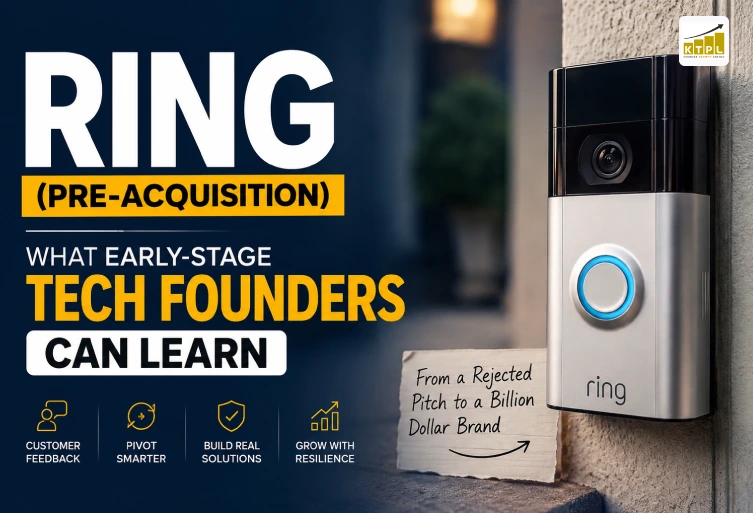
Before becoming a billion-dollar company acquired by Amazon, Ring (Pre-Acquisition) was a startup struggling to gain investor confidence and prove its place in the market. Originally launched as Doorbot by entrepreneur Jamie Siminoff, the company introduced a Wi-Fi-enabled video doorbell that allowed homeowners to see and speak with visitors through their smartphones. While the idea was innovative, it entered the market at a time when smart home technology was still new, making customer adoption and investor interest difficult to achieve. The turning point came when Jamie Siminoff pitched Doorbot on Shark Tank US in 2013. Although the Sharks appreciated the concept, none of them chose to invest. Instead of viewing this rejection as the end of his entrepreneurial journey, Siminoff treated it as valuable feedback. He refined the product, improved the company’s messaging, and continued focusing on solving real customer problems. His determination eventually transformed Ring into one of the world’s leading smart home security brands. The story of Ring (Pre-Acquisition) is more than just a startup success story. It is a practical case study on resilience, product-market fit, customer feedback, and strategic growth. Every entrepreneur building a technology startup can learn valuable lessons from the company’s early struggles before its eventual success. In this article, we’ll explore how Ring overcame rejection, identified what customers truly wanted, and built a business that stood out in a competitive market. Whether you’re developing a SaaS platform, AI product, mobile app, or digital service, these lessons can help you avoid common startup mistakes and build a stronger foundation for long-term growth.
The Origin of Ring (Pre-Acquisition)
The journey of Ring (Pre-Acquisition) began with a simple observation. Jamie Siminoff noticed that people often missed visitors or package deliveries because they weren’t near the front door. Instead of accepting this everyday inconvenience, he envisioned a smart doorbell that would allow homeowners to answer their doors remotely using a smartphone. This idea led to the creation of Doorbot, a product designed to make homes more connected and convenient. Although the concept was innovative, launching a hardware startup was far from easy. The smart home market was still developing, and many consumers were unfamiliar with internet-connected security devices. Convincing people to trust new technology required more than simply building a functional product. Ring had to educate customers, demonstrate real value, and prove that connected home security could make everyday life safer and easier. Like many early-stage startups, Doorbot faced several challenges during its initial growth. Users appreciated the idea but also reported issues with video quality, connectivity, and overall reliability. Instead of ignoring these concerns, the company actively listened to customer feedback and treated every suggestion as an opportunity to improve. This customer-first mindset became one of the biggest strengths of Ring (Pre-Acquisition) and helped shape its future product development. Another reason Ring’s early journey stands out is its focus on solving a genuine problem rather than chasing technology trends. The company didn’t market its product as just another smart gadget. Instead, it focused on helping homeowners feel more secure and stay connected to their homes, even when they were away. This shift in thinking allowed the business to create stronger emotional value for customers and build trust in a new product category. Jamie Siminoff also believed in thinking beyond the first version of the product. Rather than viewing Doorbot as a single device, he envisioned a future where connected technology could improve home security in multiple ways. This long-term vision encouraged continuous innovation and prepared the company for future expansion. It also demonstrated an important entrepreneurial principle: successful startups are built by solving evolving customer needs, not by relying on one great idea. The early years of Ring (Pre-Acquisition) remind founders that building a successful startup takes patience, adaptability, and continuous learning. Every challenge the company faced became an opportunity to improve its product and strengthen its market position. Instead of aiming for perfection from day one, Ring focused on making consistent improvements based on real customer experiences—a strategy that ultimately laid the foundation for its remarkable success.
The Shark Tank Rejection That Changed Everything
In 2013, Jamie Siminoff appeared on Shark Tank US hoping to secure investment for Doorbot, the company that would later become Ring (Pre-Acquisition). He pitched the idea of a Wi-Fi-enabled video doorbell that allowed homeowners to see and communicate with visitors through their smartphones. While the concept impressed the Sharks, they questioned its market potential, valuation, and ability to scale. As a result, Siminoff left the show without receiving an investment offer. For many entrepreneurs, such a public rejection could have ended their confidence. Instead, Siminoff viewed the experience as an opportunity to learn. The feedback from the Sharks helped him understand where the product and business model needed improvement. More importantly, the television appearance introduced Doorbot to millions of viewers, giving the startup valuable exposure that traditional marketing could never have achieved with its limited budget. After Shark Tank, the company focused on refining its product instead of dwelling on the rejection. Customer feedback became a priority, the technology was improved, and the brand messaging shifted from selling a smart doorbell to providing home security and peace of mind. This change made the product far more appealing to homeowners because it addressed an emotional need rather than simply offering a new piece of technology. The journey of Ring (Pre-Acquisition) proves that investor rejection does not determine a startup’s future. Sometimes, the most valuable outcome isn’t funding but the lessons learned from criticism and the opportunity to improve. By staying committed to its vision and continuously adapting, Ring transformed a disappointing moment into one of the biggest turning points in its success story.
Key Lessons Every Tech Founder Can Learn
The biggest lesson from Ring (Pre-Acquisition) is the importance of solving real customer problems instead of focusing only on innovative technology. Doorbot began as a convenient way to answer the front door remotely, but customer feedback revealed a much bigger opportunity. People weren’t simply looking for convenience—they wanted greater security and peace of mind. Recognizing this shift allowed the company to reposition its product and build a stronger connection with its audience. Another valuable lesson is to treat customer feedback as one of the most powerful business tools. Rather than defending its original product, Ring listened carefully to users and made continuous improvements based on their experiences. This customer-first approach helped the company improve product-market fit and build long-term trust. Startups that regularly gather and apply user feedback are far more likely to develop products that customers genuinely value. Persistence also played a critical role in Ring’s growth. The company faced investor rejection, technical challenges, and market uncertainty, yet it continued moving forward. Every obstacle became an opportunity to refine the business rather than a reason to quit. Successful entrepreneurs understand that setbacks are part of the startup journey, and resilience often becomes the difference between failure and long-term success. Ring also demonstrated the importance of clear product positioning. Instead of marketing a collection of technical features, the company focused on the outcome customers cared about most: protecting their homes and families. Businesses that communicate the value their products create are often more successful than those that concentrate only on specifications or technology. Finally, Ring (Pre-Acquisition) teaches founders to think beyond the first version of their product. A startup should never stop evolving after launching an MVP. Continuous innovation, customer-focused improvements, and a long-term vision are essential for sustainable growth. Entrepreneurs who remain adaptable and committed to learning from the market are better positioned to build businesses that thrive in competitive industries.
How You Can Apply These Lessons to Your Startup
The journey of Ring (Pre-Acquisition) offers practical lessons that every early-stage founder can apply, regardless of industry. The first step is to validate your idea with real users instead of relying only on assumptions. Launch a minimum viable product (MVP), collect feedback, and use customer insights to improve your solution. Products become successful when they solve genuine problems, not simply because they include advanced technology. Founders should also remain open to change. Market conditions, customer expectations, and industry trends evolve over time, so businesses must be willing to adapt. Ring succeeded because it listened to customers, refined its messaging, and focused on delivering a clear value proposition. Being flexible does not mean abandoning your vision—it means improving your approach based on what the market tells you. Another important lesson is to build resilience. Every startup faces rejection, whether from investors, customers, or potential partners. Instead of treating rejection as failure, use it as an opportunity to identify weaknesses and strengthen your business. Entrepreneurs who continue learning and improving are far more likely to achieve long-term success than those who give up after early setbacks. Finally, remember that a strong digital presence is just as important as a great product. A professional website, effective SEO, quality content, and consistent branding help startups build credibility and attract potential customers. KTPL – Business Growth Agency supports startups by creating growth-focused digital solutions that improve online visibility and help businesses establish a stronger market presence.
Conclusion
The story of Ring (Pre-Acquisition) demonstrates that successful startups are built through persistence, customer understanding, and continuous improvement. Although Jamie Siminoff left Shark Tank without an investment, he refused to let rejection define the future of his business. Instead, he improved the product, listened to customers, and created a stronger value proposition that eventually transformed Ring into a global smart home security brand.For early-stage tech founders, the biggest takeaway is simple: focus on solving meaningful customer problems, embrace constructive feedback, and keep refining your product as the market evolves. A single setback should never determine the future of your startup. The companies that succeed are often those that continue learning, adapting, and moving forward despite challenges. Whether you’re building a SaaS platform, AI solution, fintech product, or mobile application, the lessons from Ring (Pre-Acquisition) remain highly relevant today. Innovation is important, but long-term success comes from understanding your customers, communicating clear value, and staying committed to your vision even when the journey becomes difficult.
FAQs
Have questions? We’ve answered some of the most common queries to help you understand the topic better.
Q1. What is Ring (Pre-Acquisition)?
Ring (Pre-Acquisition) refers to the period before Amazon acquired Ring in 2018. During this time, the company operated as an independent startup, evolving from Doorbot into a leading smart home security brand through product innovation and customer-focused improvements.
Q2. Why did Ring fail to get a deal on Shark Tank?
The Sharks questioned the company’s valuation, scalability, and market demand for smart video doorbells. Although Ring did not receive funding, the national exposure and investor feedback helped the company improve its strategy and accelerate growth.
Q3. What is the biggest lesson from Ring's startup journey?
The biggest lesson is that customer feedback and persistence are more valuable than early investor approval. Ring continuously improved its product, refined its messaging, and focused on solving real customer problems.
Q4. How can startups apply Ring's success strategy?
Startups should validate ideas with real users, improve products based on feedback, remain adaptable, and build strong branding alongside product development. These practices increase the chances of achieving product-market fit and sustainable growth.
Q5. Why is Ring (Pre-Acquisition) a popular startup case study?
It highlights how resilience, continuous innovation, and customer-first thinking helped a rejected startup become one of the most successful smart home companies in the world, making it an inspiring example for entrepreneurs.
Want To Grow Your Business - Connect With KTPL
KTPL – Business Growth Agency, a creative solutions and business growth agency from India.
👉 Visit https://kirnanitechnologies.com
📞 Call us at +91 95093 33000
📧 Email us at contact@kirnanitechnologies.com


