


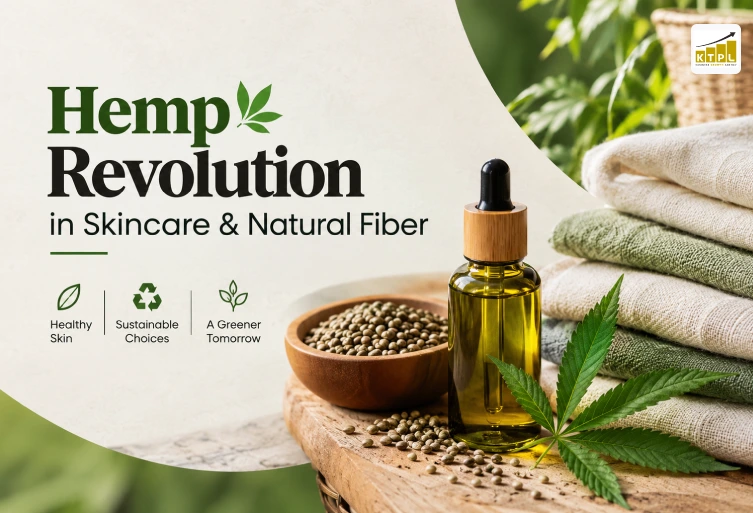
The Hemp Revolution is transforming the way the skincare, beauty, fashion, and textile industries approach natural ingredients and sustainable materials. As consumers become more conscious of the products they apply to their skin and the fabrics they wear, hemp is gaining attention for its versatility, useful plant-derived compounds, and potential role in responsible manufacturing. Hemp seed oil is used in moisturisers and personal care products, while fibres obtained from hemp stalks are being explored for clothing, accessories, and other textile applications. This growing interest reflects a wider shift towards products that combine quality, durability, and thoughtful resource use. However, understanding the Hemp Revolution requires more than following a trend, because hemp seed oil, CBD extracts, and industrial hemp fibres have different properties and applications. Their benefits also depend on product formulation, cultivation practices, processing methods, and the quality of the finished product. In this article, we explore how the Hemp Revolution is influencing skincare and natural fibre innovation, the opportunities it creates for businesses, and why it matters for the future of sustainable product development.
What Is the Hemp Revolution and Why Is It Growing?
The Hemp Revolution refers to the growing use of hemp-derived ingredients and materials across industries such as cosmetics, personal care, fashion, textiles, and manufacturing. Hemp belongs to the Cannabis sativa plant species, but industrial hemp is cultivated for specific purposes, including fibre and seed production, and is generally subject to legal limits on THC content. Different parts of the plant offer different commercial uses: hemp seeds can be pressed to produce oil, while stalks contain fibres that can be processed into yarn, fabrics, and other materials. Certain hemp-derived extracts, including cannabidiol (CBD), are also used in some cosmetic formulations, although their properties differ from those of hemp seed oil. One reason the Hemp Revolution is gaining attention is that consumers increasingly examine product ingredients, material quality, sourcing, and environmental claims before making purchasing decisions. Manufacturers are responding by investigating alternative raw materials and developing products that meet changing expectations without sacrificing performance or affordability. For businesses, hemp offers opportunities for innovation, but successful adoption requires reliable suppliers, appropriate processing, accurate product information, and compliance with relevant regulations. Rather than replacing every conventional ingredient or textile, the Hemp Revolution is about identifying where hemp can offer practical value and how it can be used responsibly.
Hemp Revolution in Skincare and Natural Beauty
The skincare industry is one of the most visible areas of the Hemp Revolution because hemp-derived ingredients can be incorporated into facial creams, body lotions, moisturising oils, cleansing products, and nourishing balms. Hemp seed oil is especially interesting to cosmetic formulators because it contains fatty acids, including linoleic acid and alpha-linolenic acid, which contribute to its value as an emollient ingredient. These fatty acids can help condition the skin, support its natural moisture barrier, and improve the feeling of dryness when hemp oil is used in a suitable formulation. Depending on the other ingredients and the concentration of the oil, a hemp-based moisturiser may leave the skin feeling softer without the heavy finish associated with some richer products. This makes hemp seed oil a useful option for brands developing everyday skincare products for different consumer preferences. The Hemp Revolution also reflects growing interest in plant-derived ingredients, but natural origin alone does not guarantee that a product is suitable for every skin type or more effective than conventional alternatives. Consumers should check the complete ingredient list, follow product instructions, and introduce unfamiliar products carefully, particularly if they have sensitive skin. CBD is another ingredient associated with hemp skincare, but it should not be confused with hemp seed oil. Hemp seed oil is generally extracted from the seeds and contains negligible amounts of cannabinoids, while CBD is a cannabinoid usually obtained from other parts of the plant. Researchers are investigating CBD for various skin-related applications, including its potential relationship with inflammation and skin oil production, but the available evidence varies depending on the use and formulation. Claims that hemp or CBD products cure acne, treat eczema, eliminate wrinkles, or resolve other medical conditions should not be accepted without reliable supporting evidence. A moisturiser may soften the appearance of fine lines caused by dryness, but that is different from reversing skin ageing. The most responsible approach to the Hemp Revolution in beauty is to focus on transparent ingredients, realistic cosmetic benefits, suitable formulation, and clear product labelling. Consumers experiencing persistent skin problems should consult a qualified healthcare professional rather than relying exclusively on cosmetic products. For further reading, explore this scientific review of hemp-derived ingredients and dermatological applications.
Hemp Revolution in Natural Fibre and Sustainable Textiles
Beyond beauty products, the Hemp Revolution is creating opportunities in natural fibre innovation, where hemp stalks provide fibres that can be processed into clothing, bags, accessories, home textiles, and selected industrial materials. Hemp fibres are valued for their strength and durability, although their actual performance depends on fibre quality, yarn construction, fabric design, and manufacturing methods. Traditional hemp fabrics can feel firm or coarse when they have not been processed for softness, but modern techniques and fibre blends can help manufacturers develop materials suitable for a broader range of products. Hemp can be blended with cotton or other fibres to achieve a desired balance of comfort, durability, appearance, and cost. This flexibility makes it an interesting material for fashion businesses seeking alternatives to conventional textile inputs without compromising everyday usability. Shirts, trousers, jackets, reusable bags, and home furnishings are among the potential applications, although each product must be evaluated according to its intended use and care requirements. One important development is cottonization, a group of processes designed to make hemp fibres more compatible with textile manufacturing methods commonly used for cotton. Mechanical, enzymatic, and other controlled treatments can help separate and refine fibres, improving their handling and suitability for yarn production. These methods do not make hemp identical to cotton, but they can help textile manufacturers produce more consistent materials and explore a wider range of fabric applications. The Hemp Revolution therefore depends not only on growing the crop but also on improving how fibres are processed, spun, blended, and finished. Processing quality matters because excessive or poorly managed treatments can affect fibre strength, production costs, and environmental performance. Manufacturers must balance softness, durability, efficiency, and resource use when selecting a suitable method. Businesses interested in this area can read more about hemp fibre properties and textile processing, including the challenges involved in converting raw plant fibres into usable textile materials. Sustainability is another major reason hemp is attracting attention from textile manufacturers and environmentally conscious consumers. Hemp can grow relatively quickly and may require less irrigation and fewer pesticide applications than conventional cotton in certain agricultural conditions. However, these advantages vary according to climate, soil quality, rainfall, farming practices, crop variety, and the quantity of usable fibre produced. The complete environmental impact also depends on harvesting, fibre separation, spinning, dyeing, finishing, transportation, and product disposal. A natural fibre is not automatically sustainable simply because it comes from a plant, and biodegradable materials do not necessarily break down quickly in every environment. Product durability and how long an item remains useful are also important considerations when comparing materials. For this reason, the Hemp Revolution should be supported by transparent sourcing and evidence-based comparisons rather than broad claims that hemp is always better than cotton or other fibres. Businesses can explore this comparative life-cycle research on hemp and cotton textiles to understand why agricultural and manufacturing conditions matter when evaluating sustainability.
Business Opportunities and the Future of the Hemp Revolution
The Hemp Revolution offers opportunities for businesses working in skincare, personal care, fashion, accessories, and sustainable product manufacturing. Beauty brands may explore hemp seed oil in moisturisers, body lotions, lip care, and other cosmetic formulations, while textile companies can investigate hemp fabrics, cotton-hemp blends, reusable bags, and selected home products. However, commercial success depends on more than adding hemp to a product name. Businesses must evaluate raw-material quality, supplier reliability, manufacturing costs, product performance, applicable regulations, and the expectations of their target audience before launching new products. Clear labelling and evidence-based claims are especially important because customers increasingly want to know what products contain and whether their sustainability benefits are supported by credible information. Companies should also distinguish hemp seed oil from CBD and ensure that their marketing accurately reflects the ingredients used in the finished formulation. Digital communication can help businesses explain these differences and connect their products with people searching for reliable information. Helpful blog articles, informative product pages, relevant internal links, and clear answers to common questions can improve the customer experience while supporting organic search visibility. Related keywords such as hemp skincare benefits, hemp seed oil for skin, hemp fabric, natural fibre innovation, and sustainable textiles can be included naturally where they provide useful context. For effective SEO, content should answer the reader’s questions rather than repeat the same keyword excessively. AEO-friendly FAQs and direct explanations can make information easier to understand, while GEO-focused content should provide accurate context, identifiable business information, and trustworthy sources that search systems can interpret. These practices are relevant to KTPL – Business Growth Agency, where useful content and clear brand communication are important parts of digital growth. Businesses entering the hemp market can apply the same principles by explaining product benefits accurately, building customer trust, and making information easy to discover. Looking ahead, the future of the Hemp Revolution will depend on continued research, improved fibre processing, dependable supply chains, and skincare formulations supported by appropriate evidence. Advances in cottonization may make hemp more practical for a wider range of textile products, while ongoing cosmetic research may improve understanding of specific hemp-derived ingredients. Wider adoption will also require consistent quality, competitive pricing, suitable manufacturing infrastructure, and compliance with local laws and industry standards. Consumers will continue to need reliable information about product ingredients, textile composition, and environmental claims. Brands that provide clear explanations and avoid exaggerated promises may be better positioned to build lasting customer relationships. Ultimately, the Hemp Revolution is not about replacing every existing ingredient or material with hemp; it is about finding where this versatile plant can deliver practical value while encouraging responsible product development and informed purchasing decisions.
FAQs
Have questions? We’ve answered some of the most common queries to help you understand the topic better.
Q1. What is the Hemp Revolution?
It is the growing use of hemp-derived ingredients and fibres in skincare, fashion, and manufacturing.
Q2. What are the benefits of hemp seed oil for skin?
It contains fatty acids that can help condition the skin and support moisture retention.
Q3. Is hemp seed oil the same as CBD oil?
No. Hemp seed oil comes from seeds, while CBD is a cannabinoid generally extracted from other plant parts.
Q4. Is hemp fabric sustainable?
It can offer environmental advantages, depending on cultivation, processing, durability, and disposal.
Q5. Can hemp fibre be used for clothing?
Yes. Hemp fibre can be processed into fabrics for clothing, bags, and other textile products.


