


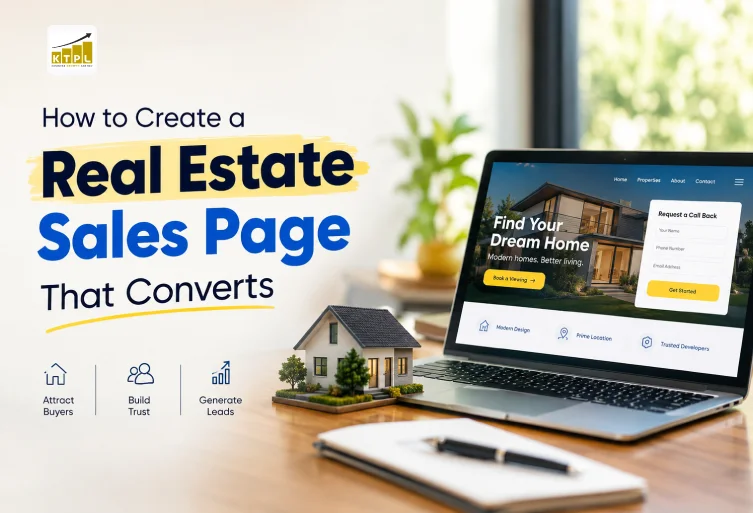
Creating a Real Estate sales page that converts requires more than attractive property photographs and a modern website design. It involves understanding potential buyers, presenting property information clearly, building trust, and guiding visitors towards a specific action, such as booking a site visit, requesting property details, or contacting an agent. Whether you are a real estate agent, property developer, broker, or property marketing professional, your landing page should make it easy for visitors to understand your offer and take the next step. A well-designed Real Estate landing page can support organic search traffic, paid advertising, social media campaigns, and other digital marketing activities. It should also answer common questions about pricing, location, amenities, property features, and availability without overwhelming visitors with unnecessary information. In this guide, you will learn how to create a Real Estate sales page that attracts relevant visitors, builds credibility, and turns genuine interest into qualified property enquiries.
Understand Your Target Audience and Set a Clear Goal
Before designing a Real Estate sales page, identify your target audience and decide what action you want visitors to complete. First-time homebuyers may prioritise affordability, neighbourhood facilities, and convenient transport, while property investors may focus on rental demand, ownership costs, and long-term investment considerations. Homeowners planning to sell may be more interested in a property valuation, local market information, or a consultation with an experienced agent. Trying to address every audience with the same message can make the page confusing and reduce its relevance to individual visitors. Instead, create a focused landing page around one primary objective, such as scheduling a property viewing, generating enquiries for a new residential project, or offering a free property valuation. Your headline, photographs, content, and call-to-action buttons should all support this goal. For example, a residential property page could use the headline “Explore Modern Apartments in Jaipur” if the property is genuinely located in Jaipur, while a seller-focused campaign might promote a “Free Initial Property Valuation.” Supporting content should explain what visitors can expect, what information they will receive, and how they can contact your team. Consider the visitor’s stage in the buying journey as well, because someone researching neighbourhoods may need a helpful guide before being ready to schedule a viewing. Understanding the audience also helps you select relevant search terms, advertising messages, and lead magnets. A clear goal and a specific audience provide the foundation for a Real Estate sales page that feels useful rather than overly promotional.
Create a Compelling Headline and Present Property Information Clearly
Your headline is one of the first things visitors notice, so it should communicate the property’s value or the benefit of your offer immediately. Avoid generic phrases such as “Welcome to Our Real Estate Website” and use a specific message that reflects the property, location, or service. A residential project might highlight spacious layouts or convenient access to local facilities, while a commercial property could focus on accessibility, usable space, or suitability for business operations. Add a short supporting description beneath the headline to explain the offer and help visitors understand why it is relevant to their needs. Place a clear call-to-action button nearby, using wording such as “Schedule a Property Viewing,” “Request Property Details,” or “Speak With Our Team.” Your property content should answer the questions buyers are likely to ask before contacting an agent. Include accurate information about the location, property type, price or available price range where appropriate, floor area, configurations, parking, amenities, and possession timeline when those details are available. Explain nearby facilities such as transport connections, hospitals, shopping areas, schools, and business districts using verifiable information rather than vague claims about an excellent location. Organise the content into readable paragraphs and clearly labelled information sections so visitors can quickly find relevant details. If certain details are not confirmed, do not present assumptions as facts. Accurate, helpful content allows potential customers to understand the offer and helps your Real Estate landing page attract enquiries from people whose requirements match the property.
Use Professional Images and Build Trust With Credible Information
Property visuals play an important role in helping buyers understand a property’s appearance, layout, and features before arranging a viewing. Use clear, high-quality photographs of the exterior, living areas, bedrooms, kitchens, bathrooms, parking facilities, and other relevant spaces. Floor plans, walkthrough videos, and virtual tours can provide additional context and help visitors understand how the property is arranged. Where neighbourhood photographs are included, ensure that they accurately represent the area and do not create misleading expectations about nearby facilities. Optimise image sizes so that the page loads efficiently, and use descriptive alt text to make relevant images more accessible. Visual presentation should be supported by genuine trust signals. Include authentic customer testimonials, accurate company details, relevant professional credentials, and real project information wherever appropriate. If you are promoting a real estate project in India, provide applicable RERA registration details and required disclosures, and direct visitors to official records where they can verify project information. Avoid fabricated reviews, misleading photographs, exaggerated claims, or guarantees about property appreciation. Place relevant trust signals near enquiry forms or CTA buttons so visitors can review them when deciding whether to contact your business. A trustworthy Real Estate sales page combines professional presentation with transparent information, helping prospective buyers feel more confident about taking the next step.
Design a Simple Enquiry Form and a Strong Call to Action
A lead capture form makes it easy for interested visitors to request property information, arrange a viewing, or speak with your sales team. Keep the form short and request only the information needed to respond, such as the visitor’s name and preferred contact method. You can include additional fields, such as preferred property type or viewing date, when they serve a genuine purpose, but avoid asking unnecessary questions that could discourage completion. Use clear CTA text such as “Book a Site Visit,” “Request Property Details,” or “Get a Free Property Valuation” instead of vague labels like “Submit.” Place the primary CTA near the headline and repeat it at suitable points throughout the page so visitors can take action when they are ready. Explain what happens after the form is submitted and provide a brief privacy notice describing how the information will be used. Once a visitor completes the form, display a confirmation message so they know their request has been received. Connect the form to a suitable customer relationship management system or lead management tool so enquiries can reach the correct team. An automated confirmation email can acknowledge the request, while an appointment scheduling tool such as Calendly can make it easier to arrange consultations or property viewings. Compatible automation services such as Zapier may also help connect forms with business applications. Ensure that follow-up communication respects visitors’ preferences and applicable privacy requirements. A straightforward enquiry process makes your Real Estate sales page easier to use and helps your business manage incoming leads more effectively.
Optimise the Page for Mobile, SEO, AEO, and GEO
A successful Real Estate sales page should provide a smooth experience across smartphones, tablets, and desktop computers. Many visitors discover property listings through mobile searches, social media advertisements, and messaging applications, so the page must use readable text, appropriately sized images, easy-to-tap buttons, and forms that work well on smaller screens. Avoid unnecessary animations, oversized graphics, intrusive pop-ups, and uncompressed images that can delay access to important information. Google’s Core Web Vitals guidance recommends aiming for a Largest Contentful Paint of 2.5 seconds or less, an Interaction to Next Paint of 200 milliseconds or less, and a Cumulative Layout Shift of 0.1 or less for a good user experience. Test the page on different devices and connection speeds, paying attention to loading performance, form submission, and layout stability. For SEO, use a descriptive page title, a relevant meta description, a clear H1 heading, and a concise URL that reflects the page’s purpose. Include the primary keyword “Real Estate” and related phrases naturally, alongside terms such as “Real Estate landing page,” “property lead generation,” and “real estate website design.” Local search optimisation is especially useful when the page promotes a property in a specific area. For example, phrases such as “apartments for sale in Jaipur” should be used only when they accurately describe the listing and match the intended audience’s search. Include useful information about nearby facilities and link to related property listings or local guides on your website. Answer Engine Optimisation (AEO) involves making answers to common user questions easy to find and understand, while Generative Engine Optimisation (GEO) focuses on presenting useful, clearly structured information that can be understood in AI-powered search experiences. Provide direct answers to relevant property questions, use accurate facts, and link to credible sources. Google’s SEO Starter Guide offers further guidance on creating accessible, helpful content. No keyword strategy or optimisation technique guarantees search rankings, but useful content, accurate information, and a good user experience provide a stronger foundation for search visibility.
Track Performance and Improve Your Real Estate Sales Page
Publishing a landing page is only the beginning; reviewing its performance helps you understand whether it is attracting the right visitors and generating useful business opportunities. Start by defining your main conversion, such as a completed enquiry form, a booked viewing, a valuation request, or a qualified phone call. Use analytics and conversion tracking to identify traffic sources, understand visitor behaviour, and measure how often people complete the intended action. Review lead quality alongside conversion rate because a high number of enquiries is not necessarily valuable if most visitors are unsuitable prospects. A/B testing can help you compare different headlines, property images, CTA labels, or form layouts to identify what works better for your audience. When possible, change one major element at a time and collect enough relevant data before drawing conclusions. Check that forms work correctly, contact details remain current, and enquiries receive timely responses. Avoid changing several elements simultaneously if you want to understand which change influenced performance. Review your results regularly and use the findings to improve the page’s messaging, design, and enquiry journey. Consistent testing helps your Real Estate marketing strategy adapt to visitor behaviour rather than relying on assumptions.
How KTPL - Business Growth Agency Can Support Your Digital Growth
A strong online presence helps property businesses communicate their services, present property information professionally, and reach potential customers through relevant digital channels. KTPL – Business Growth Agency provides services including website design, search engine optimisation, logo design, packaging design, and social media management to support businesses working to improve their digital presence. For a real estate business, an effective website can combine clear property information, user-friendly enquiry forms, local SEO content, and consistent branding. Search optimisation can help organise content around relevant search intent, while social media management can support property promotion and audience engagement. The right approach depends on the business’s target market, goals, budget, and current online performance. If you are planning a new website or improving an existing one, focus on making it useful for customers rather than simply adding decorative elements. Keep property details accurate, make contact options visible, and review how visitors move from discovering a listing to submitting an enquiry. You can explore the KTPL blog for further insights into website design, SEO, digital marketing, and business growth. By combining practical website improvements with consistent marketing and useful content, businesses can build a stronger foundation for attracting and engaging potential customers.
Conclusion
Creating a Real Estate sales page that converts requires a clear goal, useful property information, professional visuals, and a simple enquiry process. Focus on your target audience, build trust through accurate details, and make the page easy to use on mobile devices. Strengthen its SEO, AEO, and GEO foundations with relevant keywords, local information, helpful answers, and credible backlinks. Connect enquiries to an organised follow-up process and use analytics to identify opportunities for improvement. With consistent testing and a customer-focused approach, your Real Estate sales page can become a valuable part of your digital marketing strategy.
FAQs
Have questions? We’ve answered some of the most common queries to help you understand the topic better.
Q1. What is a Real Estate sales page?
A dedicated web page designed to promote a property or service and generate enquiries, viewing bookings, or valuation requests.
Q2. What should a Real Estate landing page include?
A clear headline, accurate property details, professional images, a simple enquiry form, trust signals, and a strong CTA.
Q3. How can I generate more property leads?
Use relevant content, local SEO, clear CTAs, useful offers, and timely follow-up communication.
Q4. Is mobile-friendly design important?
Yes. It helps visitors explore property information and complete enquiry forms across different devices.
Q5. How do I measure landing page success?
Track qualified leads, form submissions, viewing bookings, conversion rates, and traffic sources.
Want To Grow Your Business - Connect With KTPL
KTPL – Business Growth Agency, a creative solutions and business growth agency from India.
👉 Visit https://kirnanitechnologies.com
📞 Call us at +91 95093 33000
📧 Email us at contact@kirnanitechnologies.com


