


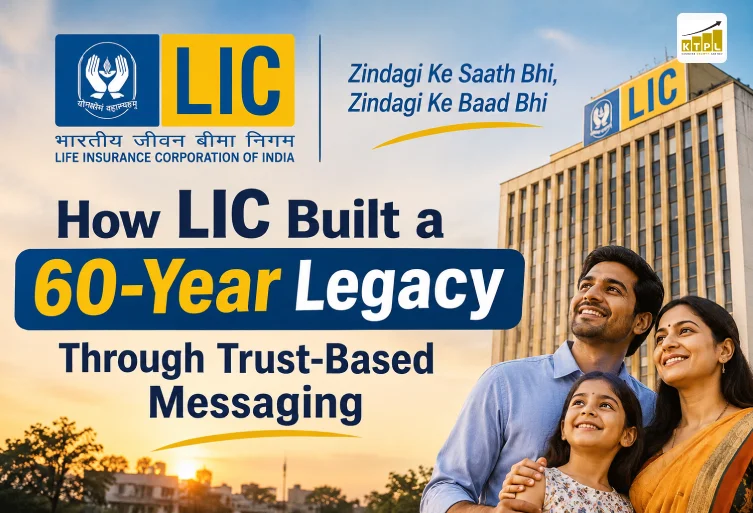
Some brands become successful because of the products they offer, while others become memorable because of the emotions and values they represent. The Life Insurance Corporation of India (LIC) is one of the strongest examples of a brand that built its identity around trust, family protection, and financial security. For generations of Indian households, LIC has represented more than an insurance provider; it has become associated with responsibility, future planning, and the confidence of protecting loved ones. Established on 1 September 1956, LIC entered the Indian market with the objective of making life insurance accessible to a wider population. At a time when financial awareness and insurance penetration were limited, the corporation needed to explain why insurance mattered to ordinary families. Instead of depending entirely on financial returns or aggressive advertising, LIC connected its services with familiar values such as family responsibility, long-term security, and financial independence. The story of how LIC Built a 60-Year Legacy demonstrates the importance of consistent communication, emotional branding, and customer relationships. Its memorable advertising, extensive agent network, institutional reputation, and ability to adapt to changing expectations helped it establish a recognisable position in India’s insurance industry. Even as private insurers entered the market and digital platforms transformed customer behaviour, LIC continued to benefit from the trust developed over generations.
1. From a Government Initiative to a Household Brand
When the Life Insurance Corporation of India was established in 1956, the Indian insurance industry was undergoing an important transformation. The government nationalised 245 insurers and provident societies to create a unified institution that could expand insurance coverage and improve public confidence in the sector. LIC’s responsibility extended beyond serving customers in major cities, as it also aimed to make financial protection accessible to rural communities and economically weaker sections. During its early years, the corporation expanded its branch network, developed local distribution channels, and introduced insurance services to households that were unfamiliar with formal financial planning. Its growing presence helped people understand the importance of protecting their families against unexpected financial difficulties. Over time, LIC moved beyond being a government-established organisation and became a familiar financial institution associated with long-term security and responsible financial planning. One of the important reasons behind this development was LIC’s ability to connect insurance with everyday family needs. Its communication encouraged people to think about children’s education, retirement planning, family expenses, and the financial future of dependants. Rather than presenting insurance as a complicated financial product, the organisation gradually made it part of ordinary household conversations. Its nationwide presence also helped customers access policy information and assistance through local offices and representatives. This approach created familiarity among people who might otherwise have avoided financial products because of limited awareness. The foundation established during these early years played an important role in building the long-term brand recognition that LIC continues to enjoy.
2. Emotional Marketing: Selling Family Protection Instead of Insurance
One of the strongest reasons LIC Built a 60-Year Legacy is its ability to communicate through emotions that Indian families naturally understand. Life insurance is associated with uncertainty, financial responsibilities, and subjects that many people prefer not to discuss openly. Instead of making fear or death the centre of its advertising, LIC focused on the positive purpose of insurance: protecting loved ones and preparing for their future. Its communication frequently connected financial planning with familiar situations, such as parents securing their children’s education, individuals planning retirement, and families preparing for unexpected circumstances. These relatable examples helped customers understand the importance of insurance without requiring detailed knowledge of financial terminology. By connecting its services with care, commitment, and responsibility, LIC made life insurance more meaningful to ordinary households. Its iconic tagline, “Zindagi Ke Saath Bhi, Zindagi Ke Baad Bhi,” is a particularly strong example of this emotional positioning. The message communicates that financial protection can continue to benefit loved ones even after the policyholder’s lifetime, shifting the conversation from uncertainty towards responsibility and family security. Its simple Hindi wording made it easy to understand, remember, and recognise across different age groups and regions. LIC also strengthened its identity through the Sanskrit motto, “Yogakshemam Vahamyaham,” derived from the Bhagavad Gita and associated with the responsibility of people’s well-being and security. These messages helped connect the organisation with cultural values that were already important to many Indian households. For modern businesses, this demonstrates that successful marketing is not always about explaining product features; it is also about showing customers why a product or service matters in their lives.
3. The Agent Network: Building Trust Through Personal Relationships
Before digital insurance platforms became widely accessible, personal relationships played a major role in helping customers understand and purchase financial products. LIC developed an extensive network of agents who connected the organisation with individuals and families across India. These representatives explained policy benefits, assisted with documentation, discussed premium payments, and helped customers understand long-term financial protection. For many households, a local LIC agent became a familiar person they could approach whenever they needed guidance about an existing policy or wanted information about additional insurance requirements. According to LIC’s FY 2024–25 annual report, the corporation had approximately 14.87 lakh agents as of 31 March 2025, demonstrating the scale of its relationship-based distribution network. This extensive presence allowed LIC to reach communities where digital access and financial awareness were sometimes limited. The real strength of this model was the trust created through repeated interactions. Customers who received helpful guidance and dependable assistance were more likely to recommend the same agent to relatives, friends, and neighbours. Over time, these recommendations contributed to generational brand familiarity, as parents introduced their children to an organisation they already knew. This helped LIC establish a relationship that extended beyond individual policy purchases. Its agents also played an important role in making insurance understandable for customers who were unfamiliar with financial terminology or long-term policy conditions. This approach offers an important lesson for modern businesses: technology can improve convenience, but personal attention and reliable customer support remain valuable. Brands that invest in customer relationships often develop stronger loyalty and generate recommendations through positive experiences.
4. Institutional Trust, Financial Strength and Consistent Brand Communication
LIC’s public-sector background and long operating history contributed significantly to its reputation in the Indian insurance market. As an institution established under the Life Insurance Corporation Act, 1956, it developed a nationwide presence and became familiar to generations of policyholders. For customers purchasing long-term insurance, confidence in the organisation’s ability to service policies and meet contractual obligations is an important consideration. LIC’s established operations, financial scale, and institutional history helped reinforce its position as a major insurance provider. According to its FY 2024–25 annual report, LIC’s Assets Under Management stood at approximately ₹54.52 lakh crore as of 31 March 2025, reflecting the substantial scale of its financial operations. However, government ownership should not be confused with an unconditional government guarantee of every individual policy, and customers should always understand their policy terms and conditions. Another important factor behind LIC’s brand recognition has been its consistent advertising and communication. Over the decades, its campaigns have repeatedly focused on family protection, financial responsibility, future planning, and security rather than changing the brand’s identity with every marketing trend. Its familiar messaging appeared across television, newspapers, outdoor advertising, physical branches, and agent-led communication. Repeated exposure helped customers recognise the organisation and associate it with a clear purpose. This consistency also contributed to generational familiarity, as people who grew up seeing LIC advertisements often became familiar with the brand before purchasing insurance themselves. The larger lesson is that brands should maintain a recognisable promise even when their advertising formats and communication channels evolve. Consistency helps customers understand what a business represents and creates a stronger identity across different marketing platforms.
5. Digital Transformation: Balancing Legacy with Modern Customer Expectations
The Indian insurance industry has changed significantly with the growth of smartphones, online payments, digital comparison platforms, and internet-based financial services. Customers increasingly expect convenient access to policy information, premium payments, and service requests without always visiting physical branches. LIC has responded through digital initiatives, including online policy services, digital premium payments, mobile applications, the ANANDA platform for agent-assisted digital policy sales, and LIC Mitra, its chatbot initiative. These developments reflect the corporation’s efforts to make insurance services more accessible while adapting to changing customer expectations. Its digital transformation is particularly important because it serves different generations of customers, including people who prefer personal assistance and younger customers who expect faster online interactions. The challenge for LIC is to introduce modern technology without losing the familiarity that has supported its reputation for decades. Digital platforms can improve convenience and service speed, but they must also be simple enough for customers to understand and use confidently. This is where technology and customer-focused communication need to work together. LIC’s journey demonstrates that digital transformation should strengthen an organisation’s existing value rather than completely replace what made customers trust it. Modern businesses can apply the same principle by using websites, mobile applications, automation, and digital marketing to improve customer experience while maintaining transparent communication. Technology becomes more valuable when it makes services easier, faster, and more accessible.
6. What Modern Businesses Can Learn from LIC's Marketing Strategy
The journey of how LIC Built a 60-Year Legacy offers important lessons for businesses operating in industries such as technology, manufacturing, retail, education, and professional services. The first lesson is to communicate customer benefits instead of focusing entirely on product features, because people connect more strongly with brands when they understand how their offerings solve real problems. The second lesson is to maintain consistent brand messaging across websites, social media, advertisements, and customer support channels. The third lesson is to invest in customer relationships through transparent communication, timely responses, and dependable after-sales service. Businesses should also understand their audience’s cultural values, expectations, and purchasing behaviour before developing marketing campaigns. Finally, companies should adopt digital technology thoughtfully to improve accessibility without losing the human connection that customers continue to value. These principles are particularly relevant in today’s competitive digital environment, where customers can compare multiple brands before making purchasing decisions. Advertising may attract attention, but long-term growth depends on whether a business delivers the value it promises. This is why trust-based marketing should be treated as an ongoing business strategy rather than a one-time promotional activity. At KTPL – Business Growth Agency, we believe that effective branding combines a clear identity, meaningful communication, professional design, and a consistent digital presence. From website design and search engine optimisation to logo design, packaging design, and social media management, every customer-facing element should communicate the same brand values. LIC’s journey demonstrates that businesses can create stronger customer relationships when they understand their audience and communicate their value consistently.
Conclusion: Trust Is the Foundation of a Lasting Brand
LIC’s journey demonstrates that lasting brand recognition cannot be created through advertising alone. Its identity developed through emotional communication, cultural relevance, institutional credibility, human relationships, and consistent customer engagement. By connecting life insurance with family protection and financial responsibility, LIC made an important financial service more relatable to ordinary Indian households. Its iconic tagline, extensive agent network, familiar institutional presence, and efforts to adopt digital services all contributed to its position in the Indian insurance industry. The story of how LIC Built a 60-Year Legacy is ultimately a lesson in the power of trust-based marketing. For modern businesses, the message is simple: products may attract customers, but honest communication, reliable service, and meaningful relationships give them a reason to stay.
FAQs
Have questions? We’ve answered some of the most common queries to help you understand the topic better.
Q1. How did LIC build its brand legacy?
Through emotional marketing, consistent messaging, institutional credibility, and long-term customer relationships.
Q2. What is LIC's famous tagline?
“Zindagi Ke Saath Bhi, Zindagi Ke Baad Bhi.”
Q3. Why is LIC an example of trust-based marketing?
It connects insurance with family protection, financial security, and long-term responsibility.
Q4. How has LIC adopted digital transformation?
Through online services, digital premium payments, mobile applications, and chatbot-based assistance.
Q5. What can businesses learn from LIC's marketing strategy?
Build customer trust through consistent branding, meaningful communication, and reliable services.
Want To Grow Your Business - Connect With KTPL
KTPL – Business Growth Agency, a creative solutions and business growth agency from India.
👉 Visit https://kirnanitechnologies.com
📞 Call us at +91 95093 33000
📧 Email us at contact@kirnanitechnologies.com


