


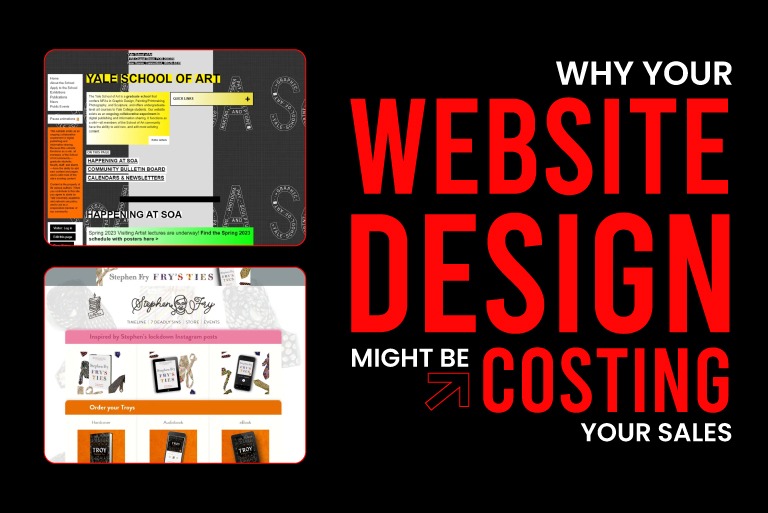
In 2026, your website is not just a digital presence—it is your primary sales engine. Whether you run a small business, service company, or eCommerce store, your website design directly impacts how many visitors convert into customers.
Many businesses invest in ads, SEO, and social media, but still struggle with low conversions. The real issue often lies in poor website design decisions that silently push users away. A slow, outdated, or confusing website can cost you leads without you even realizing it.
If your website is not generating sales, this guide will help you understand what’s going wrong and how to fix it.
1. Slow Website Speed is Driving Visitors Away
In today’s fast-paced digital world, users expect websites to load instantly. If your website takes more than 2–3 seconds to load, most visitors will leave before even seeing your content.
Slow loading speed not only frustrates users but also affects your Google ranking. A delay of even one second can reduce conversions significantly. Many Indian users rely on mobile data, which makes speed even more critical.
Heavy images, unoptimized code, and poor hosting are common reasons for slow performance. Businesses often ignore this issue, assuming design is only about visuals, but speed is a major part of user experience.
To fix this, optimize images, use fast hosting, enable caching, and minimize unnecessary scripts. A faster website means better engagement and higher sales.
2. Poor Mobile Experience is Losing Potential Customers
More than 80% of users in India browse websites on their smartphones. If your website is not mobile-friendly, you are losing a huge portion of your audience.
A poor mobile experience includes small text, difficult navigation, slow loading, and buttons that are hard to click. These issues make users leave your website instantly.
In 2026, mobile-first design is no longer optional—it is essential. Google also prioritizes mobile-friendly websites in search rankings.
Make sure your website is fully responsive, loads quickly on mobile, and provides a smooth browsing experience. A well-optimized mobile website can dramatically improve conversions.
3. Confusing Navigation Reduces User Engagement
When users land on your website, they should instantly understand where to go next. If your navigation is confusing, visitors will leave without exploring your services.
Many websites try to include too many menu options, which creates clutter. Others hide important pages, making it difficult for users to find information.
A simple and clear navigation structure helps users move smoothly through your website. It builds trust and keeps visitors engaged longer.
Use clear headings, limit menu options, and guide users with proper call-to-action buttons. The easier your website is to use, the more likely users are to convert.
4. Weak Call-to-Action is Killing Conversions
Your website should guide users toward a specific action—whether it’s contacting you, booking a service, or making a purchase.
Many websites fail because they don’t have strong call-to-action (CTA) buttons. Generic phrases like “Click Here” or “Submit” do not encourage users to take action.
A good CTA should be clear, visible, and action-oriented. For example, “Get Free Consultation,” “Start Your Project,” or “Request a Quote” works much better.
Also, CTAs should be placed strategically across the website—not just on one page. A strong CTA can significantly increase your conversion rate.
5. Outdated Design Creates Trust Issues
Your website design reflects your brand. If it looks outdated, users may assume your business is not professional or reliable.
In 2026, users expect clean layouts, modern visuals, and smooth interactions. Old designs with poor graphics, cluttered layouts, and outdated fonts can reduce credibility.
A modern website builds trust instantly and makes your business look more professional. It shows that you care about your online presence and customer experience.
Updating your design regularly helps you stay competitive and relevant in the market.
6. Lack of Trust Signals is Holding Back Sales
Users need to trust your business before they make a decision. If your website lacks trust signals, visitors may hesitate to take action.
Trust signals include customer reviews, testimonials, client logos, certifications, and secure payment badges. These elements reassure users that your business is genuine.
Many businesses ignore this aspect and focus only on design. However, trust plays a major role in conversion.
Adding real testimonials and showcasing your work can improve credibility and increase sales.
7. Poor Content Structure Confuses Visitors
Content is not just about writing—it’s about how information is presented. Large blocks of text, unclear headings, and lack of structure make your website difficult to read.
Users prefer content that is easy to scan and understand. Proper headings, short paragraphs, and clear formatting improve readability.
In 2026, users have shorter attention spans. If your content is not engaging, they will leave quickly.
Focus on clear messaging, highlight key points, and make your content user-friendly. Good content structure keeps users engaged and improves conversions.
8. No SEO Optimization Means No Visibility
Even a well-designed website cannot generate sales if people cannot find it. Search Engine Optimization (SEO) is essential for driving organic traffic.
Many websites fail because they ignore basic SEO practices like keyword optimization, meta tags, and proper URLs.
In the Indian market, local SEO is especially important for businesses targeting specific cities or regions.
Optimizing your website for search engines helps you attract the right audience and increase your chances of conversion.
9. Lack of Clear Value Proposition
When users visit your website, they should immediately understand what you offer and why they should choose you.
A weak or unclear value proposition confuses visitors and reduces engagement. If users don’t see value, they won’t stay.
Your homepage should clearly communicate your services, benefits, and unique selling points. Keep your message simple and direct.
A strong value proposition helps you stand out and attract the right customers.
10. Ignoring User Experience (UX) Design
User experience is the foundation of a successful website. If your website is difficult to use, slow, or confusing, users will not stay.
UX design focuses on making your website easy, intuitive, and enjoyable for users. It includes everything from layout and navigation to speed and responsiveness.
In 2026, businesses that prioritize user experience see higher engagement and better conversion rates.
Improving UX is not just a design change—it is a business strategy that directly impacts your sales.
Conclusion
Your website design plays a crucial role in your business growth. A poorly designed website can silently reduce your sales, even if you are investing heavily in marketing.
By improving speed, mobile experience, navigation, content, and user experience, you can turn your website into a powerful sales tool.
If you want to grow your business in 2026, it’s time to rethink your website design and focus on what truly matters—user experience and conversion.
KTPL – Business Growth Agency helps businesses create high-performing websites that not only look good but also deliver real results.
FAQs
Have questions? We’ve answered some of the most common queries to help you understand the topic better
Q1. How does website design affect sales?
Website design impacts user experience, trust, and engagement. A well-designed website increases conversions, while a poor design drives users away.
Q2. What is the most important factor in website design?
User experience, speed, and mobile responsiveness are the most important factors in modern website design.
Q3. How can I improve my website conversion rate?
Improve loading speed, add clear CTAs, optimize for mobile, and include trust signals like reviews and testimonials.
Q4. Why is mobile-friendly design important in India?
Most users in India browse on smartphones. A mobile-friendly website ensures better engagement and higher conversions.
Q5. How often should I update my website design?
It is recommended to update your website design every 2–3 years to stay modern and competitive.
Want To Grow Your Business - Connect With KTPL
KTPL – Business Growth Agency, a creative solutions and business growth agency from India.
👉 Visit https://kirnanitechnologies.com
📞 Call us at +91 95093 33000
📧 Email us at contact@kirnanitechnologies.com


