


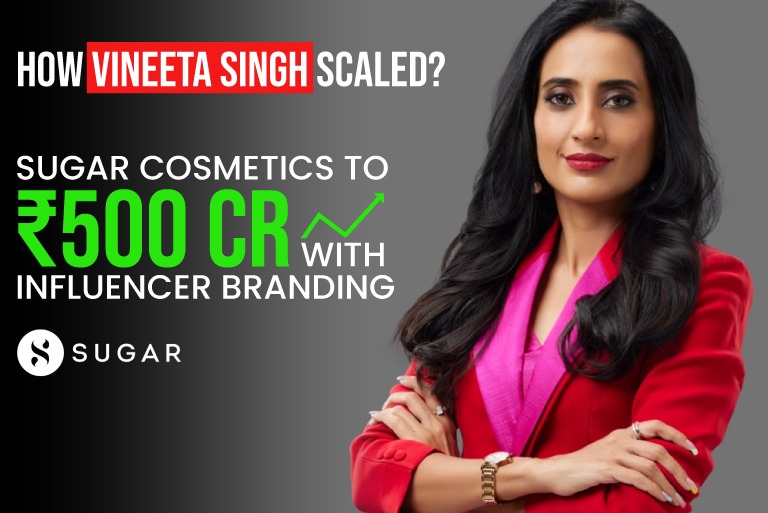
In a world dominated by traditional cosmetic giants, Vineeta Singh and her brand Sugar Cosmetics have carved a bold path to success. With a focus on influencer marketing, direct-to-consumer strategy, and a millennial mindset, Sugar Cosmetics has become a ₹500 Cr brand in less than a decade. Let’s break down how it all happened—and what you can learn from it.
The Rise of Sugar Cosmetics
Vineeta Singh’s journey is not just about entrepreneurship—it’s about disrupting the norm. Starting with a deep understanding of the Indian beauty market, she saw the demand for products tailored specifically for Indian skin tones and preferences.
Sugar Cosmetics was launched in 2015, aiming to fill this very gap. While global brands dominated shelf space, Vineeta focused on building a brand that resonated with Indian millennial women—bold, independent, and unapologetically real.
Who is Vineeta Singh? A Visionary in D2C Beauty
Before starting Sugar, Vineeta had rejected a ₹1 crore job offer to build her own path. Armed with degrees from IIT Madras and IIM Ahmedabad, she took the road less traveled.
Understanding the D2C Beauty Model
D2C (Direct-to-Consumer) means eliminating the middlemen and selling products directly to customers. This model allows brands like Sugar to:
- Collect valuable first-party data
- Understand user preferences
- Offer personalized product recommendations
- Save on retail margins
- Build strong customer relationships
Influencer Branding: Sugar’s Secret Weapon
Instead of relying solely on celebrity endorsements, Sugar partnered with influencers who had trust-based audiences. These were creators who:
- Shared honest product reviews
- Created relatable makeup tutorials
- Used Sugar products in real-life scenarios
Why Influencer Marketing Works for Beauty Brands
Influencers bring authenticity. When a popular beauty creator shares a review or tutorial using Sugar’s lipstick or foundation, it resonates more than any billboard or TV ad. It feels real, believable, and actionable.
- Brand credibility
- Product trial rates
- Repeat purchases
- User-generated content
Multi-Platform Content Strategy
Sugar understood that content had to be native to the platform. On Instagram, they focused on high-impact visuals, influencer reels, and swipe-up tutorials. On YouTube, it was more about longer, educational content—full-face makeup tutorials, honest reviews, and product launches.
Their YouTube strategy created an organic content marketing flywheel, where creators built free visibility in exchange for products and affiliate commissions.
How Packaging Became a Branding Tool
Sugar’s matte-black packaging, quirky product names, and clean typography made their products instantly Instagrammable. Customers loved showing them off—unknowingly turning into brand promoters.
- Makeup vanity videos
- Shelf placement in stores
- Unboxing experiences on social media
How Data Helped Sugar Scale
Thanks to its D2C model, Sugar collected vast amounts of data:
- Which shades sold the most
- What users clicked on
- What was added to cart but not bought
- Repeat purchase behavior
- Launch better products
- Send targeted emails
- Improve retention and LTV (lifetime value)
Revenue Breakdown and Growth
- 70% sales from online (own website + marketplaces)
- 5M+ app downloads
- 100+ retail stores across India
- High NPS (Net Promoter Score) from repeat buyers
- Strong Tier 2 & Tier 3 city presence via digital reach
- Micro-influencer campaigns across Instagram & YouTube
- Bold branding with edgy visual language
- Content marketing via beauty tutorials & reviews
- D2C model to collect first-party data
- Community engagement through relatable, inclusive marketing
- Start with a real problem to solve
- Invest in organic influencers, not just celebs
- Build a recognizable brand identity
- Use content as your primary acquisition channel
- Always listen to your customer feedback loop
Sugar is now eyeing global expansion, especially across Southeast Asia and the Middle East. The brand is also expanding into skincare and accessories, using the same influencer-first approach.
Vineeta Singh didn’t just start a cosmetics company—she built a brand movement. With a vision rooted in real consumer needs, Sugar Cosmetics shows how far smart branding, influencer marketing, and a fearless D2C strategy can take you.
If you’re a brand looking to scale, the Sugar playbook is one to learn from.
FAQs
Have questions? We’ve answered some of the most common queries to help you understand the topic better
Q1: How did Vineeta Singh grow Sugar Cosmetics to ₹500 Cr?
By using influencer marketing, a D2C strategy, and strong content across digital platforms.
Q2: What marketing strategy does Sugar Cosmetics use?
Mainly influencer branding, content marketing, and personalized targeting through first-party data.
Q3: Is Sugar a direct-to-consumer brand?
Yes, Sugar started as a D2C brand and later expanded to offline retail.
Q4: Why is influencer marketing important in the beauty industry?
It builds trust, increases reach, and is more relatable than traditional ads.
Q5: What is unique about Sugar Cosmetics’ packaging?
Their bold black packaging, quirky names, and modern aesthetics make them stand out.
Want To Grow Your Business - Connect With KTPL
KTPL – Business Growth Agency, a creative solutions and business growth agency from India.
👉 Visit https://kirnanitechnologies.com
📞 Call us at +91 95093 33000
📧 Email us at contact@kirnanitechnologies.com


