


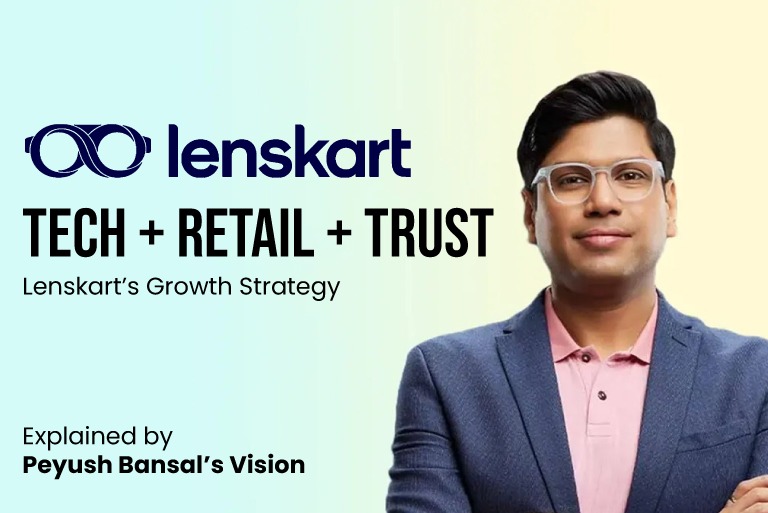
Introduction: How Lenskart Became a Visionary Brand
In the crowded Indian startup ecosystem, Lenskart stands tall as a leader in the eyewear segment. Launched by Peyush Bansal, this brand didn’t just sell eyeglasses—it transformed how India buys them. The fusion of technology, retail innovation, and customer trust is the secret behind Lenskart’s unmatched growth. But what truly sets it apart? Let’s dive into its powerful growth strategy.
Technology as the Driving Force Behind Lenskart
Lenskart didn’t follow the conventional path of retail. Instead, it embraced cutting-edge technology to stand out. Peyush Bansal understood early on that scalability comes from systems, not sales.
Online to Offline (O2O) Retail Transformation
Before Lenskart opened stores, it dominated online. It introduced AR-based virtual try-ons, enabling customers to visualize frames before buying. This feature helped reduce returns and build confidence in online shopping.
The next phase was offline: experience stores, where customers could try, test, and interact with the brand physically. This O2O model created a seamless loop—capturing both online convenience and offline trust.
Retail Innovation: Experience-First, Not Just Sales-Driven
Lenskart’s retail game isn’t about stacking shelves with frames. It’s about crafting memorable experiences for customers.
Hybrid Business Model with Franchising Power
Lenskart pioneered a hybrid retail model by combining e-commerce, company-owned stores, and franchise outlets. This allowed rapid geographical expansion with minimal risk. By 2024, Lenskart had over 1,500+ stores across India, many in Tier 2 and Tier 3 cities.
The brand also trained store staff to act as eyewear consultants, not just salespeople. This personalized approach turned walk-ins into loyal customers.
Trust: The Core of Customer Loyalty
Eyewear isn’t just fashion—it’s a medical necessity. Lenskart capitalized on this sensitivity by building trust at every touchpoint.
Customer-Centric Innovations That Set Lenskart Apart
From free eye tests at home to 3D frame fitting, everything Lenskart did prioritized customer comfort. They launched the “Home Eye Test Kit” during the pandemic and turned a crisis into an opportunity.
Their flexible return policy and lifetime service for frames made people feel secure buying expensive glasses online.
Peyush Bansal’s Vision: Branding with Purpose
Behind every successful brand is a visionary leader. Peyush Bansal didn’t just want to sell eyewear—he wanted to solve real problems, especially for the Indian middle class.
Brand Strategy Built on Empathy and Innovation
Peyush’s Shark Tank India appearances brought Lenskart into the spotlight, but it was his long-term vision that fueled real growth. His ads weren’t just about selling; they told relatable stories.
Example: Their “Don’t Be Specsy” campaign humorously addressed the struggles of wearing glasses, making the brand feel human and approachable.
Challenges Along the Way (And How They Won)
Lenskart wasn’t always on top. Initial supply chain issues, pricing concerns, and market skepticism plagued the early years. But instead of slowing down, they doubled efforts in R&D, launched Lenskart Labs, and solved problems in-house.
With their own manufacturing unit in India and Singapore, they ensured quality control, reduced costs, and improved delivery times.
What Startups Can Learn from Lenskart
- Solve real problems before building flashy apps.
- Build trust before chasing growth.
- Use technology as a tool, not just a trend.
- Stay visible and credible—social proof matters.
- Don’t be afraid to blend online and offline.
Conclusion: The Future of Lenskart and Indian Retail
Lenskart is no longer just a startup—it’s a tech-powered retail powerhouse. With global ambitions, ongoing innovation, and a rock-solid brand strategy, it’s rewriting the rulebook for retail in India. The mix of tech, retail innovation, and trust will likely drive the next decade of retail growth—not just for Lenskart, but for every visionary startup willing to learn.
Benefits of Lenskart’s Strategy at a Glance:
- Uses AI and AR to personalize shopping
- Ensures seamless integration of online & offline
- Builds customer trust through services
- Empowers retail staff with training
- Controls product quality via in-house manufacturing
- Expands using franchise + owned store model
- Invests in brand storytelling
- Makes customer convenience a priority
FAQs
Have questions? We’ve answered some of the most common queries to help you understand the topic better
1. What is Lenskart’s business model?
Lenskart uses a hybrid model combining online sales, retail stores, and franchises for rapid expansion.
2. How has Lenskart used technology to grow?
Lenskart implemented AR try-ons, AI-powered CRM, and O2O integration to scale effectively.
3. Why is Peyush Bansal’s strategy successful?
He focuses on solving real customer problems, builds trust, and uses innovation as a core business driver.
4. What makes Lenskart different from traditional eyewear brands?
Lenskart offers tech-enabled convenience, better pricing, in-house quality control, and excellent customer service.
5. Is Lenskart a profitable company?
Yes, with its unicorn status and international expansion, Lenskart is among the most profitable Indian D2C brands.
Want To Grow Your Business - Connect With KTPL
KTPL – Business Growth Agency, a creative solutions and business growth agency from India.
👉 Visit https://kirnanitechnologies.com
📞 Call us at +91 95093 33000
📧 Email us at contact@kirnanitechnologies.com


