


Introduction
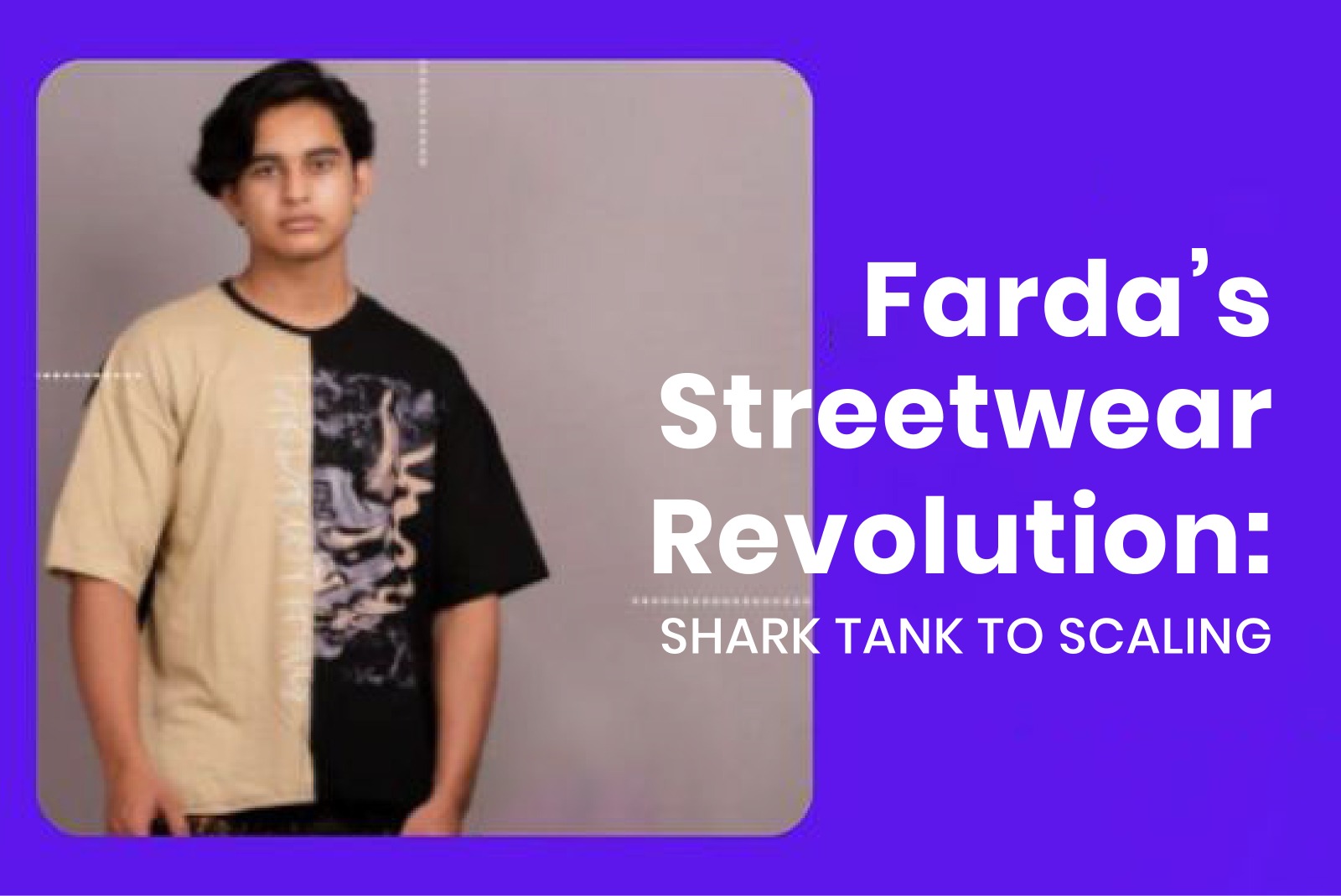
When Farda’s Streetwear stepped onto the Shark Tank India stage, the fashion world took notice. This wasn’t just another clothing brand looking for investment—it was the story of two young entrepreneurs who believed in art as much as commerce. What started in a small city has now turned into a national conversation about the future of Indian streetwear.
From Shark Tank to Scaling, Farda’s journey is both inspiring and instructive. It shows how creative passion, when backed by strategic business decisions, can transform a dream into a thriving brand. In this blog, we’ll dive deep into Farda’s origin, Shark Tank success, scaling challenges, and lessons for aspiring entrepreneurs.
The Birth of Farda: A Tomorrow-Driven Brand
The name “Farda” literally translates to “tomorrow” in Hindi and Urdu. For founders Chahat Pahuja and Sanskar Mishra, tomorrow wasn’t just a day—it was a vision. They wanted to build a brand that reflected individuality, art, and boldness.
While India’s fashion market is crowded with fast-fashion labels, Farda’s Streetwear stood apart because every piece had a story. Their designs weren’t copied from global catalogs; they were hand-painted, customized, and deeply personal. Customers didn’t just buy T-shirts or jackets—they bought wearable art.
Streetwear has always been about culture, rebellion, and self-expression. In India, this trend was rising among youth who wanted more than “cookie-cutter” fashion. Farda tapped into this wave by merging art, customization, and street culture, offering an alternative to mainstream fashion houses.
Shark Tank to Scaling: The Turning Point
Every startup dreams of the spotlight, and for Farda, Shark Tank India became that moment. The founders walked into the Tank asking for ₹30 lakhs for 10% equity. Their pitch was full of passion, energy, and creativity—something that immediately captured the Sharks’ attention.
After some negotiation, they struck a deal: ₹30 lakhs for 20% equity with two powerful investors—Aman Gupta (boAt) and Namita Thapar (Emcure Pharmaceuticals).
This wasn’t just a financial deal; it was validation. Overnight, Farda’s Streetwear became a household name. Shark Tank gave them credibility, visibility, and a platform to scale. The term “Shark Tank to Scaling” became their reality, proving that a small-town dream could win big on a national stage.
Scaling a Streetwear Brand: The Hidden Challenges
- Production Bottlenecks: Hand-painted clothing meant scaling was slower than traditional mass production.
- Maintaining Quality: Scaling up without losing uniqueness was a balancing act.
- Supply Chain Pressure: Managing demand after Shark Tank required better logistics.
Instead of compromising their identity, the founders adopted a hybrid approach. They trained new artisans, created processes for efficient production, and used technology to streamline orders. This allowed them to grow without losing their artistic soul.
For other startups, this shows an important truth: scaling isn’t just about producing more—it’s about scaling without dilution.
Local Roots, National Impact
From their humble beginnings in Nagpur, Farda is now a name recognized across India. But what’s remarkable is how they scaled visibility without huge ad budgets.
- Social Media Storytelling – Platforms like Instagram became their runway. By showcasing behind-the-scenes painting, customer testimonials, and fashion shoots, they built emotional connections.
- Influencer Collaborations – Farda tapped into India’s influencer economy, getting young trendsetters to wear and promote their clothes.
- Press & Media Coverage – Shark Tank exposure was just the start. Blogs, fashion portals, and interviews gave them credibility beyond advertising.
What Makes Farda’s Streetwear Stand Out
- Customization as a Core Value – Every product feels unique, not mass-produced.
- Cultural Relevance – Their designs capture youth identity, urban culture, and artistic rebellion.
- Sustainability with Style – Instead of chasing trends, they build demand-based collections, reducing waste.
Lessons from Farda: Shark Tank to Scaling
Entrepreneurs across industries can learn from Farda’s journey. Here are five takeaways:
1. Tell a Story, Not Just Sell a Product
Farda’s success wasn’t just because of their clothing—it was the narrative behind it. Investors and customers connected with their mission.
2. Protect Your Core Identity
Even as they scaled, they didn’t dilute their uniqueness. Startups must learn to balance growth with authenticity.
3. Build Smart Systems Early
Scaling isn’t only creative—it’s operational. Farda invested in processes and training to ensure quality at scale.
4. Use Visibility as a Growth Engine
The Shark Tank platform was a springboard. But they capitalized on it through PR, digital campaigns, and influencer engagement.
5. Think Long-Term, Act Daily
“Tomorrow” isn’t just their name—it’s their philosophy. They consistently align short-term actions with long-term vision.
The Future of Farda: Tomorrow Looks Bright
So, what’s next for Farda’s Streetwear? If their current trajectory is any sign, the brand is moving toward becoming a pan-India fashion powerhouse.
With stronger production pipelines, expanding retail presence, and continued media buzz, they’re not just scaling—they’re evolving into a cultural icon. Tomorrow doesn’t just belong to Farda—it belongs to every startup daring to think differently.
For young entrepreneurs, their journey is a beacon: passion plus process equals possibility.
Conclusion
The story of Farda’s Streetwear is a testament to the power of vision and persistence. From a humble Nagpur beginning to Shark Tank to Scaling, they proved that art and business can co-exist beautifully.
For every aspiring entrepreneur, the lesson is clear: authenticity, strategy, and storytelling can turn even the boldest dreams into reality.
Tomorrow, as Farda reminds us, belongs to those who start today.
FAQs
Have questions? We’ve answered some of the most common queries to help you understand the topic better
Q1. What makes Farda’s Streetwear unique compared to other brands?
Farda is known for hand-painted, customized streetwear. Unlike fast fashion, each piece tells a personal story, making customers feel like owners of wearable art.
Q2. How did Shark Tank help Farda in scaling?
The Shark Tank deal gave them financial backing, credibility, and mentorship. This exposure helped them scale operations and gain national recognition.
Q3. What challenges did Farda face when scaling?
The main challenges included production bottlenecks, quality maintenance, and supply chain management. They overcame these by building systems and training artisans.
Q4. Who invested in Farda during Shark Tank India?
Aman Gupta (boAt) and Namita Thapar (Emcure Pharmaceuticals) invested ₹30 lakhs for 20% equity in Farda’s Streetwear.
Q5. What can startups learn from Farda’s journey?
Key lessons include storytelling, scaling without losing authenticity, leveraging visibility, and balancing creativity with operational discipline.
Want To Grow Your Business - Connect With KTPL
KTPL – Business Growth Agency, a creative solutions and business growth agency from India.
👉 Visit https://kirnanitechnologies.com
📞 Call us at +91 95093 33000
📧 Email us at contact@kirnanitechnologies.com


