


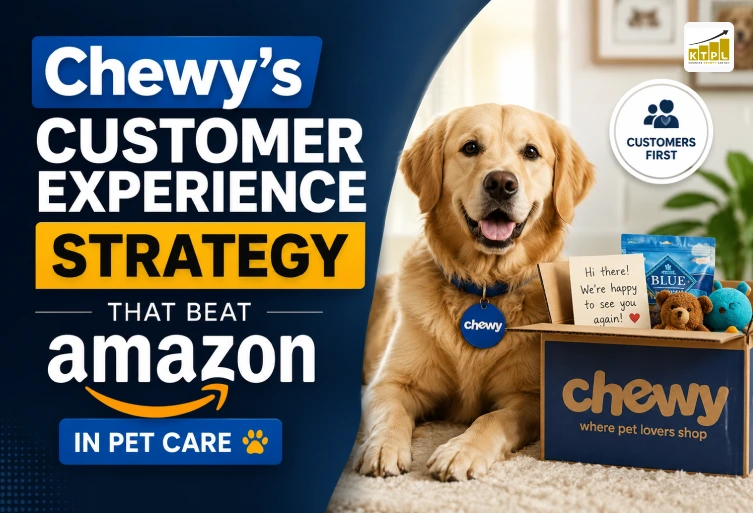
When people think about buying pet food, toys, medicines, treats, or other supplies online, Amazon is one of the first names that comes to mind. Its huge product selection, fast delivery, competitive pricing, and familiar shopping experience have made it a major force in e-commerce. However, the pet care market has also created space for a specialist brand that takes a very different approach. Chewy built its business around understanding pet parents, providing convenient shopping, and creating personal connections that make customers feel valued. This makes the Amazon in Pet Care conversation about more than products and delivery. It is also about customer service, emotional connection, personalization, convenience, and long-term loyalty.
Why Customer Experience Matters in Pet Care
Online pet care is different from many other e-commerce categories because customers are purchasing products for animals they often consider members of their families. Dog food, cat litter, treats, supplements, medicines, and toys can become regular purchases, which means customers need a retailer they can trust and rely on. Amazon has major advantages in this category, including its marketplace scale, product selection, logistics network, and established customer base. Amazon also identifies pet products as a significant category for sellers, covering areas such as food, health products, toys, accessories, and supplies. Chewy took another route by making pets and their owners the center of its entire business experience. The company describes its model as combining the convenience and speed of e-commerce with the personalized service associated with a neighborhood pet store. Instead of treating pet products as simply another category, Chewy created a specialized environment around pet parents. Its website, customer service, subscriptions, pharmacy, and other services are all designed around pet-related needs. This specialization helped Chewy establish a distinct position in the Amazon in Pet Care landscape.
Chewy’s Human-Centered Customer Experience Strategy
One of the biggest differences in Chewy’s strategy is its focus on human interaction. Online businesses often depend heavily on automation, chatbots, self-service systems, and standardized communication. These tools can make transactions faster, but they do not always create a strong emotional relationship with customers. Chewy has made customer care an important part of its brand identity and emphasizes access to real people who can help customers with their needs. This approach is particularly useful in pet care because customers may need assistance with situations that are more personal than a normal shopping question. They may have problems with an important food order, need help with a prescription, want to change an Autoship order, or need assistance with a return. A helpful human response can make these situations much easier. Chewy is also well known for thoughtful customer gestures, including handwritten notes, personalized messages, and pet portraits shared with customers. These actions are powerful because they make customers feel recognized rather than treated like order numbers. A small personal gesture may cost relatively little compared with a major advertising campaign, but it can create a memorable brand experience. This is one of the most important lessons from Chewy’s customer experience strategy: personalization can create value even when it is simple and human.
Personalization Helps Chewy Build Customer Loyalty
Pet owners usually have a strong emotional connection with their animals. Because of this, businesses that understand the emotional side of pet ownership can create stronger relationships with their customers. Chewy has used this opportunity by building a brand voice that focuses on pets, pet parents, care, and personal service. Personalization does not always mean using complicated artificial intelligence or collecting huge amounts of customer data. Sometimes it can be as simple as remembering a customer’s needs, providing useful support, sending relevant communication, or acknowledging the importance of their pet. Chewy’s personalized customer gestures became a recognizable part of its brand story because they transformed an ordinary e-commerce transaction into something customers could remember and share. This matters when comparing Chewy with a broad marketplace such as Amazon. Amazon’s scale allows it to offer enormous choice and convenience across thousands of product categories. Chewy, however, can build its identity around one particular audience. Its specialization gives the company an opportunity to understand pet owners and their purchasing habits in greater depth. For businesses studying the Amazon in Pet Care market, this shows that competing with a large marketplace does not necessarily require copying its entire business model. A specialist company can create differentiation through deeper customer understanding and stronger category-focused experiences.
Autoship Makes Repeat Shopping Easier
Pet care also provides a natural opportunity for subscription-based shopping because many products need to be purchased regularly. Customers may need the same food, litter, treats, supplements, or other supplies every few weeks or months. Remembering these purchases can become a repetitive task, particularly for households with multiple pets. Chewy’s Autoship program addresses this problem by allowing customers to schedule recurring deliveries. Customers can adjust delivery schedules, change products, or manage their orders according to their needs. This creates value for both sides. Customers receive greater convenience because they do not need to repeatedly search for essential products, while Chewy gains a stronger connection with customers who regularly purchase through the platform. Subscription commerce works best when it removes friction rather than creating it. Chewy’s approach demonstrates this principle because recurring orders are connected directly to products customers already need. Instead of trying to convince customers to make unnecessary purchases, the system helps them manage routine pet care more easily. Autoship therefore becomes more than a subscription feature. It becomes part of the overall customer experience and helps turn occasional shoppers into repeat customers.
Chewy vs Amazon: Two Different E-Commerce Approaches
The comparison between Chewy and Amazon is most useful when looking at how the two businesses are positioned. Amazon operates across a huge range of categories and provides customers with an enormous marketplace where pet products are only one part of the overall shopping experience. Its strengths include product variety, marketplace scale, logistics, and convenience. Chewy is much more specialized. Its entire brand revolves around pets and pet parents. The company says it offers a large selection of pet products and services while combining digital convenience with personalized customer care. Its services extend beyond ordinary product sales into areas such as pharmacy, veterinary services, Autoship, pet health, and customer support. This difference creates two distinct customer experiences. Amazon provides the convenience of a massive general marketplace, while Chewy provides a more focused pet shopping environment. A customer visiting Chewy is entering a platform designed specifically around pet ownership. The lesson is not that one model automatically replaces the other. Instead, the Amazon in Pet Care market demonstrates how different businesses can create value through different strengths. Scale can create convenience, while specialization can create depth and stronger category-focused relationships.
Customer Support Became Part of Chewy’s Brand
Customer support is often treated as something a company provides when a customer has a problem. Chewy has made it a much more visible part of the overall customer experience. Its customer care resources cover areas including orders, shipping, prescriptions, Autoship, returns, payments, and account support. This matters because problems are especially important in pet care. If a customer’s regular food shipment is delayed or a prescription order needs attention, the customer may not want to wait for a generic automated response. Getting help from a real person can reduce frustration and reinforce trust. Good customer service also creates an opportunity for a company to demonstrate its values. A brand can advertise that it cares about customers, but the real test often comes when something goes wrong. A helpful response during a difficult interaction can leave a stronger impression than a promotional message ever could. Chewy’s approach shows that customer support can become part of a company’s competitive advantage when it is consistently connected to the brand experience.
Building a Complete Pet Care Ecosystem
Chewy’s strategy has expanded beyond simply selling pet products online. Its offering includes areas such as pet pharmacy, veterinary services, Autoship, customer care, and other pet-focused solutions. This creates an ecosystem in which customers can return to the same company for different parts of their pet care journey. For example, someone might first visit Chewy to purchase dog food. Over time, that customer may use Autoship for regular deliveries, purchase medication through the pharmacy, explore health services, and continue using customer support whenever assistance is required. Each additional service gives the customer another reason to remain connected with the brand. This is an important strategy for specialist e-commerce businesses. Instead of competing only on individual products, companies can create value by solving more of the customer’s problems. When multiple services work together, switching to another provider may become less convenient. The approach also strengthens Chewy’s identity as a pet care company rather than simply an online retailer.
What Businesses Can Learn From Chewy
Chewy’s customer experience strategy offers several useful lessons for businesses operating in competitive digital markets. The first is that specialization can be powerful. A company does not always need to serve everyone when it can understand one audience exceptionally well. The second lesson is that customer service should be treated as part of the product experience rather than only a department for handling complaints. Another important lesson is that personalization does not have to be complicated. A relevant message, thoughtful response, or memorable gesture can make a customer feel valued. Businesses should also look for recurring customer needs that can be made easier through subscriptions or automated services. Most importantly, Chewy shows that convenience and human connection can work together. Technology can make shopping faster, while human support can make the experience more meaningful. Businesses that combine both can create an experience that customers remember. For companies analyzing Amazon in Pet Care, this is perhaps the most useful takeaway. Competing against a large marketplace does not always mean competing on size. A focused brand can differentiate itself through expertise, service, personalization, and a deeper understanding of its customers.
Conclusion: The Real Lesson Behind Chewy’s Strategy
Chewy’s growth in online pet care demonstrates how customer experience can become a central part of an e-commerce strategy. Amazon has significant strengths in scale, product variety, convenience, and logistics, while Chewy has built its identity around pets, pet parents, personalized service, recurring purchases, and specialized support. Handwritten messages and personalized pet portraits helped make the brand feel more human, while Autoship made routine shopping easier. Customer support strengthened trust, and the company’s growing ecosystem created additional reasons for pet owners to remain connected with the platform. The Amazon in Pet Care comparison therefore provides a useful lesson for modern businesses: customers do not always choose a company based only on price or product availability. Convenience matters, but so do trust, service, relevance, and the feeling that a brand understands what customers actually need. Chewy’s strategy shows that even in a highly competitive e-commerce market, a company can create a distinctive position by focusing deeply on its customers and making the experience feel personal at every important stage.
FAQs
Have questions? We’ve answered some of the most common queries to help you understand the topic better.
Q1. How does Chewy compete with Amazon in pet care?
Chewy focuses specifically on pet parents, combining pet products with personalized service, Autoship, pharmacy, and other pet-focused services.
Q2. What makes Chewy’s customer experience different?
Its strategy combines digital convenience with human customer support and personalized gestures that make customers feel recognized.
Q3. What is Chewy Autoship?
Autoship lets customers schedule recurring deliveries of eligible pet products, making regular purchases easier to manage.
Q4. Why is personalization important in pet care?
Pet owners often have strong emotional connections with their animals, so thoughtful and relevant communication can strengthen trust and loyalty.
Q5. What can businesses learn from Chewy?
Businesses can learn that specialization, customer support, personalization, and convenient recurring services can create meaningful differentiation in competitive markets.
Want To Grow Your Business - Connect With KTPL
KTPL – Business Growth Agency, a creative solutions and business growth agency from India.
👉 Visit https://kirnanitechnologies.com
📞 Call us at +91 95093 33000
📧 Email us at contact@kirnanitechnologies.com


