


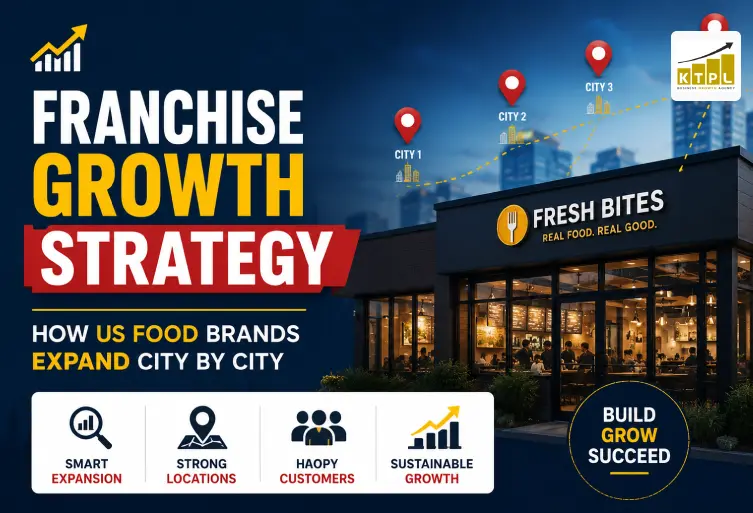
The restaurant franchise industry in the United States continues to grow rapidly as consumer demand for convenient, reliable, and branded food experiences increases across cities and suburban regions. From fast-food giants to premium café chains and healthy dining concepts, modern food businesses are constantly looking for scalable ways to enter new markets while maintaining consistent customer experiences. This is where a strong Franchise Growth Strategy becomes essential for sustainable long-term expansion.
Today, successful franchise brands do not simply open outlets randomly. They follow detailed market research, localized branding, operational planning, digital marketing, and customer acquisition strategies to expand city by city. Every decision—from selecting a location to optimizing local search visibility—plays a major role in overall franchise success. Brands that fail to build a structured growth model often struggle with low profitability, weak local awareness, and operational inconsistency.
Modern franchise expansion also depends heavily on digital visibility. Customers now discover restaurants through Google searches, Google Maps, food delivery apps, and social media recommendations before visiting physically. Businesses that combine physical expansion with advanced SEO and digital marketing strategies gain faster traction in competitive markets. This is why companies increasingly partner with experts like KTPL-Bussines Growth Agency to improve online visibility, local rankings, lead generation, and brand authority during franchise scaling.
In this detailed guide, we will explore how US food brands expand city by city, the systems behind successful franchise growth, the role of technology and SEO, and the proven strategies that help restaurant franchises dominate local markets while building national presence.
Understanding Franchise Growth Strategy
A Franchise Growth Strategy is a structured business expansion framework designed to help a franchise brand enter new cities, regions, or states while maintaining operational quality, profitability, and brand identity. Instead of growing without direction, successful food brands use planned expansion models supported by market analysis, customer behavior studies, digital marketing, and franchisee support systems.
This strategy helps restaurant brands identify high-demand locations, optimize supply chains, improve customer retention, and create long-term brand loyalty. It also ensures that every franchise location follows standardized operational systems while adapting to local customer preferences and regional market conditions.
In the modern food industry, franchise growth is no longer limited to physical outlets alone. Digital discoverability, local SEO rankings, social proof, and online customer engagement have become equally important factors in determining expansion success. Businesses that combine operational scalability with strong online presence usually grow much faster than competitors in saturated markets.
For growing food brands, a proper franchise strategy creates a roadmap that reduces risk, improves investor confidence, and increases the probability of sustainable expansion. Without structured planning, even popular restaurant concepts can struggle when entering unfamiliar markets or competing against established local brands.
Why US Food Brands Expand City by City
Most successful restaurant chains in the United States prefer gradual city-by-city expansion instead of aggressive nationwide launches. This approach allows businesses to build strong local market dominance before scaling into nearby regions. Brands that focus on one city at a time usually achieve better customer retention, stronger operational control, and improved profitability.
Localized expansion helps restaurant franchises understand customer behavior, food preferences, spending habits, and competition levels within each market. It also allows brands to refine operational systems before replicating them in new locations. This controlled growth model reduces the chances of operational failure and improves franchise sustainability over time.
Another major reason for city-focused expansion is local brand positioning. Customers often trust restaurants that feel connected to their city or community. By investing in local engagement, regional advertising, and community-based marketing, franchises can create emotional brand loyalty more effectively.
From an SEO perspective, city-based expansion also improves search visibility. Optimized location pages, local Google Business Profiles, geo-targeted content, and regional keywords help brands appear in local search results when customers search for restaurants nearby. This creates a strong digital foundation that supports physical growth.
Market Research: The Foundation of Franchise Expansion
Before entering any new city, successful food brands conduct extensive market research to understand whether the location can support long-term franchise profitability. Market analysis helps businesses reduce financial risk and make data-driven expansion decisions based on actual customer demand and competitive opportunities.
Research begins with demographic analysis. Brands evaluate population density, average income levels, lifestyle patterns, family structures, and dining behavior. Understanding the target audience helps determine whether the restaurant concept matches local consumer preferences.
Competition analysis is another critical factor in franchise growth planning. Businesses study existing restaurant chains, pricing models, customer reviews, delivery trends, and menu positioning to identify market gaps. Entering an oversaturated market without differentiation often reduces profitability and customer acquisition speed.
Real estate selection also plays a major role in franchise success. High-traffic locations near offices, malls, residential areas, universities, and commercial districts usually perform better. Accessibility, parking, visibility, and nearby competition are all considered before finalizing a location.
Modern restaurant brands additionally analyze online demand before expanding into a city. Search trends, food delivery app data, social media conversations, and local search volume provide valuable insights into customer interest. This combination of offline and online market research helps brands make smarter expansion decisions.
Building a Localized Franchise Expansion Model
One of the most effective strategies used by successful US food franchises is localization. Even global restaurant chains adapt their branding, promotions, and customer engagement strategies based on local culture and regional preferences. Localized expansion creates stronger customer connections and improves market penetration.
A localized franchise model starts with city-specific marketing campaigns. Instead of generic nationwide advertising, brands focus on local events, regional food trends, and community engagement. This makes the business feel more relatable and trustworthy to local customers.
Menu optimization is another important aspect of localization. Many restaurant chains adjust flavors, ingredients, portion sizes, or seasonal offerings based on regional customer preferences. Small local adaptations can significantly improve customer satisfaction and repeat business.
Geo-targeted digital advertising also plays a major role in modern franchise growth. Brands use location-based Google Ads, Facebook campaigns, Instagram promotions, and YouTube advertising to attract customers within specific cities. This targeted approach increases marketing efficiency and improves local brand awareness faster.
Localized SEO further strengthens franchise visibility. Restaurant brands optimize city landing pages using geo-focused keywords such as “best burger restaurant in Houston” or “top coffee franchise in Los Angeles.” These localized search strategies help businesses rank higher in Google Maps and organic search results.
The Role of Technology in Franchise Growth Strategy
Technology has become one of the most important drivers of modern franchise expansion. Food brands that use digital systems effectively can scale faster, improve operational consistency, and deliver better customer experiences across multiple locations.
Franchise management software helps businesses monitor inventory, employee performance, sales reporting, customer feedback, and operational efficiency from a centralized platform. This allows franchise owners to maintain better control while expanding into multiple cities.
Customer data analytics has also transformed restaurant marketing strategies. Brands now track purchasing behavior, popular menu items, customer retention patterns, and delivery trends to make smarter business decisions. Data-driven marketing campaigns improve customer engagement and increase revenue opportunities.
Online ordering systems and food delivery integrations have become essential for restaurant franchises. Customers expect fast digital ordering experiences with real-time tracking and convenient payment options. Businesses without optimized digital ordering systems often lose customers to competitors.
Automation systems also improve franchise scalability. Self-service kiosks, AI-driven customer support, loyalty programs, and CRM platforms help brands maintain operational efficiency while reducing dependency on manual processes. As franchise networks grow larger, automation becomes increasingly important for consistency and profitability.
How SEO Helps Food Franchises Expand Faster
Search engine optimization is now a major growth engine for restaurant franchises. Most customers search online before visiting a restaurant, which means visibility on Google directly affects customer acquisition and revenue generation.
Local SEO helps franchises rank higher when users search for restaurants in specific cities. Optimized Google Business Profiles, location landing pages, customer reviews, and localized content increase visibility in Google Maps and local search results.
SEO also helps attract potential franchise investors. Entrepreneurs searching for franchise opportunities often discover restaurant brands through organic search results. Businesses with strong SEO authority appear more established and trustworthy to investors.
Content marketing further supports franchise expansion. Publishing blogs about food trends, local dining culture, franchise opportunities, and customer experiences helps brands improve search visibility while building topical authority. High-quality content also increases website engagement and customer trust.
Technical SEO is equally important for franchise websites. Fast-loading pages, mobile responsiveness, structured data, schema markup, and optimized user experience improve both search rankings and customer satisfaction. Modern customers expect fast and seamless digital experiences when browsing restaurant websites.
KTPL-Bussines Growth Agency helps restaurant franchises build advanced SEO systems focused on local rankings, franchise lead generation, location-based visibility, and scalable digital growth strategies.
Visit KTPL Official Website to explore professional franchise marketing and SEO growth solutions.

Multi-Unit Franchise Expansion Strategy
Many successful food brands prefer multi-unit franchise models because they accelerate regional growth while maintaining stronger operational consistency. In this model, a single franchisee operates multiple outlets within a specific territory or city.
Multi-unit franchise operators often have more business experience, stronger financial resources, and better understanding of operational systems. This reduces the risks associated with inexperienced franchise ownership and improves overall brand performance.
For restaurant brands, multi-unit expansion creates operational advantages. Inventory management, staffing, local marketing, and customer retention become easier when multiple locations are managed under one regional operator. This also helps brands establish stronger dominance within local markets.
Another benefit is faster expansion speed. Instead of onboarding new franchisees for every outlet, brands can grow more efficiently by working with experienced operators already familiar with company systems and standards.
From a branding perspective, multi-unit ownership creates more consistency across locations. Customers receive similar food quality, service standards, and brand experiences throughout the region, which strengthens trust and long-term loyalty.
Importance of Brand Consistency During Expansion
As restaurant franchises grow across cities, maintaining brand consistency becomes extremely important. Customers expect the same quality, service, and experience regardless of location. Inconsistent experiences can damage reputation and reduce customer trust quickly.
Food quality consistency is one of the biggest priorities for expanding restaurant brands. Standardized recipes, supplier systems, ingredient quality checks, and operational guidelines help maintain the same taste and presentation across all franchise outlets.
Interior design consistency also strengthens brand identity. Similar store layouts, colors, menus, signage, and ambiance create familiarity for customers visiting different locations. This consistency improves recognition and customer comfort.
Employee training systems play a major role in maintaining service quality. Successful franchises invest heavily in onboarding programs, operational manuals, customer service training, and management support to ensure consistent customer experiences.
Digital consistency is equally important today. Websites, social media pages, online menus, and Google Business Profiles should follow the same branding structure across all cities. Unified digital branding improves trust, professionalism, and online discoverability.
Common Challenges in Franchise Expansion
Although franchise expansion offers major growth opportunities, businesses also face several operational and strategic challenges during scaling. Understanding these challenges helps brands prepare more effectively for long-term growth.
Supply chain management becomes increasingly complex as brands expand into multiple cities. Maintaining fresh inventory, consistent ingredient quality, and timely delivery logistics requires strong supplier networks and operational coordination.
Hiring and retaining trained employees is another common challenge in the restaurant industry. Rapid expansion often creates staffing shortages and service inconsistencies if businesses fail to implement proper training systems.
Competition also becomes more intense in larger markets. Established local restaurants and national chains may already dominate customer attention. New franchise locations must differentiate themselves through branding, service quality, pricing, or unique customer experiences.
Poor location selection is one of the biggest reasons for franchise failure. Even strong restaurant concepts struggle in low-traffic areas or markets with weak demand. Detailed market analysis is essential before opening new outlets.
Digital reputation management has also become critical. Online reviews, customer feedback, and social media engagement significantly influence restaurant success. Brands must actively monitor and manage their online reputation across all locations.
How Successful Food Brands Scale Nationally
Most leading restaurant franchises follow a phased growth model when scaling nationally. Instead of expanding aggressively into every market at once, they focus on creating strong operational foundations first.
The first step is building dominance in a core market. Brands establish customer loyalty, operational systems, and regional awareness before moving into nearby cities. This creates a stable foundation for future growth.
Next, businesses standardize internal systems including inventory management, training programs, customer service protocols, and marketing strategies. Standardization improves scalability and operational consistency.
Brands then expand into similar demographic markets where customer behavior and food preferences align with their existing success models. This reduces market entry risk and improves customer adoption speed.
Localized digital marketing campaigns are launched for every new city. Brands optimize local SEO, create geo-targeted ads, and engage regional audiences through social media and influencer collaborations.
Continuous franchise support remains essential throughout the expansion process. Successful brands provide operational guidance, marketing assistance, technical support, and performance monitoring to help franchisees succeed in competitive markets.
Why Digital Presence Matters in Modern Franchise Growth
In today’s competitive restaurant industry, digital visibility is just as important as physical presence. Most customers now discover restaurants through online searches, delivery apps, and social media recommendations before making purchase decisions.
An SEO-optimized website helps franchise brands rank higher in search results and attract local customers organically. Mobile-friendly design, fast loading speed, and clear location pages improve both user experience and search rankings.
Google Business Profile optimization is essential for local visibility. Accurate business information, reviews, images, menus, and regular updates help restaurant locations appear prominently in local search and Google Maps results.
Social media branding also plays a major role in franchise expansion. Platforms like Instagram, Facebook, TikTok, and YouTube help brands build customer engagement, promote offers, and increase regional awareness quickly.
Online reputation management is equally important. Positive customer reviews influence both search rankings and customer trust. Businesses with strong online ratings usually attract more customers and franchise inquiries.
KTPL helps franchise businesses create scalable digital ecosystems including SEO-focused websites, location landing pages, local marketing systems, and lead generation funnels designed specifically for restaurant growth.
Explore advanced digital growth services at KTPL-Bussines Growth Agency Blog

Future Trends in Franchise Growth Strategy
The future of restaurant franchise expansion will continue evolving as technology, customer behavior, and digital marketing trends change rapidly. Businesses that adapt early will gain significant competitive advantages.
Cloud kitchens are becoming increasingly popular for low-risk expansion. Many food brands now test demand in new cities using delivery-only kitchens before opening full dine-in locations.
Artificial intelligence and customer analytics are improving personalization. Brands can now deliver targeted offers, menu recommendations, and loyalty rewards based on customer behavior and purchasing patterns.
Sustainability is also influencing customer preferences. Eco-friendly packaging, local sourcing, and sustainable business practices are becoming important factors in restaurant branding and customer loyalty.
Hyperlocal marketing will continue growing in importance. Customers increasingly prefer businesses that feel connected to their communities and local culture. Geo-focused content and localized engagement strategies will dominate future franchise marketing.
Automation technologies including AI ordering systems, self-service kiosks, and smart inventory management will further improve operational efficiency for expanding restaurant chains.
Conclusion
A successful Franchise Growth Strategy requires much more than opening new restaurant outlets. US food brands expand city by city through detailed market research, localized marketing, operational consistency, SEO optimization, digital branding, and scalable business systems.
Modern franchise growth depends heavily on online visibility and customer engagement. Businesses that combine physical expansion with strong local SEO, geo-targeted marketing, and digital reputation management achieve faster and more sustainable growth in competitive markets.
From location analysis and customer acquisition to automation systems and local search optimization, every part of the expansion process contributes to long-term franchise success. Brands that invest in structured growth strategies are more likely to dominate regional markets and build nationwide recognition.
For restaurant businesses looking to scale effectively, KTPL-Bussines Growth Agency provides advanced SEO, digital branding, website optimization, and franchise marketing solutions designed to improve visibility, generate leads, and support sustainable expansion.
FAQs
Have questions? We’ve answered some of the most common queries to help you understand the topic better
Q1. What is a Franchise Growth Strategy?
A Franchise Growth Strategy is a structured plan used by businesses to expand into new cities while maintaining operational consistency, customer satisfaction, and profitability.
Q2. Why do US food brands expand city by city?
City-by-city expansion allows brands to build stronger market control, improve operational management, reduce risks, and create localized customer loyalty before scaling further.
Q3. How does SEO help restaurant franchises grow?
SEO improves local search rankings, increases online visibility, attracts customers, generates franchise leads, and supports long-term digital brand growth.
Q4. What is localized franchise marketing?
Localized franchise marketing focuses on city-specific advertising, local SEO, community engagement, and regional customer targeting to improve market penetration.
Q5. Why is digital presence important for franchise businesses?
A strong digital presence helps customers discover restaurants online, improves trust, increases local visibility, and supports sustainable franchise expansion.
Want To Grow Your Business - Connect With KTPL
KTPL – Business Growth Agency, a creative solutions and business growth agency from India.
👉 Visit https://kirnanitechnologies.com
📞 Call us at +91 95093 33000
📧 Email us at contact@kirnanitechnologies.com


