


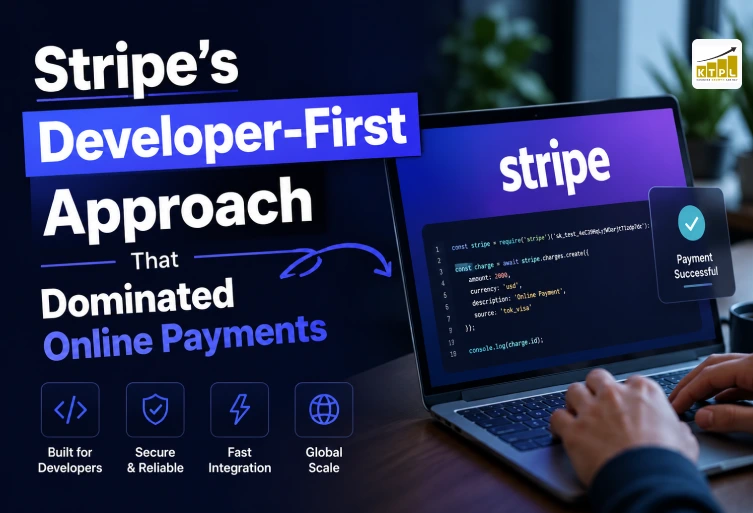
Online payments have become the foundation of the modern digital economy. Every online business, whether it is an eCommerce website, SaaS platform, marketplace, subscription business, or mobile application, depends on a secure and efficient payment system. However, before Stripe entered the market, accepting payments online was often a frustrating process filled with complicated paperwork, lengthy bank approvals, and difficult technical integrations. Stripe recognized these challenges and transformed the entire industry by focusing on one group that many companies ignored: developers. Instead of relying heavily on corporate sales teams, Stripe built products specifically for engineers who build digital products every day. This simple yet revolutionary approach changed online payments forever and established Stripe as one of the most influential financial technology companies in the world.
How Stripe Identified a Major Problem in Online Payments
Before Stripe, businesses struggled with outdated payment systems that were designed primarily for banks rather than internet companies. Entrepreneurs often spent weeks navigating banking regulations, filling out forms, and coordinating between multiple service providers just to begin accepting payments. This process slowed innovation and prevented many startups from launching quickly. Stripe founders Patrick and John Collison understood that speed had become a competitive advantage in the digital era. They noticed that developers were spending more time solving payment problems instead of building products customers actually needed. Stripe decided to remove these barriers completely. Their mission was simple: make online payments as easy as adding a few lines of code to an application. This user-centric approach immediately attracted startups and software companies worldwide.
Why Stripe Chose a Developer-First Strategy
Most financial companies targeted executives, finance departments, and enterprise decision-makers. Stripe took an entirely different path by putting developers at the center of its growth strategy. Developers are often the people responsible for selecting technologies inside organizations because they directly build and maintain products. Stripe understood that if developers loved using their platform, they would naturally recommend it to their companies. This created a powerful organic growth engine. Instead of expensive sales campaigns, Stripe invested heavily in developer experience. Every decision revolved around simplicity, usability, and speed. Over time, this strategy created trust within the developer community and helped Stripe spread globally without relying solely on traditional marketing methods.
The Seven-Line Code Promise That Changed Everything
One of Stripe’s most famous messages was that developers could start processing payments with only seven lines of code. While this sounded simple, it represented a major shift in the industry. Businesses no longer needed weeks of preparation before accepting transactions. Developers could create an account, generate API keys, integrate payments, and begin testing within minutes. This drastically reduced time-to-market for startups and digital businesses. Entrepreneurs could now focus on validating ideas and acquiring customers instead of dealing with technical payment infrastructure. The simplicity of this message became one of Stripe’s strongest selling points and differentiated it from older competitors that offered complicated integration systems.
How Exceptional Documentation Became Stripe's Competitive Advantage
Stripe understood that documentation is just as important as the product itself. Many companies treat documentation as an afterthought, resulting in confusing instructions and outdated information. Stripe completely changed this mindset by investing heavily in world-class developer documentation. Their guides are clean, visually appealing, and easy to navigate. Developers can find working code examples that can be copied directly into projects without additional modifications. This dramatically reduces development time and minimizes frustration. Excellent documentation also decreases support requests because engineers can independently solve problems. By treating documentation as a premium product rather than a support tool, Stripe built long-lasting trust within the global developer community.
How Stripe Simplified Complex Financial Infrastructure
Online payments involve enormous complexity behind the scenes. Businesses must comply with security regulations, partner with banks, manage transaction risks, and handle sensitive customer information. Most companies do not have the resources to manage these responsibilities independently. Stripe solved this problem by hiding the complicated financial infrastructure behind a simple interface. Businesses only interact with easy-to-use tools while Stripe handles the difficult backend processes. This allows organizations to focus on innovation, customer experience, and business growth instead of worrying about banking systems. Stripe’s philosophy of delivering simplicity while managing complexity became one of its biggest strengths.
The Importance of Stripe.js in Data Security
Security remains one of the most important concerns for online businesses. Handling customer payment information directly can expose companies to significant legal and financial risks. Stripe introduced Stripe.js to simplify this challenge. The technology securely captures payment information and converts it into encrypted tokens before sensitive data reaches business servers. This significantly reduces security risks and helps businesses comply with PCI standards. Companies can build secure checkout experiences without becoming cybersecurity experts. This approach not only protects businesses but also builds customer trust, which directly impacts conversion rates and long-term brand reputation.
How Stripe Created a Powerful Developer Growth Loop
Stripe’s growth was not entirely dependent on advertising budgets. Instead, it created a self-sustaining developer ecosystem. Engineers who successfully implemented Stripe in one company often recommended it when they moved to another organization. This created a powerful network effect that continuously expanded Stripe’s customer base. Developers shared positive experiences within online communities, startup networks, and technology forums. As more businesses adopted Stripe, its reputation grew even stronger. This developer-led growth model allowed Stripe to scale globally while maintaining customer loyalty. Few technology companies have successfully built such an influential community-driven expansion strategy.
How Stripe Expanded Beyond Payment Processing
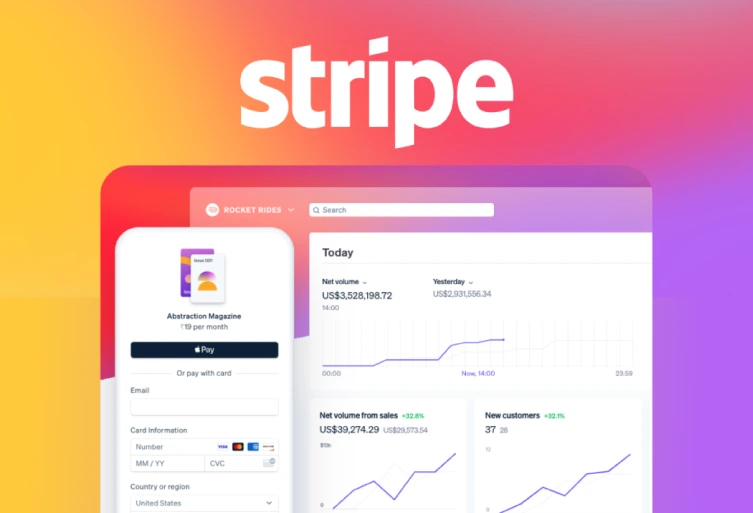
Stripe initially focused on processing credit card transactions, but the company quickly evolved into a complete financial infrastructure platform. Today, businesses use Stripe for much more than accepting payments. Stripe offers tools for subscription billing, invoicing, tax management, fraud prevention, identity verification, financial reporting, and business automation. This expansion transformed Stripe into a one-stop ecosystem for digital businesses. Instead of purchasing multiple software solutions from different vendors, companies can manage numerous financial operations from a single platform. This saves time, reduces costs, and improves operational efficiency.
How Stripe Supports Subscription-Based Businesses
The subscription economy has grown rapidly across industries such as software, media, education, and digital services. Stripe recognized this trend early and introduced powerful recurring billing solutions. Businesses can automate monthly, quarterly, and annual payments with minimal effort. Stripe also manages failed payments, customer upgrades, downgrades, and invoice generation. These automated systems reduce manual administrative work and improve customer retention. Companies can scale subscription models without investing heavily in custom financial infrastructure. This has made Stripe a preferred choice for SaaS businesses worldwide.
How Stripe Radar Helps Businesses Prevent Fraud
Online fraud is one of the biggest challenges facing digital businesses today. Fraudulent transactions can damage customer trust and create financial losses. Stripe developed Stripe Radar, an intelligent fraud prevention system powered by machine learning. The platform continuously analyzes transaction patterns to identify suspicious activities before they become costly problems. Businesses benefit from automated risk assessments without needing dedicated fraud teams. This technology protects both merchants and customers while reducing chargebacks. Fraud prevention has become an essential component of modern online commerce, and Stripe provides an efficient solution that integrates seamlessly into existing systems.
How Stripe Made Global Expansion Easier for Businesses
Many companies dream of expanding internationally but struggle with payment complexities. Different countries have unique currencies, regulations, and customer preferences. Stripe simplified global expansion by supporting multiple currencies and localized payment methods. Businesses can accept payments from customers around the world without building separate systems for every market. This accessibility opens new growth opportunities and allows brands to enter international markets faster. Global scalability has become a major reason why both startups and established enterprises choose Stripe as their payment infrastructure provider.
Why Businesses Can Learn From Stripe's Success Story
Stripe’s journey offers valuable lessons for every business owner and entrepreneur. First, businesses should always prioritize user experience because simplicity drives adoption. Second, removing friction creates loyal customers and accelerates growth. Third, investing in education and documentation improves long-term customer satisfaction. Fourth, building products around real user problems generates sustainable success. Finally, scalability should always be part of the product strategy from the beginning. These principles extend far beyond financial technology and can be applied to businesses across every industry.
How KTPL-Business Growth Agency Helps Businesses Build Digital Growth Systems
At KTPL-Business Growth Agency, we understand that modern businesses need more than attractive websites. They need complete digital ecosystems that integrate technology, automation, user experience, and scalable infrastructure. Whether businesses require website development, payment integrations, digital transformation, or growth-focused strategies, choosing the right technology stack is essential. Platforms like Stripe demonstrate how simplicity and customer-centric innovation can drive massive business growth. By implementing efficient digital solutions, businesses can improve customer experiences, increase operational efficiency, and build long-term competitive advantages.
Final Thoughts
Stripe transformed online payments by making developers its primary audience instead of corporate executives. This bold strategy reshaped an entire industry and created a financial infrastructure platform trusted by millions of businesses worldwide. Through simple APIs, exceptional documentation, robust security, and scalable solutions, Stripe removed many obstacles that previously slowed digital innovation. Today, companies ranging from startups to global enterprises rely on Stripe to power their online operations. The company proves that when businesses focus on solving genuine user problems, extraordinary growth naturally follows. Stripe’s developer-first philosophy will continue influencing technology companies for years to come and remains one of the strongest examples of customer-centric innovation in the digital era.
FAQs
Have questions? We’ve answered some of the most common queries to help you understand the topic better
Q1. What is Stripe's developer-first approach?
Stripe’s developer-first approach focuses on building payment solutions that are simple, fast, and easy for developers to integrate into digital products.
Q2. Why did Stripe become popular among startups?
Stripe became popular because it reduced payment integration time and eliminated many traditional banking obstacles.
Q3. Is Stripe only a payment processor?
No. Stripe now offers billing, fraud prevention, tax management, invoicing, identity verification, and global payment solutions.
Q4. How does Stripe improve online payment security?
Stripe uses technologies like Stripe.js and tokenization to protect sensitive customer payment information.
Q5. Can businesses accept international payments with Stripe?
Yes. Stripe supports multiple currencies and localized payment methods worldwide.
Want To Grow Your Business - Connect With KTPL
KTPL – Business Growth Agency, a creative solutions and business growth agency from India.
👉 Visit https://kirnanitechnologies.com
📞 Call us at +91 95093 33000
📧 Email us at contact@kirnanitechnologies.com


