



Shaadi.com has built one of the most recognizable brands in India’s online matchmaking industry by understanding that finding a life partner is not simply a transactional activity—it is deeply connected with emotions, family expectations, culture, identity, trust, and long-term aspirations. Since its launch in 1996, the platform has positioned itself around helping Indians find meaningful matrimonial relationships, while continuously adapting its communication for changing generations. What makes the Shaadi.com branding strategy particularly interesting is its ability to speak differently to different audience groups without losing its core identity. For younger Indians, the brand increasingly uses relatable language, social-media-friendly conversations, modern relationship concerns, technology and cultural commentary. For Non-Resident Indians (NRIs), the communication leans more heavily toward cultural familiarity, trust, community, family participation and the convenience of finding compatible Indian matches from overseas. This dual positioning gives Shaadi.com an important advantage: it can modernize the matchmaking experience without completely disconnecting it from the traditions that make Indian marriage culturally significant. The brand therefore operates at the intersection of modern matchmaking, Indian culture, digital technology and family-oriented decision-making. For marketers, the Shaadi.com case study offers valuable lessons in audience segmentation, emotional branding, community marketing, digital acquisition, localized SEO, trust-building and conversion strategy. This article explores how Shaadi.com targets Indian youth and NRIs, why its messaging works, and what businesses can learn from its approach.
How Shaadi.com Built a Strong and Recognizable Brand
Shaadi.com’s branding strength comes largely from its ability to own a very specific category: online matchmaking for Indians seeking meaningful relationships with marriage as the broader objective. The company describes itself as a pioneer in online matchmaking, having launched in 1996, and says its mission is to provide a superior matchmaking experience to Indians around the world. Over time, the brand has expanded beyond simply presenting profiles by combining technology, matchmaking expertise, verification, community-specific services, success stories and human assistance. This combination allows Shaadi.com to remain culturally familiar while still presenting itself as a modern digital platform. Its current website emphasizes verified profiles, technology-powered matchmaking, success stories and a long-standing brand mission around meaningful relationships. The result is a brand that does not have to choose between tradition and technology because it presents technology as a tool for improving a traditionally important life decision. This positioning is especially useful when communicating with audiences who want the convenience of digital platforms but still care about compatibility, family involvement and cultural values.
Shaadi.com’s Branding Strategy for Indian Youth
The Indian youth audience presents a completely different branding challenge because younger consumers have grown up with smartphones, social media, dating platforms, creator culture and increasingly individualistic ideas about relationships. A traditional matrimonial advertisement focused only on family approval or conventional marriage expectations may not be enough to capture their attention. Shaadi.com therefore benefits from presenting matchmaking through a more conversational and contemporary lens, making the brand feel relevant to people who want greater control over their relationship decisions. Instead of simply saying that users should get married, the broader communication can focus on compatibility, clarity, intentional relationships and finding someone who genuinely fits their lifestyle and expectations. This is an important shift because younger Indians may reject anything that feels overly formal, forced or disconnected from their everyday language. By using relatable relationship conversations and modern digital experiences, Shaadi.com can reduce the psychological distance between “matrimonial platform” and “modern relationship platform.” The brand’s current messaging around finding love “on your terms” reflects this evolution toward greater personal agency.
Turning Dating Culture Into a Differentiation Opportunity
One of the most interesting aspects of Shaadi.com’s youth-focused positioning is the contrast between casual dating culture and intentional matchmaking. The brand can frame the modern relationship landscape around uncertainty, mixed signals, ghosting, unclear intentions and endless conversations that do not necessarily lead anywhere. Campaign ideas such as “Red Flags Se Savdhaan” fit naturally into this communication because they convert a familiar relationship vocabulary into a brand-level conversation. Instead of directly attacking every dating platform, this approach allows Shaadi.com to position itself as a more intentional alternative for people who already know what they want from a relationship. The underlying marketing message becomes simple: if your goal is a meaningful long-term relationship, you should use a platform designed around that objective. This is a powerful positioning technique because it does not merely promote features; it defines a category difference. In marketing terms, Shaadi.com is selling clarity and intent rather than simply selling access to profiles. That emotional distinction can be especially effective among millennials and Gen Z audiences who increasingly evaluate brands based on whether their communication understands their real-life frustrations.
Using Anupam Mittal and Founder-Led Brand Personality
Founder visibility is another important element in the modern Shaadi.com marketing strategy. Anupam Mittal has become a recognizable business personality through his association with the company and his public presence, particularly through Shark Tank India. That recognition gives the brand a human face rather than making it appear like a faceless matrimonial website. Founder-led communication can make marketing messages feel more conversational because audiences are responding to a recognizable individual rather than only a corporate logo. This is particularly valuable for younger consumers who are accustomed to following entrepreneurs, creators and public personalities on social platforms. It can also create credibility through familiarity, although the effectiveness of founder branding depends on how consistently the individual’s public persona aligns with the brand. Shaadi.com has historically been associated with Anupam Mittal through the People Group, and its own website identifies him as Founder & CEO. From a branding perspective, this creates an interesting combination of personal visibility, business authority and category ownership.
Connecting With Progressive Indian Youth Values
Modern Indian youth are not necessarily rejecting marriage; instead, many are redefining what a successful relationship should look like. Compatibility, mutual respect, financial independence, gender equality, personal ambitions and emotional understanding increasingly influence relationship decisions. A strong Shaadi.com branding strategy can therefore connect with these expectations by showing that matrimonial matchmaking does not have to mean blindly following outdated traditions. Campaigns and conversations around issues such as dowry, gender equality and changing relationship expectations can help the brand participate in larger cultural discussions. This approach is valuable because purpose-driven communication can make a matrimonial platform feel socially relevant rather than purely commercial. However, such messaging works best when it is supported by authentic product experiences and not treated merely as advertising language. For a younger audience, the brand promise must extend beyond a campaign into profile controls, privacy, communication tools, verification, matching quality and user experience. Shaadi.com’s current platform messaging emphasizes verified profiles, privacy and technology-powered matchmaking, helping connect its modern positioning with functional product benefits.
Making Technology Part of the Shaadi.com Value Proposition
Technology plays a crucial role in making modern matchmaking feel convenient rather than complicated. Users today expect fast search, intelligent recommendations, mobile-first interfaces, profile verification, communication tools and personalized experiences from almost every digital platform. Shaadi.com has increasingly incorporated technology into its positioning rather than treating it as something happening behind the scenes. Its current website promotes AI-powered matchmaking alongside decades of matchmaking expertise, illustrating how the company combines technological capabilities with accumulated category experience. Verification is another important part of this equation because trust becomes a major concern when people are evaluating strangers online for a serious relationship. The company’s terms also describe identity-verification mechanisms and recommend members provide government-issued identification for trust-related features. From a marketing perspective, this is important because functional features become emotional benefits: verification can represent safety, algorithms can represent convenience, and communication tools can represent confidence.
Why Trust Is Central to Shaadi.com’s Branding
Trust is arguably one of the most important assets in the matrimonial industry because the decision being facilitated is significantly more consequential than an ordinary online purchase. A user is not simply looking for entertainment; they may eventually introduce a potential match to parents, relatives and wider social circles. This creates multiple layers of trust: trust in the profile, trust in the platform, trust in the matchmaking process and trust in the people involved. Shaadi.com has built its brand around longevity, scale, verification and matchmaking expertise, giving it several ways to communicate credibility. The company states that it has been operating since 1996 and has helped millions of people globally. Its present website also prominently communicates verified profiles and success stories, reinforcing social proof. For marketers, this demonstrates why brand longevity becomes particularly valuable in high-consideration categories. When customers are making an emotionally significant decision, established reputation can reduce perceived risk and make users more comfortable taking the next step.
Shaadi.com’s Targeted Branding Strategy for NRIs
The NRI audience represents one of the strongest opportunities for an Indian matchmaking brand because geographical distance can make traditional matchmaking considerably more difficult. An Indian professional living in the United States, United Kingdom, Canada, Australia, Singapore or the UAE may want a partner who understands their culture, language, family background and lifestyle while also being comfortable with life abroad. This creates a unique matchmaking requirement that generic dating platforms may not communicate as directly. Shaadi.com addresses this broader opportunity by maintaining international market presence and dedicated NRI matchmaking options. Its website currently lists markets including the USA, Canada, UK, Singapore, Australia and UAE alongside NRI matrimonial services. The branding opportunity is therefore not simply “find an Indian partner abroad”; it is about connecting global Indian lifestyles with cultural compatibility. This gives the brand a highly specific emotional territory that can be developed through content, SEO, paid advertising, regional communities and personalized matchmaking experiences.
Shaadi.com’s Targeted Branding Strategy for NRIs
The NRI audience represents one of the strongest opportunities for an Indian matchmaking brand because geographical distance can make traditional matchmaking considerably more difficult. An Indian professional living in the United States, United Kingdom, Canada, Australia, Singapore or the UAE may want a partner who understands their culture, language, family background and lifestyle while also being comfortable with life abroad. This creates a unique matchmaking requirement that generic dating platforms may not communicate as directly. Shaadi.com addresses this broader opportunity by maintaining international market presence and dedicated NRI matchmaking options. Its website currently lists markets including the USA, Canada, UK, Singapore, Australia and UAE alongside NRI matrimonial services. The branding opportunity is therefore not simply “find an Indian partner abroad”; it is about connecting global Indian lifestyles with cultural compatibility. This gives the brand a highly specific emotional territory that can be developed through content, SEO, paid advertising, regional communities and personalized matchmaking experiences.
Cultural Connection Gives Shaadi.com an NRI Advantage
For many NRIs, marriage involves more than two individuals because family expectations, cultural practices, language and community identity can influence compatibility. A person living abroad may have adapted to a different society while still wanting familiar traditions and cultural understanding in their personal life. This creates a strong emotional role for an Indian matrimonial brand because the platform can become a bridge between two worlds. The Shaadi.com NRI strategy can therefore emphasize cultural familiarity without suggesting that users need to sacrifice their modern lifestyle. The message can be about finding someone who understands both sides of their identity. This is particularly relevant for second-generation Indians and globally mobile professionals who may have very different expectations from their parents but still value cultural continuity. Shaadi.com’s broader community-specific ecosystem supports this positioning because it allows matchmaking to be organized around language, region and community preferences. Its official FAQ lists dedicated platforms for communities including Tamil, Telugu, Malayalee, Kannada, Bengali, Gujarati, Marathi and Punjabi audiences.
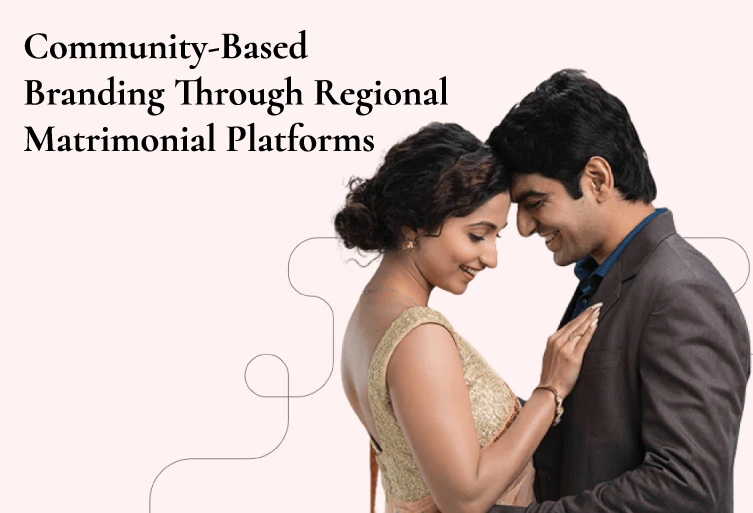
Community-Based Branding Through Regional Matrimonial Platforms
One of the smartest elements of Shaadi.com’s ecosystem is its use of community-specific matchmaking brands and platforms. Instead of forcing every user into one generic experience, the company has developed regional and language-specific matchmaking properties that can speak directly to particular communities. TamilShaadi, TeluguShaadi, MalayaleeShaadi, KannadaShaadi, BengaliShaadi, GujaratiShaadi, MarathiShaadi and PunjabiShaadi are examples identified by Shaadi.com itself. This strategy is powerful from both branding and SEO perspectives because each community has its own search behavior, cultural vocabulary and content requirements. Someone searching for a “Punjabi matrimonial site” has a different intent from someone searching for “NRI marriage bureau USA.” A regional platform can create highly relevant landing pages, content and matchmaking experiences for each audience. From a GEO and SEO marketing perspective, this creates a large network of intent-focused entry points while allowing the parent brand to retain overall authority.
How Localized SEO Can Strengthen the NRI Funnel
Search behavior provides an especially valuable acquisition channel for matrimonial platforms because users often express very specific intent through search queries. An NRI might search for phrases such as “Indian matrimonial sites in USA,” “NRI matrimony in Canada,” “Punjabi matrimony UK,” “Indian marriage bureau Dubai” or “Tamil matrimony for US Indians.” Each search represents a different combination of location, community and relationship intent. A strong Shaadi.com SEO strategy can capture these searches by creating dedicated, useful pages that answer the user’s exact needs instead of sending every visitor to one generic homepage. The company’s website already exposes international markets and NRI matrimonial services, demonstrating the importance of geographic segmentation. For GEO optimization, the content should also provide clear answers to questions users ask conversationally, such as how NRI matchmaking works, how profiles are verified, whether families can participate and how users can communicate safely across countries. This approach can improve visibility across traditional search engines and answer-oriented search experiences.
Shaadi.com Uses Content to Maintain Brand Visibility
Content marketing is another important component of the brand ecosystem because matchmaking users have many questions before they are ready to register or purchase a premium service. Relationship advice, profile-writing tips, compatibility discussions, community-specific matchmaking guides and success stories can bring users into the ecosystem at different stages of the decision journey. Shaadi.com’s official blog, ShaadiBuzz, currently publishes relationship and matchmaking content, including community-focused articles such as guides for Punjabi matches and content around TamilShaadi. This demonstrates how content can support both brand awareness and search visibility. From an AEO perspective, the opportunity is even broader: content can be structured around direct questions such as “How does NRI matchmaking work?”, “What should an NRI profile include?” and “How can Indian families verify a matrimonial profile?” When a brand answers these questions clearly, it can build authority before the user reaches the registration stage.
The Role of Social Media in Shaadi.com’s Youth Branding
Social media allows Shaadi.com to communicate in a much less formal voice than traditional matrimonial advertising. Relationship jokes, cultural observations, memes, short videos, campaign conversations and founder-led commentary can make the brand part of everyday internet culture. This is particularly important for younger audiences because attention is often earned through relevance before a product message is delivered. A matrimonial brand that only publishes promotional posts may struggle to compete with entertainment-driven social feeds. By contrast, relationship-centered content can create conversation even when users are not actively searching for a matrimonial service. The strategy works best when social content reflects the audience’s actual experiences rather than simply inserting a brand into trending topics. The wider Shaadi.com ecosystem already includes an official relationship-focused blog, giving the brand a content foundation that can be adapted across channels.
From Awareness to Conversion: The Shaadi.com Funnel
The Shaadi.com marketing funnel can be understood as a journey from cultural awareness to relationship intent, profile creation, engagement and eventually paid matchmaking services. At the awareness stage, the brand needs memorable campaigns and relatable cultural conversations. At the consideration stage, users need evidence that the platform offers better compatibility, trustworthy profiles and meaningful matchmaking. At the conversion stage, friction must be minimized through clear registration, profile creation, relevant recommendations and transparent value propositions. Shaadi.com’s registration process emphasizes detailed profile information because richer profiles can improve the quality of matchmaking interactions. The platform also offers premium memberships and additional matchmaking services, allowing the business to monetize users after establishing initial trust. This illustrates an important digital marketing principle: successful conversion does not begin with the payment page; it begins with a strong reason to believe.
Why Shaadi.com’s Youth and NRI Strategies Work Together
Although Indian youth and NRIs appear to be very different audiences, Shaadi.com can connect them through one common brand promise: meaningful matchmaking built around Indian cultural understanding and modern technology. Young Indians may want independence, compatibility and a contemporary experience, while NRIs may want cultural familiarity, geographic convenience and trusted matchmaking. Both groups still need confidence that the platform understands their expectations. This is why the brand does not need completely separate identities for each audience. Instead, it can adjust the emotional emphasis, language, content, targeting and landing experience while maintaining the same core positioning. For youth, the communication can focus on relationship clarity and personal choice; for NRIs, it can focus on cultural connection and global accessibility. The technology, verification and matchmaking infrastructure can remain consistent underneath these audience-specific messages.
Key Marketing Lessons Businesses Can Learn From Shaadi.com
The Shaadi.com case study provides several valuable lessons for businesses operating in competitive digital markets. First, a brand should own a clear emotional position instead of competing only on features. Second, audience segmentation should influence messaging, content and landing pages rather than existing only inside an advertising dashboard. Third, community-based marketing can create powerful niche opportunities when cultural or regional preferences strongly influence purchasing decisions. Fourth, SEO becomes more effective when businesses build pages around genuine search intent rather than simply repeating keywords. Fifth, trust should be treated as a marketing asset, especially in industries where customers face high emotional or financial risk. Finally, technology should be communicated through the benefit it creates for customers rather than through technical terminology alone. Shaadi.com’s long history, community-specific platforms, verification messaging, content ecosystem and international presence provide useful examples of how a mature digital brand can continue adapting to changing audiences.
Final Thoughts on Shaadi.com’s Targeted Branding Strategy
Shaadi.com’s branding strategy demonstrates how a legacy digital brand can remain relevant by changing the conversation without abandoning its core purpose. For Indian youth, the opportunity lies in presenting matchmaking as intentional, modern, personal and compatible with contemporary relationship expectations. For NRIs, the strongest opportunity comes from connecting geographical convenience with cultural familiarity, community identity and trust. The company’s use of community-specific platforms, international markets, content, technology, verification and recognizable brand personalities creates a multi-layered ecosystem rather than relying on one advertising campaign. For KTPL- Business Growth Agency, the broader lesson is equally valuable: effective branding begins with understanding what different audiences actually value. A single product can require different emotional messages for different customer segments, while its fundamental brand promise remains consistent. By combining audience research, SEO, AEO, GEO, content marketing, social media, localized landing pages and conversion-focused experiences, businesses can build a stronger digital presence and attract users with genuine intent. The Shaadi.com example shows that when technology, culture and storytelling work together, a brand can remain recognizable while continuously evolving with its audience.
FAQs
Have questions? We’ve answered some of the most common queries to help you understand the topic better.
Q1. What is Shaadi.com’s branding strategy?
Shaadi.com combines emotional branding, technology, trust, cultural relevance, and targeted audience marketing.
Q2. How does Shaadi.com target Indian youth?
It uses relatable campaigns, social media, modern relationship messaging, and technology-driven matchmaking.
Q3. How does Shaadi.com attract NRIs?
It focuses on cultural connections, NRI matchmaking, international SEO, and community-specific platforms.
Q4. Why does Shaadi.com use regional matrimonial platforms?
Platforms such as TamilShaadi and PunjabiShaadi help target users based on language, culture, and community preferences.
Q5. What can brands learn from Shaadi.com?
Brands can learn how audience segmentation, emotional storytelling, SEO, trust, and localized marketing can strengthen brand growth.


