


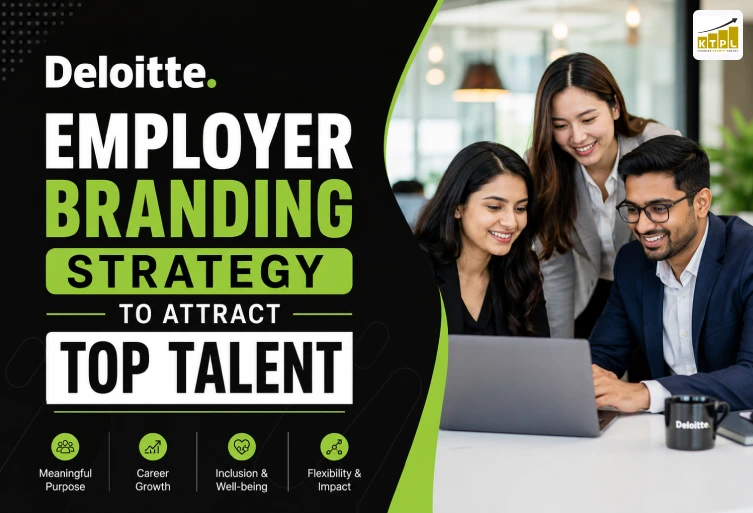
In a competitive hiring market, a strong employer brand can influence whether talented professionals notice a company, apply for a role, accept an offer, or recommend the organization to others. The Deloitte Employer branding approach is a useful example because it connects recruitment with purpose, career development, inclusion, employee experience, and meaningful work rather than focusing only on salary or job titles. Deloitte positions its purpose around “making an impact that matters” for clients, people, and society, giving its employer brand a broader story than conventional recruitment advertising. For businesses competing for skilled professionals, the lesson is not to copy Deloitte’s messaging word for word, but to understand the strategic principles behind it. A successful employer branding strategy should explain why talented people should join, what they can learn, how they can grow, what kind of culture they will experience, and how their work contributes to something meaningful. Deloitte’s careers communication brings these ideas together through its focus on inclusion, collaboration, continuous development, flexibility, well-being, and impact.
What Is Deloitte Employer Branding Strategy?
The Deloitte Employer Branding Strategy can be understood as a people-focused approach to presenting Deloitte as an attractive place to build a career, develop skills, contribute to meaningful work, and belong to an inclusive professional community. Instead of treating employer branding as a simple recruitment campaign, Deloitte connects its employee proposition with its wider purpose and organizational values. Its global purpose is centered on making an impact that matters, while its shared values include leading the way, serving with integrity, taking care of each other, fostering inclusion, and collaborating for measurable impact. This creates a consistent narrative across different parts of the candidate and employee journey. Career pages communicate opportunities for learning, leadership development, collaboration, inclusion, flexibility, and well-being, while employee stories provide a more personal view of life inside the organization. Deloitte’s US-India careers communication, for example, highlights career-shaping opportunities, mentoring, learning, technology careers, inclusion, and professional development. The important point is that Deloitte Employer positioning does not rely on a single benefit or recruitment message. It combines purpose, people, career growth, culture, flexibility, and impact into an employer value proposition that can appeal to professionals at different career stages.
Why Deloitte Employer Branding Attracts Top Talent
The strength of the Deloitte Employer brand comes from its ability to connect professional ambition with personal values. High-performing candidates increasingly want more than compensation; they want opportunities to learn, meaningful work, supportive leadership, flexibility, and an environment where they can contribute without losing their individuality. Deloitte’s own 2025 Global Impact Report notes that financial security, meaningful work, and well-being are closely connected for younger generations, while learning and professional growth remain important priorities. Deloitte also operates at a scale that allows it to offer exposure to different industries, technologies, business challenges, teams, and career paths. Its careers messaging emphasizes opportunities to learn and grow, work collaboratively, develop leadership capabilities, and make an impact. For talent acquisition teams, this demonstrates an important principle: employer branding becomes more powerful when the promise made during recruitment reflects the actual employee experience. A company that says it supports learning should demonstrate training opportunities. A company that promotes inclusion should show how employees experience belonging. A company that talks about flexibility should clearly explain its working approach. That consistency creates trust, and trust is one of the most valuable assets in modern recruitment.
Purpose-Led Employer Value Proposition
One of the most recognizable elements of the Deloitte Employer Branding Strategy is its purpose-led positioning. Deloitte describes its purpose as making an impact that matters for its clients, people, and society, and uses that purpose as a strategic lens across its global organization. From an employer branding perspective, purpose gives candidates an answer to an important question: Why should I work here? A salary can attract attention, but purpose can create emotional connection. When candidates understand how their skills can contribute to clients, communities, technology, sustainability, or wider social progress, a job can feel more meaningful. Deloitte extends this idea through initiatives such as WorldImpact, which focuses on areas including education and skills-building, sustainability, and diversity, equity, and inclusion. Businesses developing their own employer branding strategy can learn from this approach by defining a simple and credible purpose. The purpose should not sound like a generic corporate statement. It should explain the real difference the organization wants to make and connect that difference with the work employees perform every day. A strong employer value proposition therefore answers four practical questions: What do we do? Why does it matter? What can employees contribute? And what can employees become while working with us?
Individualized Candidate Experience
A major lesson from the Deloitte Employer approach is the importance of treating candidates as individuals rather than simply as applications in an applicant tracking system. Professionals have different motivations, experience levels, career ambitions, technical abilities, locations, and expectations from employers. An experienced technology professional may be interested in innovation and leadership opportunities, while a graduate may care more about mentorship, training, exposure, and career development. A working parent may prioritize flexibility and well-being, while another candidate may be motivated primarily by challenging projects and international exposure. Deloitte’s careers communication presents multiple dimensions of the employee experience, including professional development, mentoring, technology, inclusion, benefits, well-being, and career advancement. This approach helps create a broader candidate journey. Instead of showing every applicant the same generic message, organizations can create content for different talent segments. For example, an employer could develop separate recruitment content for graduates, experienced professionals, technology specialists, managers, women returning to work, and senior leadership candidates. Each group can receive information that answers the questions most relevant to its career stage.
Continuous Learning and Career Development
Learning is one of the strongest components of the Deloitte Employer Branding Strategy. Deloitte states that it invests in an environment that prioritizes learning and development and provides professionals with learning, networking, leadership, coaching, mentoring, and challenging assignment opportunities. This matters because skilled professionals understand that their current abilities may not be enough for their future roles. Technology, business models, customer expectations, and industry requirements continue to change, making continuous learning an important part of career security. Deloitte’s 2025 Global Impact Report reports more than $673 million in direct training investment, while its people strategy includes ongoing reskilling and upskilling across areas such as AI, cloud, cybersecurity, and sustainability. The company’s learning approach also extends beyond formal classroom training. Its careers material refers to live and virtual learning, exposure to leaders, sponsors, coaches, and challenging assignments. For employer branding, this is powerful because career development becomes part of the recruitment promise. Candidates are not simply being offered a job; they are being shown a potential career path. Organizations looking to compete with larger employers can apply the same principle without having a massive training budget. Mentorship programs, internal knowledge-sharing sessions, structured onboarding, certification support, leadership coaching, and clearly defined career paths can all strengthen an employer value proposition.
Inclusion, Belonging and Workplace Culture
Modern professionals increasingly evaluate company culture before accepting a job, making inclusion an important part of employer branding. Deloitte’s shared values explicitly include fostering inclusion, while its careers communication emphasizes creating an environment where people can feel valued, connected, and supported. The Deloitte Employer narrative connects inclusion with collaboration, professional development, well-being, and belonging. This is important because diversity alone does not automatically create a positive employee experience. People also need to feel that their ideas are heard, their contributions are respected, and they have opportunities to develop. Deloitte’s US-India careers content highlights identity-based communities, mentoring, networking, learning opportunities, and a culture designed to help professionals thrive. For smaller and mid-sized businesses, inclusion can become a genuine competitive advantage when it is reflected in everyday workplace practices. Companies can communicate employee stories, celebrate different perspectives, create transparent promotion processes, provide accessible workplaces, and encourage respectful collaboration. The key is authenticity. Employer branding should show what employees actually experience instead of presenting inclusion as a marketing slogan.
Flexibility, Well-Being and Employee Benefits
Another important component of the Deloitte Employer Branding Strategy is the way it communicates employee support beyond salary. Deloitte describes flexible benefits and rewards designed around employees and highlights flexibility, mental and physical well-being, and work-life balance. Benefits can vary by geography and may include time off, health insurance, parental leave, retirement contributions, and performance rewards. This reflects a broader change in employee expectations. Professionals increasingly consider the complete employee experience when comparing job opportunities. Compensation remains important, but candidates may also consider working arrangements, health and well-being support, learning opportunities, leadership quality, workplace culture, and career progression. Deloitte’s 2025 research also shows that Gen Z and millennials are particularly focused on the combination of money, meaning, learning, and well-being. In India, the survey highlights work-life balance and learning and development as important considerations for younger workers. For employers, this means benefits should be communicated as part of the overall employee value proposition. A careers page should not simply say “great benefits.” It should explain what employees can actually expect and how those benefits support their professional and personal lives. Transparent communication makes an employer brand more credible and helps candidates self-select based on what genuinely matters to them.
Authentic Employee Storytelling
Employer branding becomes more believable when employees—not only corporate marketing teams—tell the story. Deloitte’s careers ecosystem includes people stories that allow candidates to learn about the experiences and journeys of Deloitte professionals in their own words. This is a valuable strategy because candidates naturally want evidence behind employer claims. A company can say that it supports learning, but an employee describing how mentoring helped them move into a new role provides a more relatable perspective. Employee storytelling can include career journeys, project experiences, leadership development, workplace culture, community initiatives, learning experiences, technology projects, and personal growth. For a strong Deloitte Employer style strategy, content should feel less like advertising and more like a window into the workplace. Short videos, employee interviews, LinkedIn posts, career blogs, behind-the-scenes content, project stories, and team introductions can all contribute to this approach. The best stories are specific. Instead of saying “employees enjoy excellent career growth,” explain how someone joined the company, what they learned, which opportunities they received, and where that experience took them.
Digital Platforms and Employer Brand Visibility
Today, employer branding extends far beyond the careers page. Candidates can discover companies through Google searches, LinkedIn, YouTube, review platforms, social media, employee posts, recruitment websites, industry publications, and online communities. The Deloitte Employer strategy benefits from a broad digital presence where candidates can explore careers, culture, learning, purpose, benefits, professional development, and employee experiences. Deloitte’s career ecosystem provides dedicated content around these different aspects rather than forcing candidates to rely on a single recruitment page. This is where SEO and AEO become increasingly important for employer branding. Organizations should create content that answers questions candidates are actually searching for, such as “Why work at Deloitte?”, “What is Deloitte company culture?”, “Does Deloitte provide career development?”, “What benefits does Deloitte offer employees?”, and “What is Deloitte’s work environment like?” A well-structured employer branding website can capture these informational searches while providing a clear path toward job opportunities. For companies competing for talent in specific cities, GEO optimization is equally useful. Employer content can target searches such as “best company to work for in Gurgaon,” “IT jobs in Delhi,” “digital marketing careers in Jaipur,” or “technology companies hiring in Bangalore.” Localized career content helps businesses become more visible to candidates searching for opportunities in specific locations.
What Businesses Can Learn From Deloitte Employer Branding
The biggest lesson from the Deloitte Employer Branding Strategy is that employer branding should not exist separately from company culture. Recruitment messaging becomes stronger when purpose, leadership, employee experience, career development, benefits, inclusion, and communication all support the same story. Deloitte’s own employer messaging combines impact, learning, inclusion, collaboration, flexibility, and well-being rather than depending on a single recruitment benefit. A mid-sized organization does not need Deloitte’s global scale to apply these principles. It needs clarity about what makes its workplace genuinely valuable to employees. That might be faster career progression, direct access to leadership, flexible working, specialized training, entrepreneurial opportunities, meaningful local projects, strong mentorship, or a collaborative culture. The next step is to turn those strengths into an employee value proposition that is specific, believable, and differentiated. A practical employer branding framework can focus on five areas: purpose, people, growth, culture, and experience. Purpose explains why the company exists. People demonstrate who employees work with. Growth explains how careers develop. Culture describes how people collaborate. Experience shows what employees actually receive throughout their journey. When these five areas are consistently communicated, employer branding becomes more than recruitment advertising—it becomes a long-term talent attraction strategy.
How to Build a Deloitte-Inspired Employer Branding Strategy
A business looking to learn from the Deloitte Employer model should begin by researching its current employee experience instead of immediately creating marketing content. Interview existing employees, review candidate feedback, analyze employee turnover, study recruitment data, and identify the reasons people join and leave the organization. The next step is to identify the strongest employee value propositions. These should come directly from real workplace experiences rather than assumptions made by senior management. If employees consistently mention learning opportunities, supportive managers, flexible work, meaningful projects, or rapid career progression, those strengths can become central employer-brand themes. Businesses should then create content around each theme. Careers pages, employee interviews, recruitment videos, blogs, social media posts, job descriptions, onboarding materials, and recruitment campaigns should all reinforce the same positioning. Measurement is equally important. Employer branding performance can be tracked using metrics such as career-page traffic, organic search impressions, branded recruitment searches, job application volume, qualified applicants, offer acceptance rate, employee referral rate, cost per hire, time to hire, candidate engagement, and employee retention. Over time, these insights help companies understand which employer-brand messages actually attract qualified professionals.
Measuring Employer Branding ROI
Employer branding should be treated as a measurable business investment rather than simply a creative marketing activity. Companies need to understand whether stronger employer positioning is improving candidate quality, reducing recruitment friction, increasing applications, and helping retain employees. Useful metrics include organic traffic to career pages, branded search growth, qualified applications per vacancy, application completion rate, interview-to-offer ratio, offer acceptance rate, employee referrals, recruitment cost, time-to-hire, retention rate, and candidate satisfaction. For example, if a company launches a new employee storytelling campaign and qualified applications increase while cost per qualified applicant falls, the campaign may be producing measurable value. If careers-page traffic increases but applications remain unchanged, the organization may need to improve its messaging, job descriptions, candidate experience, or calls to action. The Deloitte Employer example shows why employer branding needs multiple touchpoints. Candidates may care about purpose, development, inclusion, flexibility, benefits, and career opportunities simultaneously. Businesses should therefore avoid measuring employer branding only through social media likes or website traffic. The most valuable indicators are connected to talent acquisition and employee outcomes.
Final Thoughts on the Deloitte Employer Branding Strategy
The Deloitte Employer Branding Strategy demonstrates how a company can connect recruitment with purpose, career growth, employee experience, inclusion, learning, flexibility, and meaningful work. Its approach goes beyond asking candidates to apply for a job; it gives them reasons to imagine a longer-term professional journey within the organization. Deloitte’s purpose, shared values, learning programs, inclusion initiatives, employee stories, benefits, and career opportunities work together to create a recognizable employer proposition. For businesses developing their own employer brand, the most important takeaway is authenticity. A strong employer brand cannot be created through attractive recruitment graphics alone. The promises made externally need to reflect the experiences employees receive internally.
FAQs
Have questions? We’ve answered some of the most common queries to help you understand the topic better.
Q1. What is Deloitte Employer Branding Strategy?
The Deloitte Employer Branding Strategy focuses on presenting Deloitte as a place where professionals can make an impact, develop their careers, experience an inclusive culture, and receive support for their well-being. Its employer communication connects purpose with learning, collaboration, inclusion, flexibility, and career opportunities.
Q2. What makes Deloitte attractive to top talent?
Deloitte highlights several factors that can attract professionals, including career development, continuous learning, meaningful work, inclusion, collaboration, flexibility, well-being, and opportunities to work on challenging business problems. Its careers communication presents these elements as parts of a broader employee experience rather than isolated benefits.
Q3. How does Deloitte use employee development in employer branding?
Learning and development are central to Deloitte’s employee proposition. Deloitte describes opportunities involving live and virtual learning, networking, mentoring, coaching, leadership development, and challenging assignments. Its 2025 Global Impact Report also reports substantial investment in employee training and ongoing reskilling.
Q4. Why is purpose important in employer branding?
Purpose helps candidates understand why an organization exists and why their work matters. Deloitte’s purpose—making an impact that matters for clients, people, and society—provides a consistent foundation for its employer and corporate messaging.
Q5. Can small businesses use the Deloitte employer branding approach?
Yes. Small and mid-sized businesses can adopt the principles without copying Deloitte’s scale or messaging. They can define a clear employee value proposition, communicate genuine workplace strengths, showcase employee stories, provide development opportunities, improve candidate experience, and build transparent career content around their actual employee experience.
Want To Grow Your Business - Connect With KTPL
KTPL – Business Growth Agency, a creative solutions and business growth agency from India.
👉 Visit https://kirnanitechnologies.com
📞 Call us at +91 95093 33000
📧 Email us at contact@kirnanitechnologies.com


