


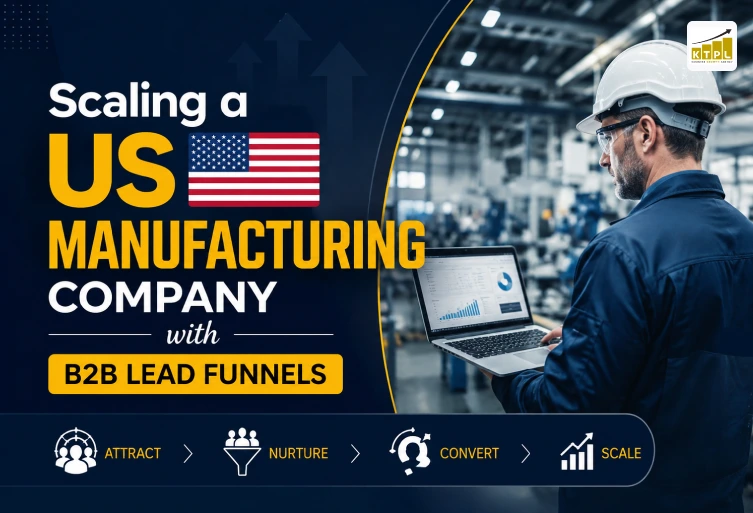
US manufacturing companies are operating in a highly competitive market where buyers increasingly research suppliers, compare capabilities, and evaluate solutions online before speaking with a sales representative. Traditional channels such as referrals, distributors, trade shows, and outbound sales remain valuable, but they may not provide a consistent flow of new opportunities on their own. This is where B2B Lead Funnels can help manufacturers create a more predictable customer acquisition process. A properly designed funnel connects search visibility, useful content, landing pages, advertising, lead qualification, nurturing, and sales follow-up into one structured journey. For manufacturing businesses, the buying process is rarely immediate because customers may need technical specifications, certifications, pricing information, production capacity, samples, quality documentation, and internal approvals before selecting a supplier. A B2B funnel allows a company to provide the right information at different stages instead of expecting every website visitor to request a quotation immediately. This approach can be especially effective for manufacturers selling industrial products, OEM services, custom components, equipment, or specialized production solutions. The purpose of a manufacturing lead funnel is not simply to generate a large number of contacts. The real objective is to attract companies that fit the manufacturer’s ideal customer profile and gradually move qualified prospects toward a sales conversation. When marketing and sales teams work around the same funnel, businesses can understand where leads originate, what information they consume, how they interact with the website, and when they become ready for direct sales engagement. For a US manufacturing company, this strategy can also expand reach beyond existing relationships. Search engines, LinkedIn, paid advertising, industry content, and other digital channels can introduce the company to procurement managers, engineers, operations leaders, plant managers, distributors, OEM buyers, and business owners who may not have encountered the manufacturer through traditional methods. A strong B2B Lead Funnels strategy therefore becomes more than a marketing campaign. It becomes a repeatable system for attracting demand, building trust, identifying purchase intent, and supporting the sales pipeline. With the right strategy, manufacturers can reduce dependence on unpredictable lead sources while creating a stronger foundation for long-term business growth.
Why B2B Lead Funnels Matter for US Manufacturing Companies
Manufacturing purchases often involve multiple stakeholders, long decision-making processes, and significant financial or operational risk. A procurement manager may compare suppliers based on pricing and delivery, while an engineer may focus on materials, specifications, tolerances, and technical capabilities. Operations teams may evaluate production capacity and reliability, while business owners may consider overall value and long-term supplier relationships. A well-built B2B Lead Funnels strategy can address these different concerns throughout the buying journey. Many potential customers begin researching before they are ready to contact a manufacturer. They may search for a particular product, manufacturing method, supplier, material, application, or industry solution. If a manufacturer’s website only contains promotional service pages, it may miss opportunities to engage these early-stage prospects. Educational articles, technical guides, case studies, FAQs, and industry resources can attract these visitors and gradually introduce them to the company’s capabilities. Lead funnels also help businesses separate general website traffic from commercially valuable prospects. A visitor reading an introductory article may not have an active project, while someone requesting a quotation may have immediate purchasing intent. By using relevant landing pages, forms, lead scoring, and CRM tracking, companies can identify which contacts deserve immediate sales attention and which should continue through a nurturing process. Another advantage is better alignment between marketing and sales. Marketing can focus on attracting relevant prospects and educating them, while sales representatives can concentrate on leads that demonstrate stronger buying signals. This reduces the amount of time sales teams spend manually evaluating weak inquiries and allows them to focus on opportunities with greater potential. For manufacturers targeting customers across the United States, digital lead funnels can also support geographic expansion. A company that traditionally relies on local relationships can use search optimization, targeted content, paid campaigns, and industry-specific landing pages to reach buyers in new states and regions. This makes digital marketing an important tool for manufacturers looking to expand beyond their existing customer base. Ultimately, the value of a funnel comes from creating a consistent journey between discovery and purchase. Instead of hoping that a visitor will immediately contact the company, the business can provide useful information, establish credibility, capture contact information, nurture interest, qualify the opportunity, and support the sales team at the right time.
Building a Manufacturing Lead Funnel Around Buyer Intent
The first step in building effective B2B Lead Funnels is understanding buyer intent. Not every person searching for a manufacturing-related term has the same objective, and treating every visitor the same can reduce both engagement and conversion rates. A prospect searching for general information about a manufacturing process may be at the awareness stage, while someone searching for a specific supplier or requesting pricing may already be close to a purchasing decision. Manufacturing companies should therefore organize content and conversion opportunities around different stages of the buyer journey. Awareness-stage content can answer educational questions and explain industry concepts. Consideration-stage content can provide product comparisons, technical guides, case studies, application information, and supplier-selection advice. Decision-stage content can focus on quotations, consultations, product inquiries, samples, technical discussions, and direct sales contact. Understanding buyer intent also helps improve SEO. Instead of targeting only broad keywords, manufacturers can create content around commercial searches, technical questions, product-specific terms, industry requirements, and common customer problems. This creates a wider search footprint while ensuring that the content remains relevant to people who could eventually become customers. Landing pages should then support these different search intents. A visitor searching for a specific manufacturing service should ideally reach a page dedicated to that service rather than a generic homepage. Similarly, someone researching an industry application should find content that explains how the manufacturer’s capabilities apply to that specific market. Calls to action should also reflect intent. Early-stage visitors may prefer to download a guide or read a case study, while high-intent prospects may want to request a quote or speak with a specialist. Giving visitors multiple relevant options makes the funnel more flexible and reduces pressure on people who are still researching. When buyer intent, content, landing pages, and calls to action are aligned, the funnel becomes much more effective. Instead of simply generating traffic, the manufacturer creates a structured pathway that helps prospects move from research to consideration and eventually toward a qualified sales opportunity.
Creating High-Converting Landing Pages for Manufacturing Leads
Landing pages are an essential component of B2B Lead Funnels because they connect marketing campaigns with actual lead generation. A high-quality manufacturing landing page should quickly explain what the company offers, who it serves, what makes its capabilities relevant, and what the visitor should do next. It should answer important questions without forcing users to search through multiple pages. The messaging should focus on the buyer’s requirements rather than only describing the manufacturer’s internal capabilities. Procurement professionals may want information about lead times, production capacity, quality, and reliability, while engineers may need technical details, materials, customization options, and specifications. Understanding these different priorities allows the landing page to communicate value more effectively. Trust signals are particularly important in manufacturing because buyers often face significant risks when selecting a supplier. Certifications, quality-control processes, production facilities, years of experience, industry expertise, customer testimonials, case studies, and project examples can help reduce uncertainty. Specific evidence is generally more persuasive than broad statements about being the “best” or “leading” manufacturer. Forms should collect useful qualification information without creating unnecessary friction. Depending on the business model, fields may include company name, industry, product requirement, estimated order volume, location, project timeline, and specific requirements. This information gives the sales team useful context before contacting the prospect. Calls to action should be specific and connected to the visitor’s likely intent. Instead of relying exclusively on generic phrases such as “Contact Us,” manufacturers can use actions such as “Request a Manufacturing Quote,” “Discuss Your Project,” or “Speak With a Manufacturing Specialist.” Clear CTAs help visitors understand exactly what will happen after they submit the form. Landing pages should also be fast, mobile-friendly, easy to navigate, and technically optimized. A slow or confusing page can cause qualified visitors to leave before they understand the company’s capabilities. Combining strong messaging, technical performance, trust elements, and relevant conversion opportunities can significantly strengthen the role of landing pages within a manufacturing lead funnel.
Using Content Marketing to Generate Qualified Manufacturing Leads
Content marketing can become one of the strongest long-term sources of leads for US manufacturers because buyers frequently research complex products and services before contacting suppliers. A manufacturer can use useful content to answer customer questions while demonstrating expertise and building trust. This approach supports both organic search visibility and the wider B2B Lead Funnels strategy. Manufacturing content should be based on real customer questions rather than generic topics created only to insert keywords. Useful subjects can include manufacturing processes, material selection, production planning, quality standards, supplier evaluation, technical considerations, application requirements, maintenance, cost factors, and industry challenges. Such topics can attract prospects who are actively looking for solutions. Case studies can be especially valuable because they show how the manufacturer has solved real customer problems. A strong case study can explain the challenge, requirements, manufacturing approach, solution, and outcome. When measurable results are available, they can provide additional credibility and help prospects understand the practical value of working with the company. Downloadable resources can also turn content traffic into identifiable leads. Manufacturers can offer product catalogs, technical guides, supplier checklists, application guides, project-planning resources, or industry reports. The resource should provide genuine value rather than simply acting as a reason to request contact information. Internal linking is another important part of the content strategy. Blog articles can link to relevant service pages, product pages, case studies, and contact opportunities. This creates a connected website structure that helps users discover more information while supporting search engines in understanding the site’s topical relationships. For GEO optimization, content should naturally reflect the US market and the industries the manufacturer serves. References to US manufacturing requirements, domestic supply chains, industry terminology, customer expectations, and relevant regional markets can strengthen geographic relevance without unnecessary keyword repetition. This makes the content more useful to both search engines and real buyers.
Using Google Ads and LinkedIn to Accelerate Lead Generation
Organic search can provide long-term visibility, but paid advertising can help manufacturers reach potential buyers more quickly. Google Ads can capture prospects who are actively searching for manufacturing products, suppliers, and services, while LinkedIn can help reach professional audiences based on industry, job role, company characteristics, and business interests. Both channels can feed qualified prospects into B2B Lead Funnels when campaigns are strategically designed. Google Ads should focus on commercial and high-intent searches rather than broad keywords that generate large amounts of irrelevant traffic. A prospect searching for a specific supplier, manufacturing service, or industrial product may have stronger buying intent than someone conducting general research. Dedicated campaigns and landing pages can make these interactions more relevant. LinkedIn can be valuable for reaching procurement managers, engineers, operations leaders, plant managers, executives, and other B2B decision-makers. Instead of immediately asking every user to request a quote, manufacturers can promote technical resources, case studies, industry reports, webinars, or consultation opportunities. This approach can create awareness while gradually moving prospects into the funnel. Retargeting can bring previous website visitors back into the buying journey. Someone who viewed a product page but did not submit an inquiry may simply need more information before taking action. Showing that person a relevant case study, technical resource, or consultation offer can provide another opportunity for engagement. Advertising performance should be measured using business outcomes rather than clicks alone. Qualified leads, sales-qualified opportunities, quote requests, customer acquisition cost, opportunity value, and revenue provide a clearer understanding of campaign effectiveness. A campaign generating fewer but better-qualified manufacturing leads may be more valuable than one producing hundreds of low-quality inquiries.When Google Ads, LinkedIn, retargeting, landing pages, and CRM tracking work together, paid marketing becomes part of a complete acquisition system. This gives manufacturers a more structured way to attract relevant prospects and move them toward sales conversations.
Lead Nurturing and CRM Follow-Up for Manufacturing Sales
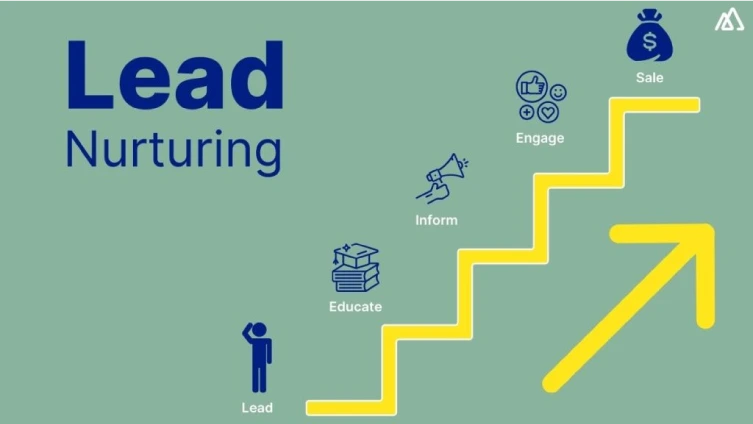
Generating a lead does not guarantee a sale, particularly when the manufacturing buying cycle can extend for weeks or months. Prospects may need internal approval, technical evaluation, budget confirmation, supplier comparison, or additional information before making a decision. Lead nurturing helps manufacturers remain visible and useful while the buyer progresses through the purchasing process. Email nurturing can provide relevant information based on the prospect’s interests. Someone interested in a particular product may receive technical information, application examples, customer stories, and related resources. The communication should be useful rather than overly promotional, because the goal is to help the buyer make a confident decision. CRM systems can organize lead information and make it easier for sales teams to manage opportunities. Sales representatives can see where a lead originated, which pages they viewed, what forms they submitted, and what communication has already taken place. This context can make follow-up conversations more relevant and reduce repetitive questions. Lead scoring can help prioritize prospects based on both business fit and engagement. A company that matches the ideal customer profile and repeatedly interacts with product information may deserve faster attention than a general website visitor. Scoring criteria should be customized to the manufacturer’s sales process rather than copied from a generic model. Speed is particularly important for high-intent inquiries. When a prospect requests a quote or technical consultation, they may be contacting several suppliers simultaneously. Prompt acknowledgement followed by personalized human follow-up can help create a stronger buying experience. Automation can handle routine communication, reminders, lead assignments, and nurturing sequences, but complex manufacturing purchases still require human expertise. Buyers may have technical questions about specifications, customization, production capacity, quality, or delivery. Combining automation with knowledgeable sales support creates a more effective customer journey.
SEO, AEO and GEO for US Manufacturing Lead Funnels
SEO helps manufacturing companies become visible when potential customers search for products, services, suppliers, technical information, and industry solutions. Instead of focusing only on broad keywords, a strong strategy should cover commercial searches, product terms, application-specific searches, industry questions, and problem-based queries. This allows manufacturers to reach prospects at multiple stages of the buying journey. AEO, or Answer Engine Optimization, focuses on providing clear answers to questions that buyers commonly ask. Manufacturing websites can address questions about processes, materials, supplier selection, costs, applications, quality standards, and other practical topics. Well-structured answers can make content more useful for search engines and answer-focused search experiences.GEO optimization strengthens geographic relevance for manufacturers serving the United States or specific regions. This can involve market-specific content, relevant service areas, industry information, location context, and accurate business information. The objective is to demonstrate genuine relevance to the target market rather than simply adding geographic keywords repeatedly. Technical SEO also plays an important role. Fast-loading pages, mobile responsiveness, logical site architecture, descriptive metadata, internal linking, secure browsing, structured data where appropriate, and accessible content can improve both search visibility and user experience. Topical authority can be developed through detailed content covering related subjects around core manufacturing services and products. A manufacturer that consistently provides useful answers and demonstrates practical expertise can create a stronger digital presence than a website containing only short promotional pages. When SEO, AEO, and GEO are connected with landing pages and conversion opportunities, organic visibility becomes a direct part of the lead-generation system. Search traffic can enter through educational content, move toward commercial pages, and eventually become a qualified inquiry.
Measuring and Improving B2B Lead Funnel Performance
A successful B2B Lead Funnels strategy needs continuous measurement because lead generation without performance analysis can quickly become inefficient. Website traffic, impressions, and clicks are useful indicators, but they do not necessarily show whether marketing is producing revenue. Manufacturers should track the complete journey from acquisition to qualified lead, sales opportunity, quotation, and customer. Important metrics can include landing-page conversion rates, qualified leads, sales-qualified leads, quote requests, cost per qualified lead, opportunity value, customer acquisition cost, sales-cycle length, and revenue generated. These metrics provide a more realistic picture of marketing performance. If a website receives significant traffic but produces very few inquiries, the issue may be the landing page, offer, messaging, user experience, or call to action. If many leads are generated but few qualify, the targeting or content may be attracting the wrong audience. If qualified leads fail to become opportunities, the sales process or follow-up may require attention. Marketing and sales teams should regularly review these numbers together. Sales representatives can provide information about lead quality, common objections, customer questions, and reasons why opportunities are won or lost. Marketing teams can use this feedback to improve content, targeting, landing pages, and campaigns. Conversion testing can also improve funnel performance over time. Businesses can test different headlines, calls to action, offers, form structures, landing-page layouts, and content formats. Small improvements across multiple funnel stages can produce meaningful gains in qualified opportunities. The key is to optimize for business value rather than vanity metrics. A manufacturing company does not necessarily need more visitors; it needs more relevant companies entering the sales pipeline. By measuring the right outcomes and continuously refining the funnel, manufacturers can make their digital marketing investment more predictable and scalable.
Scaling Manufacturing Growth With B2B Lead Funnels
Once the core funnel is working, manufacturers can scale it by expanding successful acquisition channels, creating additional industry-specific content, developing new landing pages, and targeting additional customer segments. The objective should be controlled growth rather than simply increasing advertising spend or publishing more content. A scalable system starts with a clearly defined ideal customer profile. The company should understand which industries, company sizes, applications, locations, and purchasing requirements represent the strongest opportunities. This allows marketing resources to focus on prospects that are most likely to generate long-term value. SEO can provide a growing source of organic traffic through useful content, while paid advertising can capture immediate demand. LinkedIn can support professional audience targeting, email nurturing can maintain relationships, and CRM systems can organize opportunities. Each channel should have a defined role within the larger funnel. Scalability also requires strong sales processes. More marketing leads can create problems if the sales team does not have sufficient systems for qualification, follow-up, and opportunity management. Clear response procedures, lead scoring, CRM workflows, and sales responsibilities help ensure that growth in lead volume does not reduce service quality. The funnel should also be reviewed regularly because customer behavior and market conditions change. Search trends, advertising costs, competitors, product demand, and purchasing expectations can all evolve. Continuous optimization keeps the funnel aligned with the market. For a US manufacturing company, the long-term goal is to build a repeatable customer acquisition engine that attracts relevant buyers, builds trust, identifies purchase intent, and supports sales conversion. With the right strategy, B2B Lead Funnels can become an important part of sustainable manufacturing growth.
Conclusion
Scaling a US manufacturing company requires more than increasing production or expanding sales outreach. Manufacturers also need a reliable way to attract new business opportunities in a market where buyers increasingly research suppliers online before making contact. B2B Lead Funnels provide a structured approach for connecting search visibility, content, landing pages, advertising, lead nurturing, qualification, CRM systems, and sales follow-up. The strongest funnels are built around buyer intent and customer needs. They recognize that an engineer researching technical specifications may require different information from a procurement manager requesting a quote. By creating relevant content and conversion opportunities for different stages, manufacturers can build trust and guide prospects toward meaningful sales conversations. SEO, AEO, and GEO can expand the company’s visibility across relevant search journeys, while Google Ads and LinkedIn can accelerate access to targeted audiences. Landing pages and lead forms can convert that interest into identifiable opportunities, and CRM systems can help sales teams prioritize and nurture those prospects. Most importantly, funnel performance should be measured according to qualified opportunities and revenue rather than traffic alone. Continuous optimization allows manufacturers to identify weak points, improve conversion rates, strengthen lead quality, and allocate marketing resources toward channels that deliver stronger commercial results. For US manufacturing companies looking to reduce dependence on traditional lead sources and build a more predictable sales pipeline, a well-planned B2B Lead Funnels strategy can provide a strong foundation for digital growth. When marketing and sales operate around one connected customer journey, the business can attract better prospects, improve follow-up, build stronger relationships, and create more sustainable opportunities for long-term growth.
FAQs
Have questions? We’ve answered some of the most common queries to help you understand the topic better.
Q1. What are B2B Lead Funnels?
B2B Lead Funnels are structured processes that attract business prospects, nurture their interest, qualify leads, and move them toward a sales decision.
Q2. Why are B2B Lead Funnels important for manufacturers?
They help US manufacturers attract qualified buyers, build trust, and create a more predictable flow of sales opportunities.
Q3. How can SEO support B2B Lead Funnels?
SEO helps manufacturers reach potential customers searching for products, services, suppliers, and manufacturing solutions online.
Q4. Which channels can generate manufacturing leads?
Google Search, LinkedIn, SEO content, paid advertising, email marketing, industry websites, and referral traffic can all support lead generation.
Q5. How do you measure B2B Lead Funnels?
Key metrics include qualified leads, conversion rates, quote requests, sales opportunities, customer acquisition cost, and revenue.
Want To Grow Your Business - Connect With KTPL
KTPL – Business Growth Agency, a creative solutions and business growth agency from India.
👉 Visit https://kirnanitechnologies.com
📞 Call us at +91 95093 33000
📧 Email us at contact@kirnanitechnologies.com


