


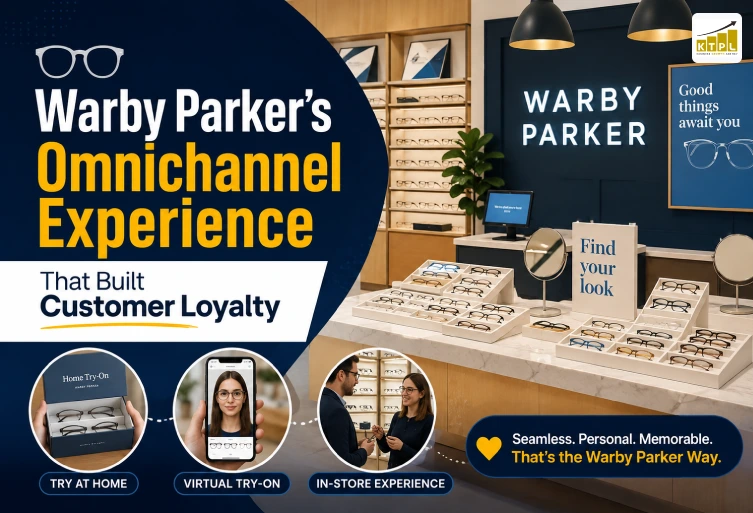
In the modern eyewear industry, customers expect more than attractive frames and competitive pricing. They want convenience, personalization, flexibility, and a consistent experience whether they interact with a brand through a website, mobile app, social media, or physical store. Warby Parker’s growth provides a strong example of how an eyewear company can connect digital commerce with physical retail to create a customer journey that feels simple rather than fragmented. Warby Parker started as a digitally native eyewear company and gradually developed a broader omnichannel model that combines ecommerce, mobile technology, virtual try-on, eye care, physical stores, and personalized recommendations. Its current approach is especially interesting because the company has continued evolving its model as customer behavior has changed. The original Home Try-On concept played an important role in reducing online purchase anxiety, while newer technologies such as Virtual Try-On and AI-powered Advisor are helping customers make decisions digitally. The result is not simply an online-to-offline retail strategy. Warby Parker’s omnichannel experience is designed around customer convenience, allowing shoppers to move between digital and physical touchpoints according to what works best for them.
What Is Warby Parker’s Omnichannel Strategy?
Warby Parker’s omnichannel strategy connects ecommerce, mobile technology, virtual shopping tools, physical stores, eye-care services, and customer support into one broader customer experience. Instead of treating online and offline retail as separate businesses, the company uses both channels to support the same customer journey. A shopper might discover a frame online, virtually try it on, visit a store for a professional fitting, complete the purchase online, and later return to a store for service. This flexibility is central to modern omnichannel retail. Customers do not necessarily think in terms of “online shopping” and “offline shopping”; they simply want to buy a product in the easiest way possible. Warby Parker’s 2026 annual filing describes this behavior directly, noting that many customers begin their journey online before visiting a store, while retail-first customers may eventually complete transactions online. The strategy therefore focuses on removing boundaries between channels. The website is not merely an ecommerce store, and physical locations are not simply places where customers complete purchases. Each channel provides a different part of the overall experience. This approach helps Warby Parker build familiarity before a customer enters a store and provides continued support after a purchase. It also creates more opportunities for personalization, service, and repeat engagement.
How Home Try-On Helped Warby Parker Build Trust
One of the most recognizable elements of Warby Parker’s early customer experience was its Home Try-On program. The concept was straightforward: customers could select five frames and try them at home for five days before deciding what to purchase. Warby Parker positioned the service as a way to make online eyewear shopping less uncertain. Buying prescription eyewear online can create several concerns. Customers may wonder whether a particular frame will suit their face, whether the size will be comfortable, or whether the style will look the same in person as it did on a screen. Home Try-On addressed these concerns by bringing the physical product into the customer’s own environment. The important lesson is that Warby Parker did not simply compete on price. It changed the buying experience itself. Instead of asking customers to make a decision based entirely on photographs and product descriptions, the brand created a lower-risk way to evaluate frames. Although the traditional Home Try-On program has now ended, its role in the evolution of the brand remains important. Warby Parker has replaced that particular experience with other ways to try frames at home, including Virtual Try-On, AI-powered Advisor recommendations, and its style quiz. This transition demonstrates an important principle of omnichannel retail: the goal is not to preserve one technology forever; the goal is to preserve the customer benefit that technology provides.
Digital Technology Makes Online Eyewear Shopping More Personal
A major part of Warby Parker’s current omnichannel experience is its use of digital technology to replicate some of the helpful elements of an in-store consultation. Customers can use Virtual Try-On to see how frames appear on their face through a compatible phone or computer, while the company’s Advisor tool can provide personalized frame recommendations based on measurements and style preferences. This is important because eyewear is a highly visual and personal category. A customer does not simply need to know whether a frame is available. They want to know whether it looks right, fits properly, and matches their personal style. Warby Parker’s Virtual Try-On uses camera-based technology and facial measurements to place frames on a customer’s face and provide a more realistic representation of fit and scale. The company’s privacy policy explains that the feature uses device camera depth technology to measure facial data for the virtual experience. Its newer Advisor experience takes personalization further. Customers can complete a face scan, virtually try frames, rate options, and receive recommendations based on fit and style. From an omnichannel marketing perspective, these tools perform a role similar to an in-store style advisor. The customer receives assistance before making a purchase, even when that interaction happens digitally.
Physical Stores Are More Than Places to Buy Glasses
The physical side of Warby Parker’s omnichannel experience is equally important. Rather than abandoning physical retail after building a successful ecommerce business, Warby Parker expanded its store network and turned stores into locations for product discovery, professional services, eye exams, fitting, and customer support. This creates a useful relationship between ecommerce and physical retail. A customer can research frames online and then visit a nearby store to see them in person. Another customer can begin inside a store and later return to the website or app to explore additional options. Warby Parker’s current website encourages customers to visit stores to try the full assortment, receive styling assistance, and access eye exams from optometrists. This combination is particularly valuable for prescription eyewear because customers often need services that cannot be fully replicated through ecommerce. Professional eye care, prescription support, fitting, and physical adjustments can provide reassurance that strengthens the relationship between the customer and the brand. The company’s annual report also describes its stores as strategically located across different retail environments and emphasizes the importance of meeting customers “where and how they want to shop.”
Data Connects Different Customer Touchpoints
An effective omnichannel strategy requires more than having a website and physical stores. The real advantage comes from connecting customer interactions across those channels. Warby Parker’s business model is designed around collecting insights across the customer journey and using them to improve products, services, operations, and retention. The company’s annual filing describes an end-to-end, data-driven operating model that captures insights across touchpoints such as eye exams, purchases, frame adjustments, repeat buying, and customer retention. This type of customer data can help a retailer understand what shoppers actually need. For example, a customer’s online browsing behavior can provide context for future recommendations, while previous purchases and prescription information can make subsequent interactions more convenient. The key is not simply collecting more data. The value comes from using relevant information to make the customer experience more useful. When a customer feels that a brand understands their preferences rather than forcing them to start over every time, the shopping journey becomes faster and more personal. That can contribute significantly to customer satisfaction and long-term loyalty.
Personalization Turns Convenience Into Customer Loyalty
Convenience may encourage a customer to make a first purchase, but personalization can give them a reason to return. Warby Parker’s combination of digital recommendations, virtual try-on, style guidance, physical advisors, and eye-care services creates multiple opportunities to personalize the customer journey. Personalization can begin before a customer even visits a store. A shopper can use a style quiz, browse recommended frames, or use Virtual Try-On to narrow down their choices. Once inside a store, the customer can receive assistance from an advisor who understands the products and can help evaluate fit and style. This creates a more connected experience than simply showing the customer hundreds of products and expecting them to choose independently. The company’s AI-powered Advisor is particularly relevant to this development. Warby Parker has described the tool as a way of bringing elements of the in-store styling experience into ecommerce by recommending frames according to facial characteristics, preferences, styles, colors, and materials. For modern ecommerce businesses, this provides an important lesson: personalization should reduce decision fatigue rather than overwhelm customers with more choices.
Social Experiences Help Strengthen Brand Advocacy
Omnichannel customer loyalty is not built entirely through technology. Emotional connection and social participation can also influence how customers perceive a brand. Warby Parker has historically encouraged customers to share their eyewear experiences, including social content around Home Try-On. Programs and campaigns associated with Home Try-On helped transform a private product-testing experience into something customers could share with friends and followers. The concept was particularly effective because eyewear is naturally visual. Customers could ask others for opinions, share photographs, compare frames, and discuss their choices. This kind of social interaction can turn customers into informal brand advocates. Instead of relying entirely on traditional advertising, the brand becomes part of conversations happening between customers. The broader lesson for ecommerce businesses is significant. A good customer experience should be shareable. When customers have an enjoyable, useful, or distinctive experience, they are more likely to talk about it, recommend the company, and create organic awareness. For brands developing an omnichannel marketing strategy, social advocacy can therefore act as a bridge between ecommerce, physical retail, and community engagement.
Service After the Purchase Supports Long-Term Loyalty
Customer loyalty is often determined by what happens after a transaction. A brand may attract customers with an excellent website, attractive products, or introductory offers, but long-term loyalty depends heavily on post-purchase support. Warby Parker’s physical retail model creates opportunities for continued customer interaction through eye care, fitting, and service. Its stores can support customers beyond the initial purchase, giving shoppers a reason to return even when they are not immediately looking for another pair of glasses. The company’s current retail experience includes professional eye exams and styling support, while its broader ecosystem also includes digital tools for vision-related services. These services are strategically valuable because they move the relationship beyond a single product transaction. Customers are not only buying frames; they are interacting with a brand that can support different aspects of their eyewear journey. That distinction matters for customer retention. When a business consistently solves problems after the sale, customers have stronger reasons to choose it again.
Warby Parker’s Shift From Home Try-On to AI and Virtual Tools
One of the most interesting aspects of Warby Parker’s strategy is that its omnichannel model continues to evolve. The company announced that its traditional Home Try-On program would be sunset as newer digital experiences and its growing physical store network became increasingly important to customers. This change does not mean the company moved away from convenience. Instead, it reflects a shift in how convenience is delivered. Virtual Try-On can provide immediate feedback without requiring physical frames to be shipped. AI-powered Advisor can narrow down choices based on personal preferences and measurements. Physical stores provide the opportunity to experience products directly and receive expert assistance. Together, these options can create a faster and more flexible shopping journey. Warby Parker’s 2025 Impact Report also highlights the launch of its AI-powered Advisor and its expansion into Target shop-in-shops, showing how the company continues to combine digital innovation with physical accessibility. This is an important lesson for businesses studying Warby Parker’s omnichannel strategy: customer experience should evolve as technology, customer expectations, and shopping behavior change.
What Businesses Can Learn From Warby Parker’s Omnichannel Model
The biggest lesson from Warby Parker’s customer loyalty strategy is that omnichannel retail is not about being present on as many platforms as possible. It is about making every channel work together. A company can have a website, mobile application, social media accounts, and physical locations and still deliver a disconnected experience. Warby Parker’s approach demonstrates the value of connecting these touchpoints around customer needs. Businesses can learn several practical principles from this model. First, remove uncertainty from the buying process by offering useful tools that help customers make decisions. Second, connect digital discovery with physical experiences instead of treating ecommerce and retail as competing channels. Third, use customer information responsibly to provide more relevant recommendations and service. Fourth, create post-purchase experiences that encourage customers to return. Finally, continue improving the customer journey rather than becoming dependent on one successful feature. The most important principle is simple: customers should be able to move between channels without feeling like they are starting over.
Why Warby Parker’s Omnichannel Experience Builds Customer Loyalty
Warby Parker’s omnichannel experience builds customer loyalty because it combines convenience, personalization, technology, human assistance, and ongoing service. Customers can discover products digitally, visualize frames using technology, receive personalized recommendations, visit stores for professional assistance, and continue interacting with the brand after purchase. The company’s evolution from Home Try-On toward Virtual Try-On, AI-powered recommendations, and an expanding physical presence shows how a customer-first retail strategy can adapt over time. Rather than forcing every customer into the same buying journey, Warby Parker provides multiple paths to purchase. Some shoppers may prefer ecommerce, while others want to visit a store. Some customers may need professional assistance, while others may feel comfortable using digital tools independently. That flexibility creates a stronger relationship because the customer has control over how they shop. For ecommerce and retail businesses, this is the real value of omnichannel strategy. It is not simply about connecting technology with stores. It is about designing a journey where every interaction makes the next interaction easier.
Conclusion
Warby Parker’s omnichannel experience demonstrates how customer loyalty can be built by making shopping easier, more personal, and more flexible. Its journey from Home Try-On to Virtual Try-On, AI-powered recommendations, physical retail, and integrated eye-care services shows that successful omnichannel retail is an evolving process rather than a fixed formula. The strongest takeaway for businesses is that customers do not care which department or channel delivers the experience. They simply want the brand to understand what they need and make the next step easy. For businesses exploring ecommerce growth, digital transformation, customer experience, or omnichannel marketing, Warby Parker offers a valuable case study. Its approach shows how technology can support human service, how physical stores can strengthen digital brands, and how consistent experiences across touchpoints can encourage customers to come back. For brands looking to develop a similar customer-focused digital strategy, KTPL – Business Growth Agency can use these principles to build stronger website experiences, conversion-focused customer journeys, and digital marketing strategies that connect business goals with customer expectations.
FAQs
Have questions? We’ve answered some of the most common queries to help you understand the topic better.
Q1. What is Warby Parker’s omnichannel strategy?
Warby Parker’s omnichannel strategy connects its website, mobile technology, Virtual Try-On, AI-powered recommendations, physical stores, eye-care services, and customer support to create a connected shopping experience.
Q2. How did Home Try-On help Warby Parker?
Home Try-On reduced the uncertainty associated with buying eyewear online by allowing customers to evaluate frames at home before purchasing. The original program has now ended, with Warby Parker offering other digital and physical ways to try and evaluate frames.
Q3. How does Warby Parker use AI?
Warby Parker uses AI-powered technology through its Advisor experience to provide personalized frame recommendations based on information such as facial measurements and style preferences.
Q4. Why are physical stores important to Warby Parker?
Physical stores provide customers with opportunities to try frames, receive styling assistance, access eye exams, and receive services that complement the company’s digital shopping experience.
Q5. What can businesses learn from Warby Parker’s customer loyalty strategy?
Businesses can learn to connect online and offline experiences, reduce purchase uncertainty, personalize recommendations, provide strong post-purchase service, and allow customers to choose how they interact with the brand.
Want To Grow Your Business - Connect With KTPL
KTPL – Business Growth Agency, a creative solutions and business growth agency from India.
👉 Visit https://kirnanitechnologies.com
📞 Call us at +91 95093 33000
📧 Email us at contact@kirnanitechnologies.com


