


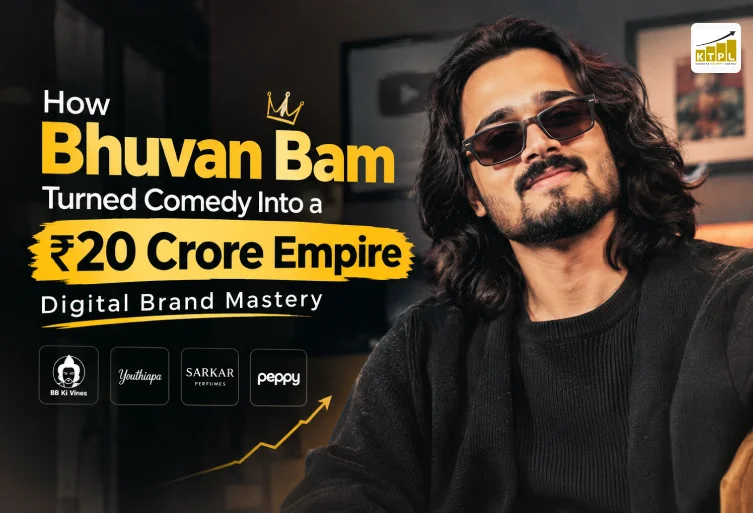
Bhuvan Bam is one of India’s most recognisable digital creators, but his success goes far beyond YouTube comedy. What began with simple videos and relatable characters eventually developed into a wider business ecosystem involving content production, intellectual property, entertainment, merchandise, brand partnerships and startup investments. The frequently discussed ₹20 crore business figure represents an important part of this journey, although current public estimates of his overall wealth and business interests vary and should not be treated as audited financial figures. The more valuable story is how Bhuvan Bam transformed audience attention into long-term brand value.His journey offers a useful case study for entrepreneurs, marketers and content creators trying to understand the modern creator economy. Instead of remaining dependent on advertising revenue and sponsored posts, Bhuvan gradually built assets that could exist beyond an individual YouTube video. BB Ki Vines became a recognisable entertainment property, recurring characters became intellectual property, merchandise created a direct-to-consumer opportunity, and his production work opened the door to larger entertainment formats. The Bhuvan Bam business strategy is therefore less about becoming famous and more about converting popularity into ownership. His career demonstrates how content can become a foundation for multiple revenue streams when creativity is combined with business thinking. For brands looking at digital marketing, creator partnerships or community-led growth, his story provides several practical lessons about audience trust, intellectual property, diversification and long-term brand building.
From BB Ki Vines to a Recognisable Digital Brand
Bhuvan Bam’s early success came from understanding what worked naturally on the internet. Instead of trying to imitate traditional television comedy, he created short, relatable videos around everyday situations and gave them a distinctive personality. BB Ki Vines introduced audiences to recurring characters such as Titu Mama and Sameer Fuddi, allowing viewers to recognise and remember the content universe. This familiarity was important because people were not simply watching isolated comedy clips; they were returning to characters they already knew. That approach helped Bhuvan build something many creators struggle to achieve: a memorable personal brand. His audience connected with his humour, expressions, characters and storytelling style. Over time, BB Ki Vines became more than a YouTube channel. It became a digital entertainment identity associated directly with Bhuvan Bam. This distinction matters from a business perspective because strong brand recognition can support opportunities outside the original platform. The next important step was professional production. BBKV Productions expanded the work beyond conventional YouTube videos into music, branded content and longer-form entertainment. This created a more structured business around the creative brand. Instead of treating every video as an individual piece of content, the organisation could develop projects, characters and stories with greater commercial potential. The success of Dhindora demonstrated how this strategy could work. The series took the familiar BB Ki Vines universe into long-form storytelling and became a major YouTube entertainment property. The official BBKV Productions profile describes the show as having crossed 500 million views, highlighting the scale that creator-led entertainment can achieve when an existing audience is combined with a stronger narrative format. This is one of the strongest lessons from Bhuvan Bam’s digital brand strategy. Content becomes considerably more valuable when it creates intellectual property that can be developed repeatedly. A character can appear in videos, shows, merchandise and other formats. A story can move from YouTube to streaming. A community built around comedy can eventually support products and commercial partnerships. For businesses, the same principle applies even outside entertainment. A company can create educational content, recurring campaigns, branded characters, signature concepts or proprietary resources that become recognisable assets. The goal is to build something that people remember instead of creating content that disappears immediately after publication.
How Bhuvan Bam Turned Audience Attention Into Business Assets
The most interesting part of the Bhuvan Bam success story is the transition from audience growth to business ownership. Traditional influencers often earn primarily through advertising campaigns, sponsorships and platform monetisation. These sources can be valuable, but they are generally tied to individual campaigns or platform performance. Bhuvan’s approach gradually added assets that could continue creating value beyond a single sponsored post. Youthiapa is a good example of this transition. The merchandise brand gave fans a way to purchase products connected with the BB Ki Vines identity and wider youth culture. Instead of the audience relationship ending when someone finished watching a video, merchandise created another point of interaction between the creator and the community. The official Youthiapa store continues to offer clothing and other merchandise associated with the BB Ki Vines universe. This represents an important D2C brand strategy. A creator already has something many new consumer businesses spend years trying to build: attention and community. However, attention alone does not guarantee sales. The product must still be attractive, useful, well-priced and capable of delivering a good customer experience. Bhuvan’s advantage was that his audience already had a relationship with his brand, making the transition from digital community to consumer products more natural. His brand partnerships also demonstrate the commercial value of a strong personal identity. Bhuvan has worked with major companies, including Lenskart, which appointed him as a brand ambassador in 2019. Such partnerships demonstrate how creators have moved from being niche internet personalities to becoming important channels for mainstream brands seeking younger and digitally active consumers. However, the next stage of the creator economy is potentially more significant: moving from brand fees to equity. Bhuvan Bam has participated in startup investments, including HYPD, a creator-commerce platform. He also joined sexual wellness startup Peppy as a co-founder and investor. These moves illustrate how an established creator can use personal brand strength, audience understanding and capital to participate in businesses rather than simply promote them. This creates a different form of creator entrepreneurship. A sponsored campaign may generate income once, while equity can potentially create long-term financial value if a business succeeds. At the same time, investments carry risk, so creator influence should never be confused with guaranteed business performance. The important lesson is the strategic shift from simply monetising attention to building or owning assets. For entrepreneurs, this is perhaps the biggest takeaway from Bhuvan Bam’s journey. A large audience should not be considered the final business goal. The stronger opportunity comes from asking what can be built around that audience: products, intellectual property, services, communities, licensing opportunities, partnerships or investments. This approach can turn personal visibility into a more diversified business model.
The Digital Brand Mastery Behind Bhuvan Bam's Growth
Bhuvan Bam’s growth can be understood through a simple progression: content created attention, attention created community, community strengthened the brand, the brand created intellectual property, and that intellectual property opened opportunities for products, entertainment and business investments. This interconnected model is what separates a digital personality from a digital brand. Each stage supports the next instead of functioning as an isolated revenue source. The first major asset was trust. Audiences repeatedly returned because they connected with Bhuvan’s humour and personality. The second asset was intellectual property through characters, stories and entertainment formats. The third was distribution through YouTube and other digital platforms. Once these elements were established, merchandise, brand collaborations and larger productions became easier to develop. His move into long-form entertainment was particularly important because it showed that a creator can expand beyond the format that originally made them famous. Taaza Khabar further established Bhuvan as an actor and producer in the streaming ecosystem. This expansion demonstrates the importance of transferring audience trust into new formats while maintaining the core identity that originally attracted the community. The same thinking can be applied to modern business marketing. A company should not create a blog only because it wants another page indexed by Google. It should create useful content that builds authority. That content can then support search visibility, social media, email marketing, lead generation and sales. Similarly, a strong brand should not depend entirely on one advertising channel. This is where SEO, AEO and GEO become increasingly important for modern brands. Search engines and answer engines reward useful, clearly structured information, while generative search systems increasingly rely on authoritative content to answer user questions. Businesses can learn from Bhuvan Bam’s strategy by creating original expertise and consistently connecting their content with a recognisable brand identity. For KTPL – Business Growth Agency, this broader lesson is particularly relevant when helping businesses build digital visibility. Whether the objective is website design, SEO, social media management, packaging or broader brand development, the strongest results come when every digital activity contributes to one recognisable brand story rather than operating independently. Bhuvan Bam’s journey ultimately shows that digital brand mastery is about ownership, consistency and diversification. Going viral can create attention, but building a lasting business requires something more. A creator or company needs assets that continue working after the campaign ends: a trusted name, original content, intellectual property, products, customer relationships and a strong digital presence.
What Businesses Can Learn From Bhuvan Bam's Business Model
The biggest lesson businesses can take from Bhuvan Bam is that content should be treated as a long-term business asset rather than simply a marketing activity. His journey shows how consistent content can build recognition, and recognition can eventually support products, partnerships and new business opportunities. The same principle applies to companies building authority through blogs, videos, social media and educational resources. The second lesson is the importance of having a recognisable identity. Bhuvan did not become successful because his videos were generic. His characters, humour and communication style gave BB Ki Vines a distinct identity. Businesses also need a clear voice, visual identity and value proposition that separates them from competitors. The third lesson is diversification without losing focus. Bhuvan’s businesses are connected by his audience and personal brand. The strongest diversification strategy is not about entering random industries; it is about finding opportunities that naturally connect with existing strengths. Finally, his story demonstrates why ownership matters. Depending completely on one platform leaves a creator or business vulnerable to algorithm changes. Websites, original intellectual property, customer relationships, products and owned digital assets provide greater control. That is a lesson every modern business can apply. The Bhuvan Bam digital brand strategy therefore offers a powerful framework: build attention, earn trust, create memorable intellectual property, develop products, diversify revenue and gradually move toward ownership. His comedy may have been the starting point, but the business thinking behind the brand is what allowed the journey to expand far beyond YouTube.
Conclusion: From Comedy Creator to Business Brand
Bhuvan Bam’s journey is a strong example of how India’s creator economy has evolved. He started with simple digital comedy but gradually built a much wider ecosystem around his audience, creativity and personal brand. From BB Ki Vines and recurring characters to production, OTT entertainment, Youthiapa, brand partnerships and startup investments, each stage added another layer of business value. The ₹20 crore figure often associated with his business journey should be viewed as part of the broader story rather than a definitive current valuation or net worth. Public financial estimates differ, and many private business details are not disclosed. What can be clearly understood is the strategy: Bhuvan Bam converted audience attention into brand equity and then used that equity to explore multiple forms of monetisation and ownership. For creators, entrepreneurs and marketers, that is the real lesson. Building followers is only the beginning. The stronger objective is to create a trusted brand that can support intellectual property, products, partnerships and long-term business opportunities. Bhuvan Bam’s story proves that comedy can become much more than entertainment when it is supported by consistency, community and business vision. His career is ultimately a case study in how a digital personality can evolve into a scalable brand—and how the creator economy is changing the traditional path from content creation to entrepreneurship.The biggest lesson businesses can take from Bhuvan Bam is that content should be treated as a long-term business asset rather than simply a marketing activity. His journey shows how consistent content can build recognition, and recognition can eventually support products, partnerships and new business opportunities. The same principle applies to companies building authority through blogs, videos, social media and educational resources. The second lesson is the importance of having a recognisable identity. Bhuvan did not become successful because his videos were generic. His characters, humour and communication style gave BB Ki Vines a distinct identity. Businesses also need a clear voice, visual identity and value proposition that separates them from competitors. The third lesson is diversification without losing focus. Bhuvan’s businesses are connected by his audience and personal brand. The strongest diversification strategy is not about entering random industries; it is about finding opportunities that naturally connect with existing strengths. Finally, his story demonstrates why ownership matters. Depending completely on one platform leaves a creator or business vulnerable to algorithm changes. Websites, original intellectual property, customer relationships, products and owned digital assets provide greater control. That is a lesson every modern business can apply. The Bhuvan Bam digital brand strategy therefore offers a powerful framework: build attention, earn trust, create memorable intellectual property, develop products, diversify revenue and gradually move toward ownership. His comedy may have been the starting point, but the business thinking behind the brand is what allowed the journey to expand far beyond YouTube.
FAQs
Have questions? We’ve answered some of the most common queries to help you understand the topic better.
Q1. Who is Bhuvan Bam?
Bhuvan Bam is an Indian comedian, actor, musician, content creator and entrepreneur best known for BB Ki Vines.
Q2. How did Bhuvan Bam make his money?
His income has come from content, entertainment production, brand partnerships, merchandise and business investments.
Q3. What is BB Ki Vines?
BB Ki Vines is Bhuvan Bam’s digital entertainment brand known for comedy videos and recurring characters.
Q4. What is Youthiapa?
Youthiapa is a merchandise and consumer brand associated with Bhuvan Bam and the BB Ki Vines community.
Q5. What can businesses learn from Bhuvan Bam?
Businesses can learn how to combine content, audience trust, intellectual property, D2C products, partnerships and diversified revenue streams.
Want To Grow Your Business - Connect With KTPL
KTPL – Business Growth Agency, a creative solutions and business growth agency from India.
👉 Visit https://kirnanitechnologies.com
📞 Call us at +91 95093 33000
📧 Email us at contact@kirnanitechnologies.com


