


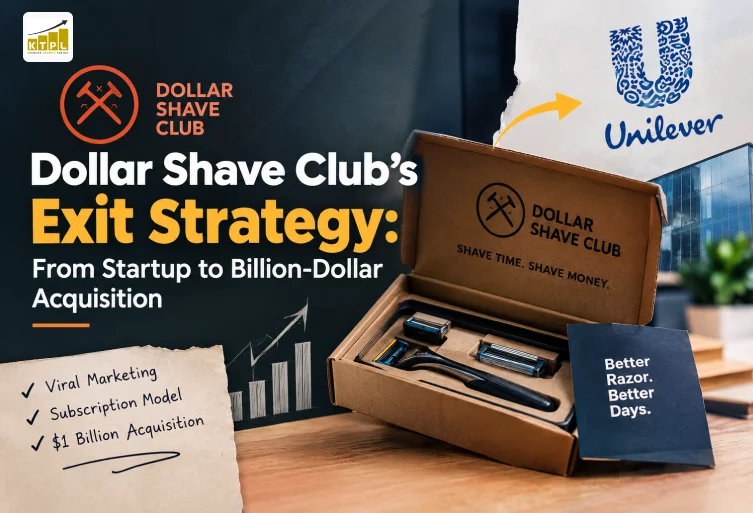
Dollar Shave Club started by addressing a simple problem in an ordinary consumer category: buying replacement razor blades was often expensive, inconvenient, and unnecessarily complicated. Instead of relying on traditional retail stores, the company created a direct-to-consumer model that allowed customers to order razors online and receive them regularly at home. This approach made the purchasing process easier while creating an ongoing relationship between the brand and its customers. The company did not need to invent a completely new product because its real innovation was in how the product was sold, priced, delivered, and marketed. By combining convenience with a straightforward subscription system, Dollar Shave Club positioned itself as an alternative to the established razor-buying experience. This simple business idea eventually became the foundation for one of the most widely discussed DTC startup exits.
The Viral Marketing Strategy Behind Dollar Shave Club
A major turning point came in 2012 when founder Michael Dubin appeared in a humorous launch video explaining the company’s razor subscription service. Instead of producing a conventional corporate advertisement, Dollar Shave Club used comedy, an informal presentation style, and a direct explanation of its value proposition. The campaign attracted enormous online attention and reportedly generated approximately 12,000 orders within its first two days. The success demonstrated how a relatively small startup could compete for attention without the enormous advertising budgets available to established razor companies. More importantly, the video communicated the company’s personality and business model at the same time. People were not simply watching an advertisement for blades; they were discovering a new brand with a distinctive voice. This became a defining part of the Dollar Shave Club growth strategy and showed how memorable content can accelerate brand awareness when it is closely connected to a clear customer proposition.
Why the Direct-to-Consumer Model Worked
The Dollar Shave Club business model was built around direct-to-consumer commerce, allowing the company to establish a direct connection with its customers rather than depending entirely on traditional retail distribution. Customers could select a shaving plan and receive replacement products at regular intervals, reducing the need to remember when to purchase new blades. For the company, the subscription model created the possibility of recurring revenue and provided valuable information about purchasing behavior. The business could understand customer preferences, monitor subscription activity, and communicate directly with its audience. This relationship was strategically different from selling a razor through a supermarket or pharmacy, where the manufacturer may have limited information about the individual consumer. The DTC model also gave Dollar Shave Club greater control over its brand presentation, customer experience, pricing communication, and digital marketing. These capabilities later became important reasons why the business attracted the attention of a much larger consumer-goods company.
How Subscription Revenue Supported Growth
Recurring revenue became an important component of the Dollar Shave Club strategy because razors are naturally repeat-purchase products. A customer who regularly needs replacement blades represents an opportunity for multiple transactions rather than a single sale. The subscription model made those repeat purchases more convenient by automatically organizing product deliveries around the customer’s needs. From a business perspective, recurring orders can also provide greater visibility into future demand and help companies develop customer lifetime value. However, subscription revenue is only valuable when customers remain active and the economics of acquiring and serving them remain sustainable. Retention, churn, fulfillment expenses, product margins, and customer acquisition costs all affect the real value of a subscriber. The Dollar Shave Club story therefore demonstrates both the attraction and complexity of subscription commerce. Building a large customer base is important, but long-term success requires converting that customer base into sustainable revenue and healthy unit economics.
The Role of Affordable Pricing and Convenience
Another important part of the Dollar Shave Club proposition was its focus on making razor purchasing easier and more affordable. Traditional razor shopping could involve expensive cartridges, retail markups, complicated product choices, and the inconvenience of remembering to purchase replacements. Dollar Shave Club simplified the process by presenting customers with a straightforward online buying experience and regular home delivery. Its messaging focused on practical value rather than positioning the product as an unnecessarily complicated premium purchase. This clarity helped the company communicate with consumers who were frustrated by the existing purchasing experience. The company also used humor to make a normally routine product category feel more approachable and entertaining. Together, pricing, convenience, subscription delivery, and brand personality created a differentiated customer proposition. The lesson for modern businesses is that competitive advantage does not always come from changing the product itself; sometimes it comes from making an existing product significantly easier to purchase and use.
An Asset-Light Supply Strategy
Dollar Shave Club also benefited from an approach that allowed it to concentrate heavily on branding, marketing, distribution, and customer relationships rather than building an enormous manufacturing operation. The company sourced its razor products from manufacturing partners, with early reporting linking its supply to South Korean manufacturer Dorco. This type of asset-light model can allow a startup to enter a competitive consumer market without investing the capital required to establish large manufacturing facilities. Instead, the business can focus its resources on generating demand, developing its ecommerce platform, improving customer experience, and building brand recognition. For Dollar Shave Club, this was particularly useful because the company was competing against established razor businesses with decades of manufacturing and distribution experience. Its competitive opportunity was not necessarily to manufacture better razors at enormous scale; it was to create a different relationship between the consumer and the razor brand. That distinction helped the startup build value around its customer-facing capabilities.
Why Unilever Became Interested in Dollar Shave Club
By the middle of the 2010s, Dollar Shave Club had developed into a recognizable digitally native consumer brand with a subscription model and direct access to its customers. These characteristics made the company strategically interesting to Unilever, one of the world’s largest consumer-goods businesses. Unilever was not simply acquiring a razor company; the transaction provided access to a business model built around ecommerce, digital marketing, subscriptions, and direct customer engagement. In an increasingly digital consumer environment, these capabilities could complement the traditional strengths of a large multinational company. Dollar Shave Club had also demonstrated that a relatively young brand could create substantial consumer awareness without following the conventional retail playbook. For Unilever, acquiring an established DTC brand offered a way to gain digital capabilities and customer relationships more quickly than developing an equivalent business entirely from the ground up. This is a common strategic reason behind corporate acquisitions: a larger company may acquire a smaller business because of its brand, customers, technology, distribution model, or capabilities rather than its physical assets alone.
The Billion-Dollar Unilever Acquisition
Unilever acquired Dollar Shave Club in 2016 for approximately $1 billion in cash, marking a major milestone in the company’s startup journey. The transaction demonstrated how quickly a focused DTC company could create strategic value in a highly competitive consumer market. For the startup, the acquisition represented a major exit event after only a few years of operation. For Unilever, it represented an opportunity to add a digitally native grooming brand and strengthen its connection with consumers who were increasingly comfortable buying personal-care products online. The deal also became an important example of the growing interest in DTC businesses among established consumer corporations. Instead of treating ecommerce-first brands as temporary competitors, major companies increasingly recognized that these businesses could develop valuable customer relationships and new approaches to marketing. The Dollar Shave Club acquisition therefore became more than a successful startup sale; it became an example of how changing consumer behavior can create acquisition opportunities between startups and global corporations.
What Happened After the Acquisition
The acquisition was not the end of the Dollar Shave Club business story. After becoming part of Unilever, the brand operated within a much larger corporate environment where growth, profitability, customer acquisition, and portfolio strategy were evaluated differently from the early startup years. The conditions that support rapid startup growth do not always remain unchanged as a company matures. Customer acquisition can become more expensive, competition can increase, consumer preferences can shift, and a business may need to balance brand investment with profitability. Unilever later recorded an impairment related to Dollar Shave Club and subsequently moved the brand toward disposal as part of its portfolio decisions. This stage of the story is important because it demonstrates that a billion-dollar acquisition does not mean a company has reached a permanent endpoint. Ownership changes can happen when the strategic priorities of an acquiring company evolve. For entrepreneurs, this is a reminder that an exit can create substantial value while still leaving the acquired brand with another long and sometimes complicated business journey.
Dollar Shave Club’s Second Exit
The next major chapter came in 2023, when Unilever sold Dollar Shave Club to private equity firm Nexus Capital Management. Unilever’s reporting records the transaction as completed on November 1, 2023. The sale marked a significant ownership transition approximately seven years after the original billion-dollar acquisition. This second transaction highlights how consumer brands can move through several ownership stages as their market position and strategic value evolve. For Unilever, selling the business was part of its broader portfolio strategy, while for Nexus Capital Management, the acquisition represented an opportunity to own and develop an established consumer brand. The second exit also makes the Dollar Shave Club case particularly valuable for understanding business lifecycle management. A startup can move from founder-led growth to strategic corporate ownership and later to private-equity ownership, with each stage bringing different objectives, resources, and expectations. The journey shows that an exit strategy is often a process rather than a single event.
What Entrepreneurs Can Learn From Dollar Shave Club
The Dollar Shave Club story offers several practical lessons for founders building consumer and digital businesses. First, a company does not always need to create a completely new product; solving an existing customer problem in a better way can create significant value. Second, strong brand communication can help a startup compete for attention even when larger competitors have much bigger marketing budgets. Third, subscription models can create recurring customer relationships, but they must be supported by retention and sustainable unit economics. Fourth, direct customer access can become a strategic asset because it gives businesses greater control over the customer experience and access to valuable behavioral information. Finally, entrepreneurs should understand that an acquisition is one stage of a company’s lifecycle rather than necessarily its final destination. Dollar Shave Club moved from startup to billion-dollar acquisition and eventually to another ownership structure, showing how brands can continue evolving long after their original founders achieve an exit.
FAQs
Have questions? We’ve answered some of the most common queries to help you understand the topic better.
Q1. What is Dollar Shave Club?
Dollar Shave Club is a direct-to-consumer grooming brand known for its razor subscription model.
Q2. Who founded Dollar Shave Club?
The company was founded by Michael Dubin, who also appeared in its famous launch video.
Q3. How much did Unilever pay for Dollar Shave Club?
Unilever acquired Dollar Shave Club for approximately $1 billion in cash in 2016.
Q4. Who acquired Dollar Shave Club from Unilever?
Unilever sold Dollar Shave Club to Nexus Capital Management in 2023.
Q5. What made Dollar Shave Club successful?
Its growth combined viral marketing, direct-to-consumer sales, subscription deliveries, simple pricing, and strong brand positioning.
Want To Grow Your Business - Connect With KTPL
KTPL – Business Growth Agency, a creative solutions and business growth agency from India.
👉 Visit https://kirnanitechnologies.com
📞 Call us at +91 95093 33000
📧 Email us at contact@kirnanitechnologies.com


